THE ADVENTURE COLLECTIVE® · Independent discovery and booking for outdoor travel

Race across the Giza Plateau by quad with the pyramids rising on the horizon. This guided half-day ride combines adrenaline with panoramic views and practical local insight for a concise, photo-ready adventure.
Race across the Giza Plateau by quad with the pyramids rising on the horizon. This guided half-day ride combines adrenaline with panoramic views and practical local insight for a concise, photo-ready adventure.
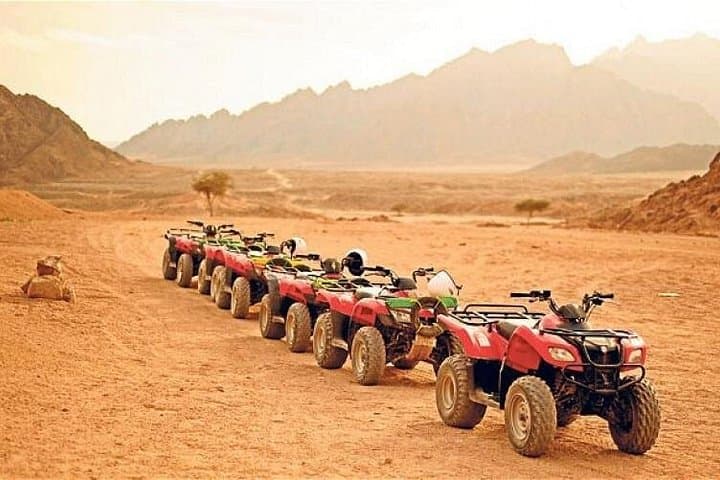
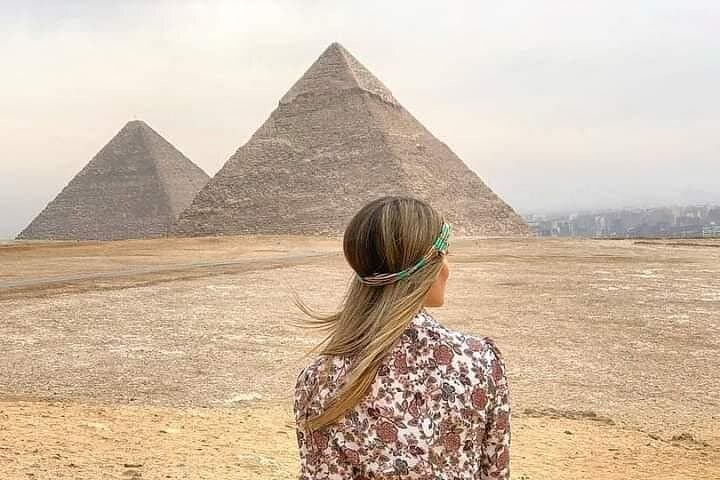
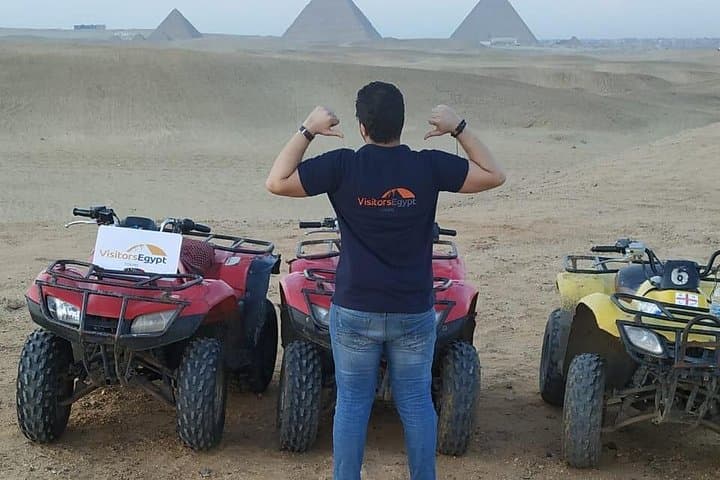
The engine kicks, sand sprays, and the pyramids loom ahead—sudden, geometric against a pale sky. Riders follow a guide across flat saltpan and rolling dune, the wind pushing the dust into ribbons while the three Great Pyramids and the Sphinx keep silent watch.
Verified experiences and guided adventures in the surrounding area.
Operated by Visitors Egypt Tours · Cairo, Cairo Governorate
The engine kicks, sand sprays, and the pyramids loom ahead—sudden, geometric against a pale sky. Riders follow a guide across flat saltpan and rolling dune, the wind pushing the dust into ribbons while the three Great Pyramids and the Sphinx keep silent watch.
This ride threads modern adrenaline through five millennia of human history. The Giza Plateau is limestone bedrock uplifted and weathered by wind; the pyramids themselves are angled monuments of Old Kingdom ambition, their stone faces worn smooth by centuries of sand. Local culture still orbits these monuments—camel handlers, small-market vendors, and Bedouin riders who know the desert’s moods.
Expect open expanses interrupted by small dunes and packed sand roads; visibility is excellent but surfaces shift beneath the quad. The landscape favors short bursts of speed and careful throttle control when soft sand appears. Guides usually include bottled water, helmets, and hotel transfers, making this a compact, guided half-day that’s big on photo stops and panoramic views.
Practical notes: wear closed-toe shoes and sunglasses, protect skin with high-SPF sunscreen, and bring a breathable layer as temperatures swing. Listen to your guide on spacing and throttle—quads handle differently in sand than on paved roads. Aim for morning or late afternoon to avoid peak heat and to get softer light on the stones.
This is a motorized way to experience one of the world’s oldest archaeological landscapes—fast enough to thrill, close enough to respect the place’s history.
No—most tours provide brief instruction and a guided route suitable for first-time riders, though basic physical control is required.
Yes, reputable operators supply helmets and bottled water as part of the tour inclusions.
Tours typically stop at designated viewpoints near the Giza Plateau for photos; vehicles do not drive on protected archaeological zones.
Light, breathable clothing, closed-toe shoes, sunglasses, and sun protection; bring a light jacket if riding in the cooler early morning or evening.
Visitors Egypt Tours operates guided outdoor trips and adventures with an emphasis on safety, stewardship, and memorable experiences.

The engine kicks, sand sprays, and the pyramids loom ahead—sudden, geometric against a pale sky. Riders follow a guide across flat saltpan and rolling dune, the wind pushing the dust into ribbons while the three Great Pyramids and the Sphinx keep silent watch.
The engine kicks, sand sprays, and the pyramids loom ahead—sudden, geometric against a pale sky. Riders follow a guide across flat saltpan and rolling dune, the wind pushing the dust into ribbons while the three Great Pyramids and the Sphinx keep silent watch.
This ride threads modern adrenaline through five millennia of human history. The Giza Plateau is limestone bedrock uplifted and weathered by wind; the pyramids themselves are angled monuments of Old Kingdom ambition, their stone faces worn smooth by centuries of sand. Local culture still orbits these monuments—camel handlers, small-market vendors, and Bedouin riders who know the desert’s moods.
Expect open expanses interrupted by small dunes and packed sand roads; visibility is excellent but surfaces shift beneath the quad. The landscape favors short bursts of speed and careful throttle control when soft sand appears. Guides usually include bottled water, helmets, and hotel transfers, making this a compact, guided half-day that’s big on photo stops and panoramic views.
Practical notes: wear closed-toe shoes and sunglasses, protect skin with high-SPF sunscreen, and bring a breathable layer as temperatures swing. Listen to your guide on spacing and throttle—quads handle differently in sand than on paved roads. Aim for morning or late afternoon to avoid peak heat and to get softer light on the stones.
This is a motorized way to experience one of the world’s oldest archaeological landscapes—fast enough to thrill, close enough to respect the place’s history.