THE ADVENTURE COLLECTIVE® · Independent discovery and booking for outdoor travel

Throttle up and cross the Giza plateau on an ATV, with the Pyramids framed in the dust behind you. This guided desert safari blends short bursts of speed with quiet moments of history and wide desert light.
Throttle up and cross the Giza plateau on an ATV, with the Pyramids framed in the dust behind you. This guided desert safari blends short bursts of speed with quiet moments of history and wide desert light.
The engine thrums and sand sprays outward as you accelerate across the sun-baked plateau that frames the Great Pyramids. Dust hangs in the heat shimmer; the limestone faces of Khufu and Khafre cut a clear, angular silhouette against the sky. Riding an ATV here is less a sight-seeing drive than a way to feel the desert’s pull — the land pushing back under your wheels, the wind trying to steal your hat.
Verified experiences and guided adventures in the surrounding area.
Operated by Cleopatra Egypt Tours · Giza, Giza Governorate
The engine thrums and sand sprays outward as you accelerate across the sun-baked plateau that frames the Great Pyramids. Dust hangs in the heat shimmer; the limestone faces of Khufu and Khafre cut a clear, angular silhouette against the sky. Riding an ATV here is less a sight-seeing drive than a way to feel the desert’s pull — the land pushing back under your wheels, the wind trying to steal your hat.
The Giza plateau sits on Eocene limestone laid down millions of years ago, later sculpted by millennia of human hands into one of the world’s most concentrated clusters of ancient monuments. Bedouin routes and caravan tracks once crossed these plains; today guided quad tours let visitors sample that mobility in a modern, engine‑driven form. Local guides usually provide context about pyramid construction, the Nile’s historical role, and contemporary life in Greater Cairo.
Expect open, sandy tracks with occasional rocky patches and gentle dunes rather than steep climbs. Operators commonly include hotel pickup, bottled water, safety briefing, and an Egyptologist guide for framing the views.
Practical tips: go early or late to avoid midday heat; wear UV protection and closed shoes; secure cameras and use dust covers. Beginners can handle a basic route after a short instruction, but maintain respectful distance from archaeological zones — riding directly up monument slopes is prohibited. Listen to your guide, stay hydrated, and treat the desert with caution; its weather shifts quickly and the sun is relentless. In four hours you’ll cover terrain, take sweeping photos with the pyramids behind you, and return with a sharper sense of place and speed.
No — operators provide a safety briefing and basic instruction; beginners can join typical routes, though you must follow the guide’s directions.
Riding on or directly up the pyramid slopes is prohibited; tours offer panoramic viewpoints but maintain distance to protect the monuments.
Yes — most packages include private A/C pickup and drop-off from central Cairo or Giza hotels.
Not recommended for people with serious heart or spinal problems; disclose medical issues when booking and follow guide advice.
Cleopatra Egypt Tours operates guided outdoor trips and adventures with an emphasis on safety, stewardship, and memorable experiences.
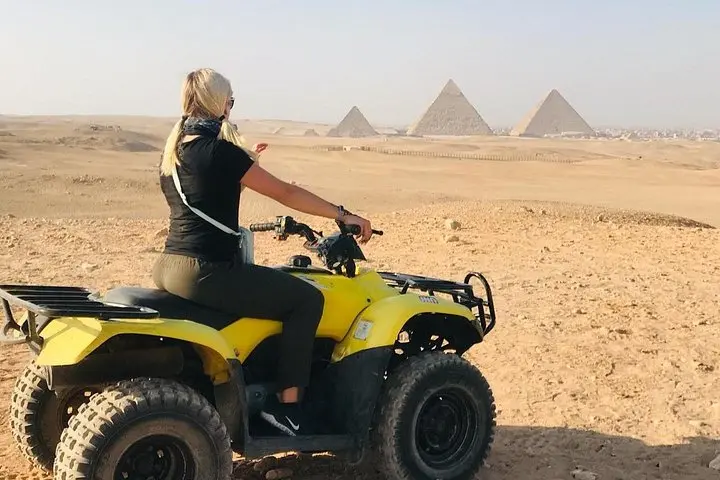
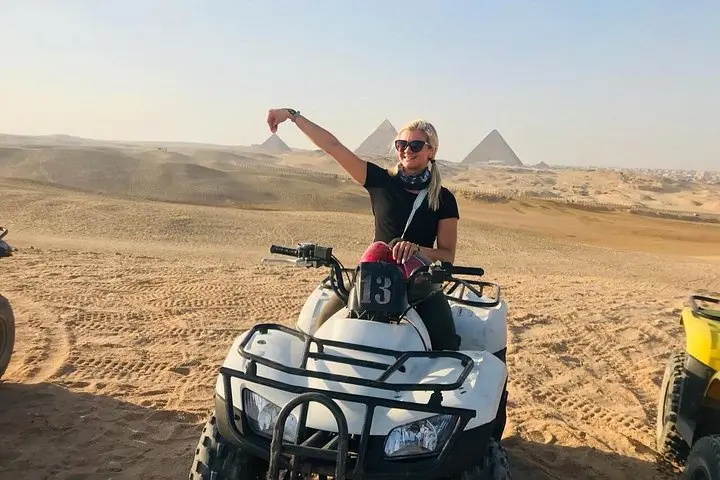
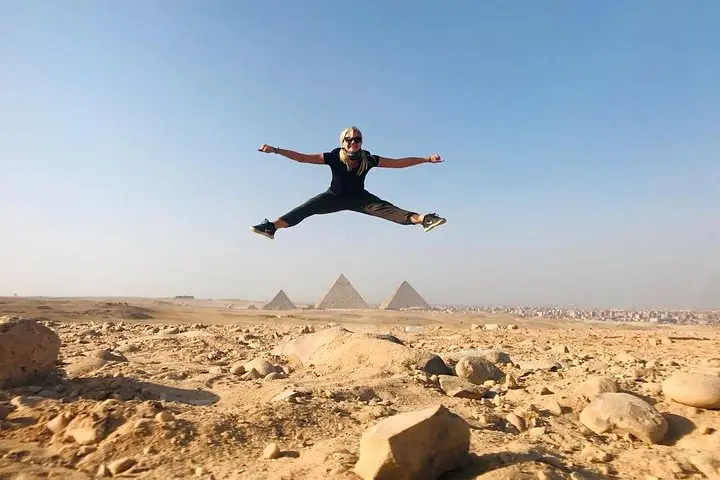
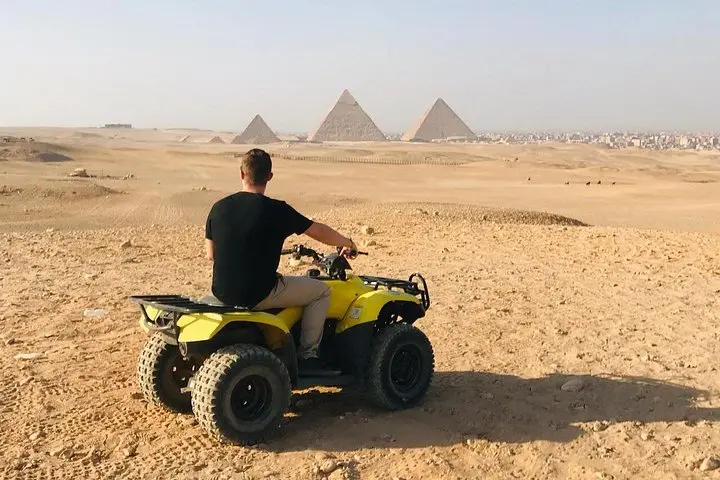
The engine thrums and sand sprays outward as you accelerate across the sun-baked plateau that frames the Great Pyramids. Dust hangs in the heat shimmer; the limestone faces of Khufu and Khafre cut a clear, angular silhouette against the sky. Riding an ATV here is less a sight-seeing drive than a way to feel the desert’s pull — the land pushing back under your wheels, the wind trying to steal your hat.
The engine thrums and sand sprays outward as you accelerate across the sun-baked plateau that frames the Great Pyramids. Dust hangs in the heat shimmer; the limestone faces of Khufu and Khafre cut a clear, angular silhouette against the sky. Riding an ATV here is less a sight-seeing drive than a way to feel the desert’s pull — the land pushing back under your wheels, the wind trying to steal your hat.
The Giza plateau sits on Eocene limestone laid down millions of years ago, later sculpted by millennia of human hands into one of the world’s most concentrated clusters of ancient monuments. Bedouin routes and caravan tracks once crossed these plains; today guided quad tours let visitors sample that mobility in a modern, engine‑driven form. Local guides usually provide context about pyramid construction, the Nile’s historical role, and contemporary life in Greater Cairo.
Expect open, sandy tracks with occasional rocky patches and gentle dunes rather than steep climbs. Operators commonly include hotel pickup, bottled water, safety briefing, and an Egyptologist guide for framing the views.
Practical tips: go early or late to avoid midday heat; wear UV protection and closed shoes; secure cameras and use dust covers. Beginners can handle a basic route after a short instruction, but maintain respectful distance from archaeological zones — riding directly up monument slopes is prohibited. Listen to your guide, stay hydrated, and treat the desert with caution; its weather shifts quickly and the sun is relentless. In four hours you’ll cover terrain, take sweeping photos with the pyramids behind you, and return with a sharper sense of place and speed.