THE ADVENTURE COLLECTIVE® · Independent discovery and booking for outdoor travel

Visit Quang Phu Cau to watch traditional incense-making come alive: artisans mixing powders, dipping bamboo cores, and arranging vibrant displays. This half-day tour from Hanoi combines hands-on craft viewing, cultural context, and a regional lunch.
Visit Quang Phu Cau to watch traditional incense-making come alive: artisans mixing powders, dipping bamboo cores, and arranging vibrant displays. This half-day tour from Hanoi combines hands-on craft viewing, cultural context, and a regional lunch.
A low-slung village road opens into a courtyard where rows of incense sticks fan out like oversized paintbrushes drying in the sun. The air carries a warm, resinous scent—powdered woods and fragrant powders steeping into bamboo cores—while artisans move with practiced, efficient motions: rolling paste, aligning sticks, and hanging bundles to dry.
Verified experiences and guided adventures in the surrounding area.
Operated by Charming Vietnam Travel · Hanoi, Hanoi
A low-slung village road opens into a courtyard where rows of incense sticks fan out like oversized paintbrushes drying in the sun. The air carries a warm, resinous scent—powdered woods and fragrant powders steeping into bamboo cores—while artisans move with practiced, efficient motions: rolling paste, aligning sticks, and hanging bundles to dry.
Quang Phu Cau sits on the flat plains north-east of Hanoi in the Red River Delta, a landscape of alluvial soils that historically supported the timber and herb harvests incidentally used in incense. Incense-making here is more craft than industry: a local tradition tied to ancestor worship, temple offerings and seasonal festivals. Visitors see every stage — mixing fragrant powders and binders, dipping sticks, drying and decorating — and may photograph colorful arrangements that double as folk art.
The tour is practical, tactile and short on elevation: expect village lanes, compacted earth and occasional concrete; minimal walking and easy footing. Logistics are straightforward — a hotel pickup in Hanoi, roughly 40 km drive, a guided visit of workshops and a regional lunch before returning to the city.
Useful planning notes: wear shoes that can handle dusty alleys, bring a hat and sunscreen for open courtyards, and carry small cash for souvenirs. Be mindful around wet incense paste and machine components; ask before photographing close-ups of workers. Timing early in the day gives cooler light for photos and less smoke in the air. For anyone curious about material culture, household crafts, or vivid photo ops, the visit is an efficient, sensory-rich window into a living Vietnamese tradition.
Expect about 6–7 hours total: roughly 40–60 minutes each way by road plus 2–3 hours in the village including a guided workshop visit and lunch.
Yes, but always ask permission for close-up shots of artisans or delicate processes and follow your guide’s directions.
Yes — the visit is low-impact with short walks and seated lunch options, but note there may be smoke and uneven ground.
Yes; many families sell handcrafted bundles and decorative arrangements — carry cash and inspect packaging for ingredients and scent profiles.
Charming Vietnam Travel operates guided outdoor trips and adventures with an emphasis on safety, stewardship, and memorable experiences.


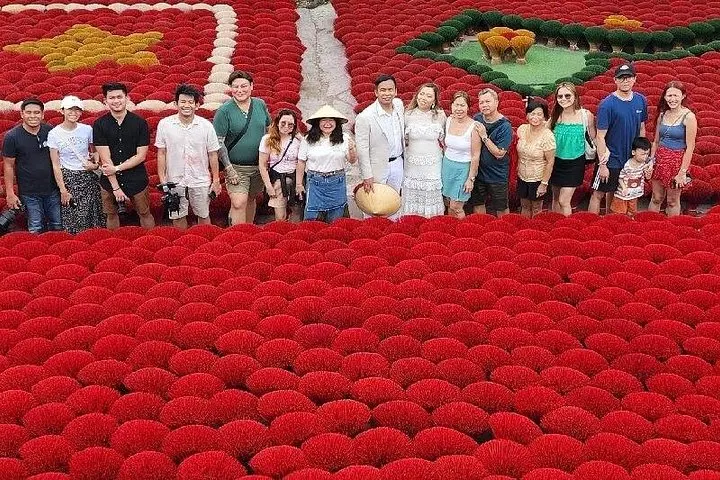

A low-slung village road opens into a courtyard where rows of incense sticks fan out like oversized paintbrushes drying in the sun. The air carries a warm, resinous scent—powdered woods and fragrant powders steeping into bamboo cores—while artisans move with practiced, efficient motions: rolling paste, aligning sticks, and hanging bundles to dry.
A low-slung village road opens into a courtyard where rows of incense sticks fan out like oversized paintbrushes drying in the sun. The air carries a warm, resinous scent—powdered woods and fragrant powders steeping into bamboo cores—while artisans move with practiced, efficient motions: rolling paste, aligning sticks, and hanging bundles to dry.
Quang Phu Cau sits on the flat plains north-east of Hanoi in the Red River Delta, a landscape of alluvial soils that historically supported the timber and herb harvests incidentally used in incense. Incense-making here is more craft than industry: a local tradition tied to ancestor worship, temple offerings and seasonal festivals. Visitors see every stage — mixing fragrant powders and binders, dipping sticks, drying and decorating — and may photograph colorful arrangements that double as folk art.
The tour is practical, tactile and short on elevation: expect village lanes, compacted earth and occasional concrete; minimal walking and easy footing. Logistics are straightforward — a hotel pickup in Hanoi, roughly 40 km drive, a guided visit of workshops and a regional lunch before returning to the city.
Useful planning notes: wear shoes that can handle dusty alleys, bring a hat and sunscreen for open courtyards, and carry small cash for souvenirs. Be mindful around wet incense paste and machine components; ask before photographing close-ups of workers. Timing early in the day gives cooler light for photos and less smoke in the air. For anyone curious about material culture, household crafts, or vivid photo ops, the visit is an efficient, sensory-rich window into a living Vietnamese tradition.