THE ADVENTURE COLLECTIVE® · Independent discovery and booking for outdoor travel

Walk the jungle after dark on a private night tour that combines a guided rainforest trail with access to Manuel Antonio’s rewilding center. Small groups, provided headlamps and a post-tour Costa Rican meal make this an accessible wildlife experience for curious travelers.
Walk the jungle after dark on a private night tour that combines a guided rainforest trail with access to Manuel Antonio’s rewilding center. Small groups, provided headlamps and a post-tour Costa Rican meal make this an accessible wildlife experience for curious travelers.
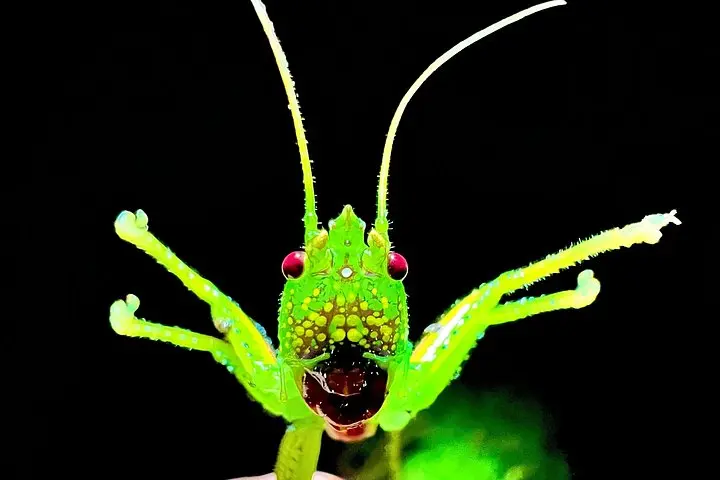
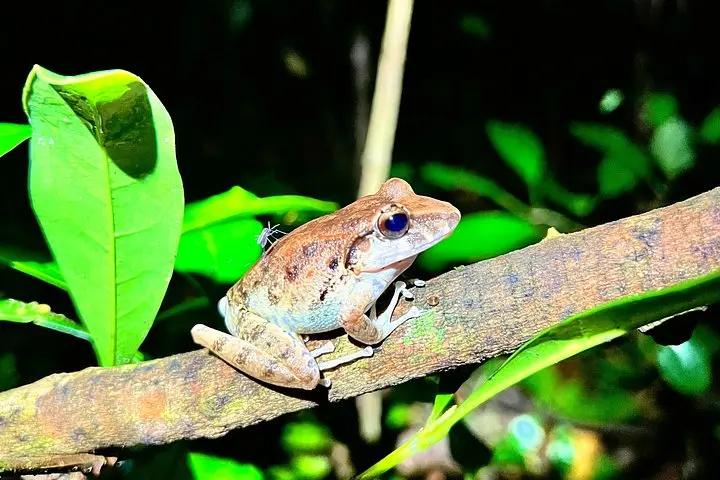
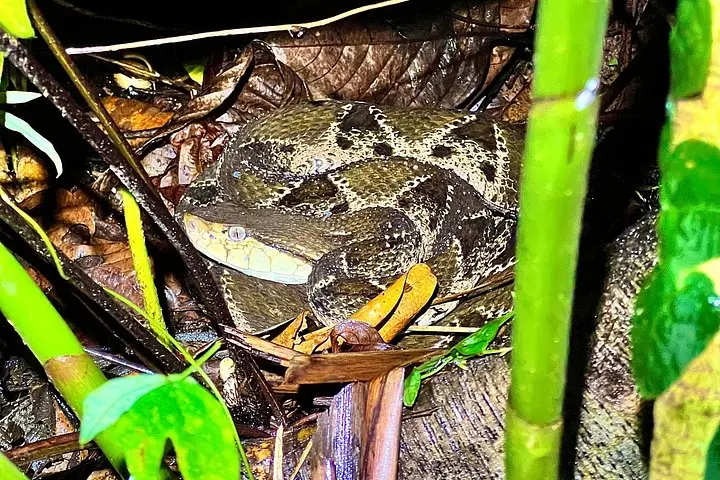
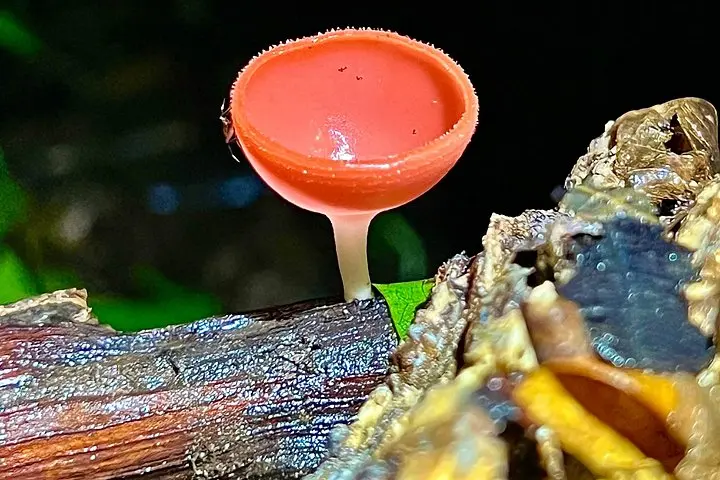
You step off a dimly lit road into a chorus of clicking insects and distant amphibian calls; the trail ahead narrows, and your guide clicks on a headlamp that pins a silver cone of light on a living wall of leaves.
Verified experiences and guided adventures in the surrounding area.
Operated by Kids Saving the Rain Forest · Quepos, Puntarenas
You step off a dimly lit road into a chorus of clicking insects and distant amphibian calls; the trail ahead narrows, and your guide clicks on a headlamp that pins a silver cone of light on a living wall of leaves.
This private night tour threads through a protected jungle preserve near Manuel Antonio, offering rare after-dark access to a rewilding and rescue center run by Kids Saving the Rainforest. The preserve occupies low coastal rainforest carved from volcanic soils—stout trees, tangled vines and seasonal streams define the terrain—while the sanctuary cares for animals that cannot be released to the wild.
Guides explain local natural history: how Pacific lowland rainforest supports high biodiversity, why nocturnal mammals like kinkajous and several species of owl become active after dusk, and how rescue efforts grew into two decades of rehabilitation work in the region. Cultural notes touch on Costa Rica’s long-running conservation push and community ecotourism around Quepos and Manuel Antonio.
Expect a short 10-minute walk to the trailhead, then roughly two hours on uneven, often muddy paths and raised boardwalks. Wildlife sightings aren’t guaranteed but the sanctuary’s nocturnal enclosures make close encounters with sloths, kinkajous and rescued fauna likely. Groups are capped at 10; the price includes rubber boots, LED headlamps, a fresh-fruit snack and a Costa Rican-style dinner afterward.
Practical tips: bring waterproof layers, insect repellent and sturdy shoes; move slowly, keep quiet and follow your guide’s light discipline to maximize sightings. The tour works best during the dry months but runs year-round with more frogs and insects in the wet season.
Yes—LED headlamps and rubber boots are included in the tour, though many guests bring their own shoes for comfort.
Small groups and private format make it family-friendly, but guests should check age limits and mobility constraints with the operator; stairs and uneven ground can be challenging for very young children.
Wild sightings of elusive predators are possible but uncommon; the sanctuary provides close views of some nocturnal rescued animals like sloths and kinkajous.
Pickup options are typically requested at booking—confirm your pickup point during reservation and allow time for transport after the dinner that ends the tour.
Kids Saving the Rain Forest operates guided outdoor trips and adventures with an emphasis on safety, stewardship, and memorable experiences.
You step off a dimly lit road into a chorus of clicking insects and distant amphibian calls; the trail ahead narrows, and your guide clicks on a headlamp that pins a silver cone of light on a living wall of leaves.
You step off a dimly lit road into a chorus of clicking insects and distant amphibian calls; the trail ahead narrows, and your guide clicks on a headlamp that pins a silver cone of light on a living wall of leaves.
This private night tour threads through a protected jungle preserve near Manuel Antonio, offering rare after-dark access to a rewilding and rescue center run by Kids Saving the Rainforest. The preserve occupies low coastal rainforest carved from volcanic soils—stout trees, tangled vines and seasonal streams define the terrain—while the sanctuary cares for animals that cannot be released to the wild.
Guides explain local natural history: how Pacific lowland rainforest supports high biodiversity, why nocturnal mammals like kinkajous and several species of owl become active after dusk, and how rescue efforts grew into two decades of rehabilitation work in the region. Cultural notes touch on Costa Rica’s long-running conservation push and community ecotourism around Quepos and Manuel Antonio.
Expect a short 10-minute walk to the trailhead, then roughly two hours on uneven, often muddy paths and raised boardwalks. Wildlife sightings aren’t guaranteed but the sanctuary’s nocturnal enclosures make close encounters with sloths, kinkajous and rescued fauna likely. Groups are capped at 10; the price includes rubber boots, LED headlamps, a fresh-fruit snack and a Costa Rican-style dinner afterward.
Practical tips: bring waterproof layers, insect repellent and sturdy shoes; move slowly, keep quiet and follow your guide’s light discipline to maximize sightings. The tour works best during the dry months but runs year-round with more frogs and insects in the wet season.