THE ADVENTURE COLLECTIVE® · Independent discovery and booking for outdoor travel

A private day trip from Quito to Quilotoa takes you to a dramatic volcanic crater lake, local markets, and highland villages along narrow mountain roads. Expect steep rim hikes, vivid views, and cultural stops in Tigua and Zumbahua.
A private day trip from Quito to Quilotoa takes you to a dramatic volcanic crater lake, local markets, and highland villages along narrow mountain roads. Expect steep rim hikes, vivid views, and cultural stops in Tigua and Zumbahua.
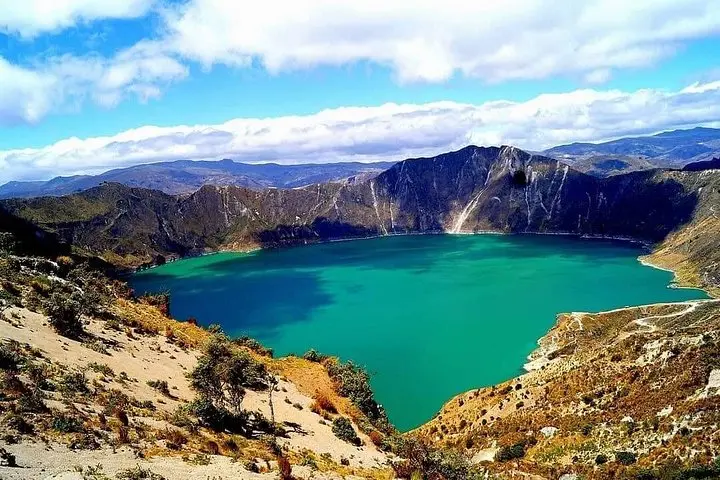
You step from an air-conditioned vehicle onto a high Andean rim where wind pushes across the crater and the lake below glows an improbable green.
Verified experiences and guided adventures in the surrounding area.
Operated by Ecu-Trans, Tourist Transportation · Quilotoa, Cotopaxi Province
You step from an air-conditioned vehicle onto a high Andean rim where wind pushes across the crater and the lake below glows an improbable green.
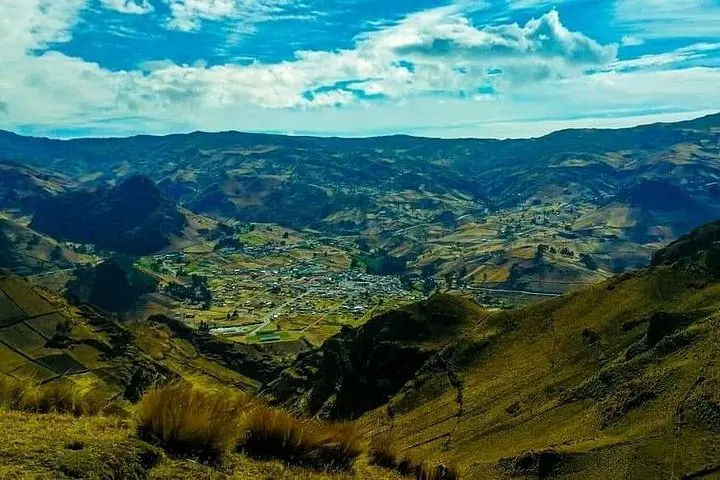
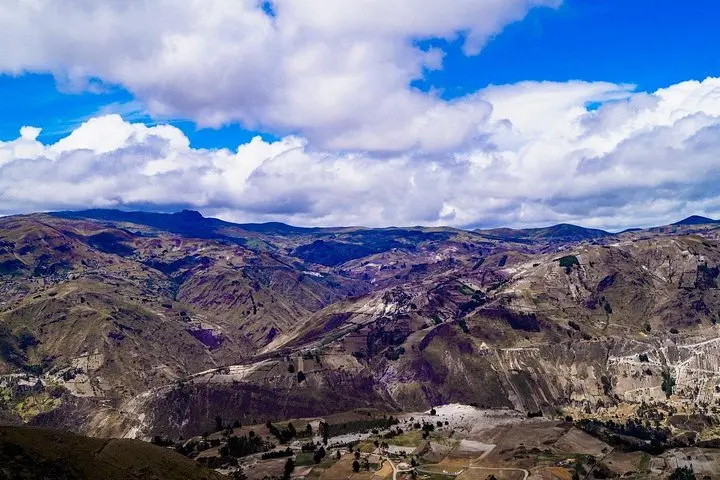
The Quilotoa crater feels immediate: a two-kilometer-wide bowl cut into volcanic rock, its steep walls dropping roughly 500 meters to a lake that reflects sky and weather. The drive along narrow dirt roads threads through farming terraces of barley, potatoes and quinoa, and small villages where marker colors and woven hats announce local identity.
Geologically Quilotoa is a collapsed caldera, the result of explosive eruptions and subsequent subsidence; the lake’s color comes from dissolved minerals and seasonal runoff. Culturally the route touches Tigua, known for sheep-skin painting, and Zumbahua, whose Saturday market remains a lively stop for textiles and fresh produce.
Practically, the day trip is long but accessible: expect an 8–9 hour round trip from Quito with stops for viewpoints and short hikes on uneven volcanic trail. The crater rim trail ranges from packed dirt to loose scree; descending to the water involves steep sections and requires steady footing. Altitude matters — the rim sits above 3,900 meters — so allow time to acclimatize and move deliberately.
Bring layered clothing, sun protection and at least 1–2 liters of water, and plan for rapidly changing weather. A private tour simplifies logistics—pickup, driver-guide, and bottled water—but independent hikers should check local entry fees and respect fragile paramo vegetation. When the wind eases, sit and let the crater watch you back: the lake keeps its quiet, the mountains keep their pace.
The rim walk around parts of the crater can be several kilometers depending on how much you cover; many visitors do shorter viewpoint walks and optional descents toward the lake rather than a full circumnavigation.
There is typically a small local entrance or access fee collected at the crater; it is usually paid in cash to community-managed booths.
Yes — paths descend from the rim to the lake but are steep and sometimes loose; descending and ascending can be strenuous and takes time, so plan accordingly.
At nearly 4,000 meters many people notice shortness of breath, headache or fatigue; hydrate, eat lightly, move slowly, and consult a guide if symptoms worsen.
Ecu-Trans, Tourist Transportation operates guided outdoor trips and adventures with an emphasis on safety, stewardship, and memorable experiences.
You step from an air-conditioned vehicle onto a high Andean rim where wind pushes across the crater and the lake below glows an improbable green.
You step from an air-conditioned vehicle onto a high Andean rim where wind pushes across the crater and the lake below glows an improbable green.
The Quilotoa crater feels immediate: a two-kilometer-wide bowl cut into volcanic rock, its steep walls dropping roughly 500 meters to a lake that reflects sky and weather. The drive along narrow dirt roads threads through farming terraces of barley, potatoes and quinoa, and small villages where marker colors and woven hats announce local identity.
Geologically Quilotoa is a collapsed caldera, the result of explosive eruptions and subsequent subsidence; the lake’s color comes from dissolved minerals and seasonal runoff. Culturally the route touches Tigua, known for sheep-skin painting, and Zumbahua, whose Saturday market remains a lively stop for textiles and fresh produce.
Practically, the day trip is long but accessible: expect an 8–9 hour round trip from Quito with stops for viewpoints and short hikes on uneven volcanic trail. The crater rim trail ranges from packed dirt to loose scree; descending to the water involves steep sections and requires steady footing. Altitude matters — the rim sits above 3,900 meters — so allow time to acclimatize and move deliberately.
Bring layered clothing, sun protection and at least 1–2 liters of water, and plan for rapidly changing weather. A private tour simplifies logistics—pickup, driver-guide, and bottled water—but independent hikers should check local entry fees and respect fragile paramo vegetation. When the wind eases, sit and let the crater watch you back: the lake keeps its quiet, the mountains keep their pace.