THE ADVENTURE COLLECTIVE® · Independent discovery and booking for outdoor travel

Stand on a windswept rim and descend into Quilotoa’s emerald crater lake on a full-day cultural tour from Quito. Expect market visits, a village homestay, a steep crater hike and a mule option for the return climb.
Stand on a windswept rim and descend into Quilotoa’s emerald crater lake on a full-day cultural tour from Quito. Expect market visits, a village homestay, a steep crater hike and a mule option for the return climb.
You arrive at the rim with wind carving the grass and a bowl of green water far below — the crater lake refuses to sit still, its color changing with the light. The trail drops quickly, a worn ribbon of volcanic scree and compacted soil that guides you toward the lip and then down into the hollow where the lagoon sits like an inland sea.
Verified experiences and guided adventures in the surrounding area.
Operated by Adventure Journeys · Quilotoa, Cotopaxi
You arrive at the rim with wind carving the grass and a bowl of green water far below — the crater lake refuses to sit still, its color changing with the light. The trail drops quickly, a worn ribbon of volcanic scree and compacted soil that guides you toward the lip and then down into the hollow where the lagoon sits like an inland sea.
This part of the Ecuadorian Andes is volcanic and agricultural: the crater formed in a violent VEI eruption centuries ago and the surrounding communities are primarily Kichwa-speaking highland farmers. On Thursdays and Sundays the tour can include the Saquisilí market, a vivid meeting place for trade in textiles, livestock and food; other days you may visit a colonial church in Pujilí or a family home to learn basic Quichua greetings and local customs.
Geologically, Quilotoa’s bowl is a collapsed caldera with steep inner walls—expect a short but steep descent of roughly 1–1.5 km and about 300–400 m of elevation change to the water’s edge. The return climb takes about an hour for fit walkers; mules are available for a small fee.
Practically: altitude matters — the rim sits near 3,900 m, so hydrate and move deliberately. Sturdy footwear, windproof layers and sun protection make the hike far more comfortable. Your day is a blend of cultural stops, an active hike into the crater, and scenic driving across Andean valleys; lunch is included and guides are bilingual, easing logistics for first-time visitors.
The descent to the lake is roughly 1–1.5 km with about 300–400 m of elevation loss; the return ascent typically takes around an hour.
Yes — mules are available for the climb back for a small additional fee (about $12), though availability can vary by season.
The tour is advertised as suitable for all fitness levels, but the climb back from the crater is steep; families with young children should consider the mule option or steady pacing.
Symptoms can include headache, shortness of breath and fatigue—drink water, eat light, move slowly, and tell your guide if symptoms worsen.
Adventure Journeys operates guided outdoor trips and adventures with an emphasis on safety, stewardship, and memorable experiences.
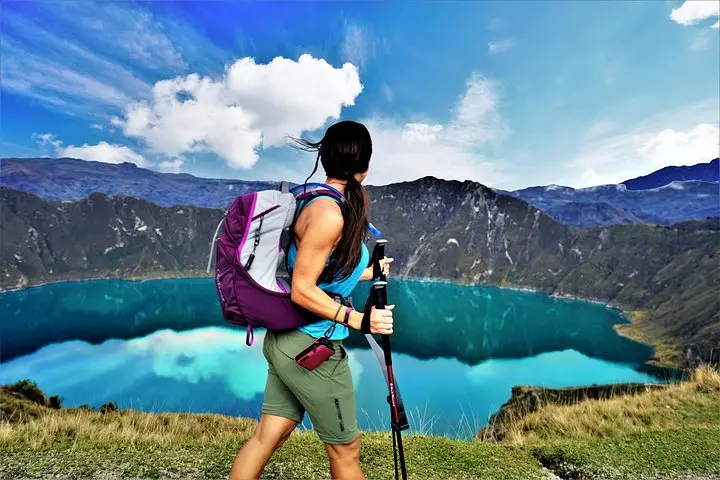
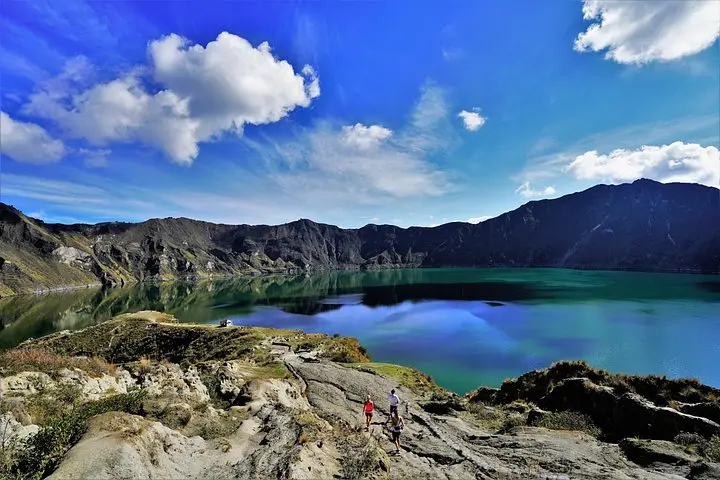
You arrive at the rim with wind carving the grass and a bowl of green water far below — the crater lake refuses to sit still, its color changing with the light. The trail drops quickly, a worn ribbon of volcanic scree and compacted soil that guides you toward the lip and then down into the hollow where the lagoon sits like an inland sea.
You arrive at the rim with wind carving the grass and a bowl of green water far below — the crater lake refuses to sit still, its color changing with the light. The trail drops quickly, a worn ribbon of volcanic scree and compacted soil that guides you toward the lip and then down into the hollow where the lagoon sits like an inland sea.
This part of the Ecuadorian Andes is volcanic and agricultural: the crater formed in a violent VEI eruption centuries ago and the surrounding communities are primarily Kichwa-speaking highland farmers. On Thursdays and Sundays the tour can include the Saquisilí market, a vivid meeting place for trade in textiles, livestock and food; other days you may visit a colonial church in Pujilí or a family home to learn basic Quichua greetings and local customs.
Geologically, Quilotoa’s bowl is a collapsed caldera with steep inner walls—expect a short but steep descent of roughly 1–1.5 km and about 300–400 m of elevation change to the water’s edge. The return climb takes about an hour for fit walkers; mules are available for a small fee.
Practically: altitude matters — the rim sits near 3,900 m, so hydrate and move deliberately. Sturdy footwear, windproof layers and sun protection make the hike far more comfortable. Your day is a blend of cultural stops, an active hike into the crater, and scenic driving across Andean valleys; lunch is included and guides are bilingual, easing logistics for first-time visitors.