THE ADVENTURE COLLECTIVE® · Independent discovery and booking for outdoor travel

Float between limestone walls and let the Dunajec River guide you through Pieniny National Park. This family-friendly wooden-raft trip pairs local boatmen’s craft with striking geology—an accessible, scenic river journey that lasts about 2–3 hours.
Float between limestone walls and let the Dunajec River guide you through Pieniny National Park. This family-friendly wooden-raft trip pairs local boatmen’s craft with striking geology—an accessible, scenic river journey that lasts about 2–3 hours.
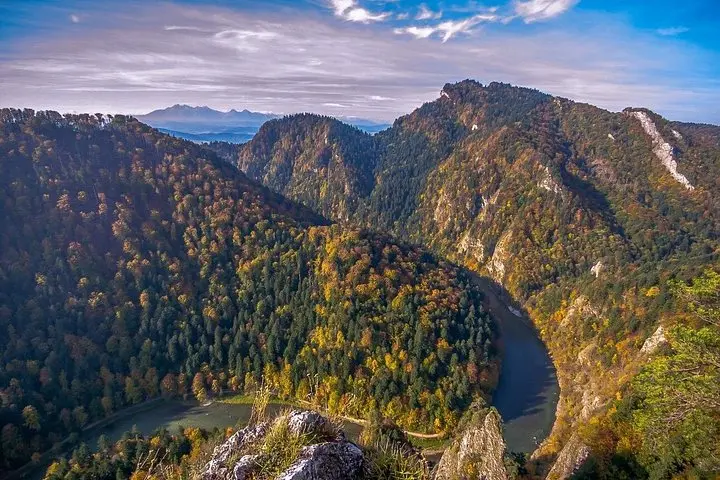
The raft nudges away from a small wooden pier and the river immediately takes charge—slow at first, then coaxing, then carrying. Limestone walls climb up either side, their faces scored with gullies and the dark green of shrubs. Above, the jagged shoulders of the Pieniny Range frame the sky; below, the Dunajec River threads a path that has been used for centuries to move timber and, more recently, visitors.
Verified experiences and guided adventures in the surrounding area.
Operated by Rivent - Rafting Kajakarstwo Sklep · Szczawnica, Lesser Poland
The raft nudges away from a small wooden pier and the river immediately takes charge—slow at first, then coaxing, then carrying. Limestone walls climb up either side, their faces scored with gullies and the dark green of shrubs. Above, the jagged shoulders of the Pieniny Range frame the sky; below, the Dunajec River threads a path that has been used for centuries to move timber and, more recently, visitors.
The Dunajec Gorge is a working landscape and a stage. For roughly two-and-a-half hours, a flat-bottom wooden raft guided by two local boatmen—flisacy—glides through a protected national park that straddles the Polish-Slovak border. The route follows the ancient river corridor where the Pieniny limestone was pushed and carved by tectonic forces, leaving vertical cliffs, exposed fossils and narrow bends that make the river feel purposeful rather than placid.
History here is compact but visible: medieval trade routes, borderland communities, and the watchful silhouette of Niedzica Castle upstream. The raftsmen still use traditional techniques—poles and practiced strokes—to position the raft against currents, turning the ride into a living craft demonstration as much as an outdoor excursion.
Culturally, the valley has always been about exchange. Fishermen and shepherds, Polish and Slovak villagers, and now visitors share a narrow corridor where nature asserts itself. The National Park manages the flow, preserving riverbanks and endemic plants while regulating tourist traffic; the rafts are an accepted low-impact way to experience the gorge when run along established routes.
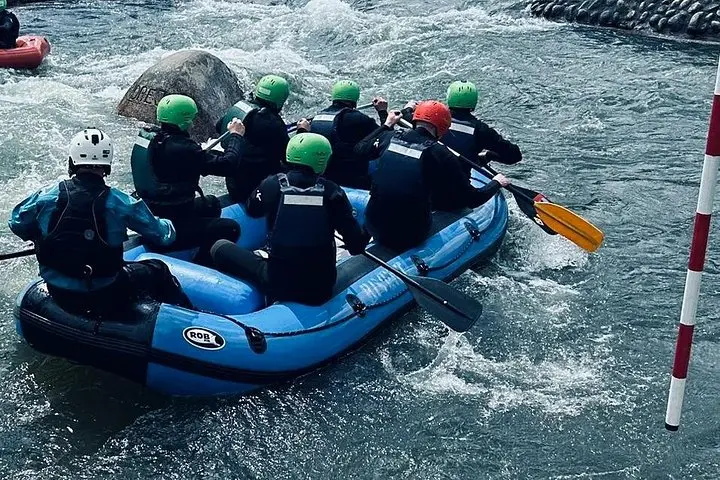
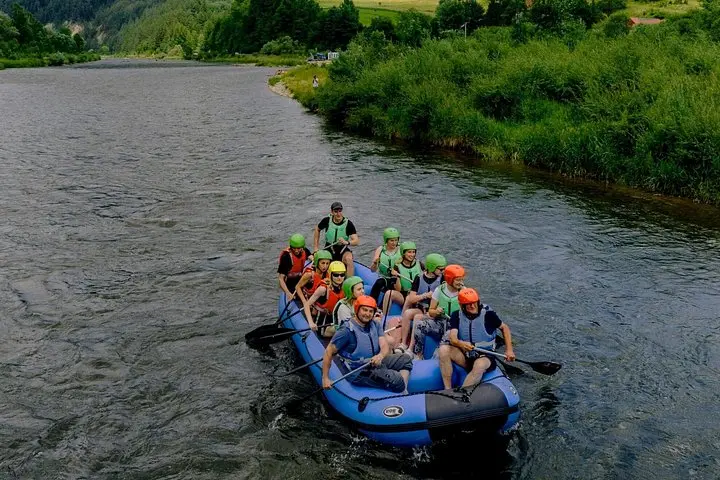
Practical details: the operator’s trip runs about 2–3 hours (roughly 18 km), mostly gentle current with a few tighter sections that demand attention from the crew but not technical skills from guests. Equipment—helmet, life vest, paddle and waterproof containers—is provided, and transport back to the start is included.
Plan to arrive with secure footwear (lace-up sandals or sneakers), a light waterproof layer and a dry bag for cameras. On warm days, shorts and a sport shirt work fine; on cooler or rainy days, synthetic layers and a windproof jacket are smart. Expect the raft to be open to the elements—sun, spray and sudden gusts all have personality here.
Timing matters: mornings can be quieter and cooler; midday brings more traffic but higher light. The trip is family-friendly and accessible for most fitness levels, but it’s not recommended for people with severe back problems. Operators cancel in bad weather or when the river is unsafe, so check schedules.
When the raft slides into a long bend and the cliffs lean in, you feel why the Dunajec has been moving people for centuries: it doesn’t merely carry you downstream—it answers you back.
The advertised experience lasts about 2–3 hours and follows the popular Dunajec Gorge route of roughly 18 km with included transport back to the starting point.
Yes—operators provide life vests and helmets, and the trip is designed for families, though infants typically must sit on an adult’s lap.
On warm days wear quick-drying sportswear and secure footwear; bring a waterproof layer for wind and spray, and a towel/change of clothes for after the trip.
No technical rapids—mostly calm current with a few tighter sections that are managed by the experienced crew; no prior rafting experience needed.
The operator often provides transport from the finish point back to the start; check booking options and pickup locations in advance.
Trips can be canceled for safety in heavy rain, high water or strong winds; the operator’s policy allows cancellations and refunds if the trip is unsafe.
Rivent - Rafting Kajakarstwo Sklep operates guided outdoor trips and adventures with an emphasis on safety, stewardship, and memorable experiences.
The raft nudges away from a small wooden pier and the river immediately takes charge—slow at first, then coaxing, then carrying. Limestone walls climb up either side, their faces scored with gullies and the dark green of shrubs. Above, the jagged shoulders of the Pieniny Range frame the sky; below, the Dunajec River threads a path that has been used for centuries to move timber and, more recently, visitors.
The raft nudges away from a small wooden pier and the river immediately takes charge—slow at first, then coaxing, then carrying. Limestone walls climb up either side, their faces scored with gullies and the dark green of shrubs. Above, the jagged shoulders of the Pieniny Range frame the sky; below, the Dunajec River threads a path that has been used for centuries to move timber and, more recently, visitors.
The Dunajec Gorge is a working landscape and a stage. For roughly two-and-a-half hours, a flat-bottom wooden raft guided by two local boatmen—flisacy—glides through a protected national park that straddles the Polish-Slovak border. The route follows the ancient river corridor where the Pieniny limestone was pushed and carved by tectonic forces, leaving vertical cliffs, exposed fossils and narrow bends that make the river feel purposeful rather than placid.
History here is compact but visible: medieval trade routes, borderland communities, and the watchful silhouette of Niedzica Castle upstream. The raftsmen still use traditional techniques—poles and practiced strokes—to position the raft against currents, turning the ride into a living craft demonstration as much as an outdoor excursion.
Culturally, the valley has always been about exchange. Fishermen and shepherds, Polish and Slovak villagers, and now visitors share a narrow corridor where nature asserts itself. The National Park manages the flow, preserving riverbanks and endemic plants while regulating tourist traffic; the rafts are an accepted low-impact way to experience the gorge when run along established routes.
Practical details: the operator’s trip runs about 2–3 hours (roughly 18 km), mostly gentle current with a few tighter sections that demand attention from the crew but not technical skills from guests. Equipment—helmet, life vest, paddle and waterproof containers—is provided, and transport back to the start is included.
Plan to arrive with secure footwear (lace-up sandals or sneakers), a light waterproof layer and a dry bag for cameras. On warm days, shorts and a sport shirt work fine; on cooler or rainy days, synthetic layers and a windproof jacket are smart. Expect the raft to be open to the elements—sun, spray and sudden gusts all have personality here.
Timing matters: mornings can be quieter and cooler; midday brings more traffic but higher light. The trip is family-friendly and accessible for most fitness levels, but it’s not recommended for people with severe back problems. Operators cancel in bad weather or when the river is unsafe, so check schedules.
When the raft slides into a long bend and the cliffs lean in, you feel why the Dunajec has been moving people for centuries: it doesn’t merely carry you downstream—it answers you back.