THE ADVENTURE COLLECTIVE® · Independent discovery and booking for outdoor travel

Float three miles down the calm Martha Brae, guided by local polers who point out medicinal herbs, birds, and the storied history of the river. This easy, cultural half-day trip blends a herbal garden walk with a tranquil bamboo-raft descent—ideal for travelers who want quiet nature and local storytelling.
Float three miles down the calm Martha Brae, guided by local polers who point out medicinal herbs, birds, and the storied history of the river. This easy, cultural half-day trip blends a herbal garden walk with a tranquil bamboo-raft descent—ideal for travelers who want quiet nature and local storytelling.
The raft eases away from the manicured bank and the world narrows to river and canopy. Bamboo planks sigh, the pole sings against shoal stones, and the Martha Brae—slow, wide, and obligingly calm—pulls the raft forward as if escorting visitors through a living chapter of Jamaica. Guides who grew up on the river point out medicinal herbs, call out birds perched low in the mangroves, and tell the islanded stories that gave the river its name.
Verified experiences and guided adventures in the surrounding area.
Operated by Thelga's Jamaica Tours · Falmouth, Trelawny
The raft eases away from the manicured bank and the world narrows to river and canopy. Bamboo planks sigh, the pole sings against shoal stones, and the Martha Brae—slow, wide, and obligingly calm—pulls the raft forward as if escorting visitors through a living chapter of Jamaica. Guides who grew up on the river point out medicinal herbs, call out birds perched low in the mangroves, and tell the islanded stories that gave the river its name.
The Martha Brae runs through Trelawny parish, a landscape shaped by limestone and coral uplift. The river's shallow, meandering channel cuts a green corridor through alluvial soil and pockets of karst topography; where cliffs appear, they're older limestone cliffs pocked with solution holes and the occasional cave. The rafting experience at Martha Brae has roots in plantation-era travel—rafts once ferried goods and people—and today it doubles as a cultural doorway: guides recite the Legend of Martha Brae, a local folktale about a runaway slave and an ill-fated romance, while Ms. Martha's herb garden showcases plants Jamaicans have used for generations for teas, poultices, and household remedies.
On the river you notice small things: the current nudging the raft around bends, dragonflies skimming the surface as if daring you to look away, and the faint citrus scent from lemon grass that grows along the bank. The property where rafts launch covers a compact horseshoe-shaped island of lawn and shade—an easy, welcoming stage for the walk through the herb garden and a tasting of welcome fruit drink before boarding.
Practicalities are straightforward. Rafting here is gentle—described as suitable for all fitness levels—and the standard excursion runs roughly 6–8 hours including pickup from Montego Bay, the garden walk, and the three-mile raft downriver. Wear quick-dry shoes, sun protection, and bring a light rain layer during the wet months. Guides provide interpretation, and some groups will stop for an optional swim; lifeguards are not standard, so non-swimmers should stay cautious.
Timing matters: aim for morning departures to avoid afternoon heat and sporadic tropical showers. If you’re interested in herbs and roadside lore, ask to linger in Ms. Martha’s herb garden—staff often demonstrate simple preparations and explain plant uses that speak to Jamaica’s African, Arawak, and European influences.
Conservation here is low-key but present: the operators encourage no-littering and limit group sizes to keep the river quiet. For photographers, the best shots come when the light catches the river’s glass between patches of shade; bring a waterproof pocket for your camera and a wide lens for the canopy-scored landscape. The Martha Brae is not an adrenaline run, but it is a slow-motion introduction to Jamaican ecology and culture—relaxed, informative, and quietly memorable.
The guided raft covers roughly three miles of slow-moving river and typically lasts about 45–60 minutes, depending on stops.
Yes; the tour is family-friendly but children should be supervised during boarding and any swims—infant seats are available in vehicles for transfers.
No—many non-swimmers take the tour safely, but if you plan to swim during a stop, be cautious and follow the guide’s instructions.
Hotel pickup and drop-off are included if you select that option at booking; otherwise, confirm the nearest pickup point with the operator.
The garden is part of the rafting experience; operators sometimes allow short visits independently, but it’s best to book the full tour to ensure access.
Yes—there are onsite facilities and a welcome fruit drink is included; additional snacks and souvenirs are usually available for purchase.
Thelga's Jamaica Tours operates guided outdoor trips and adventures with an emphasis on safety, stewardship, and memorable experiences.
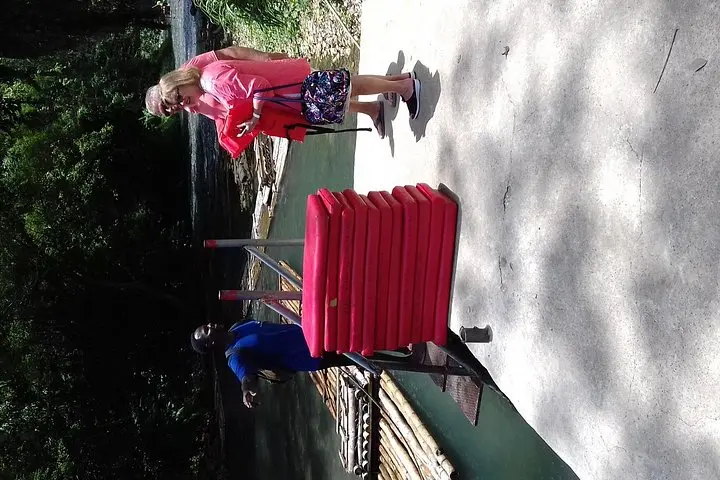
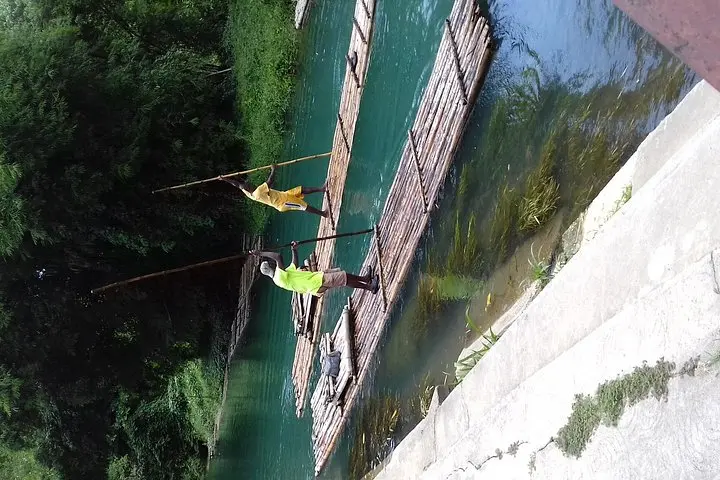
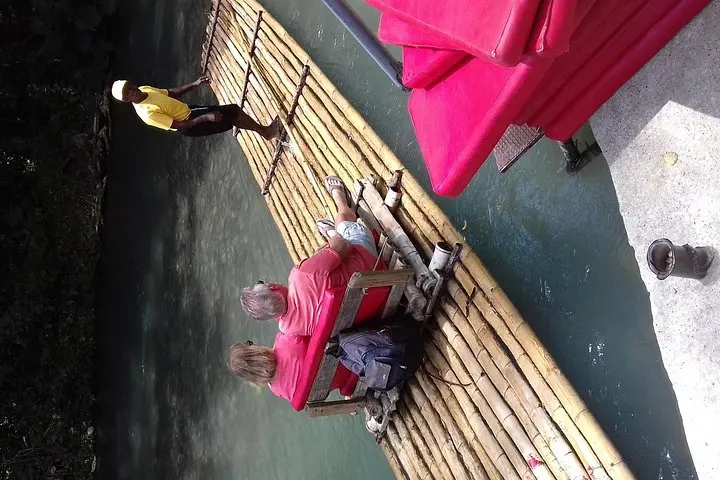
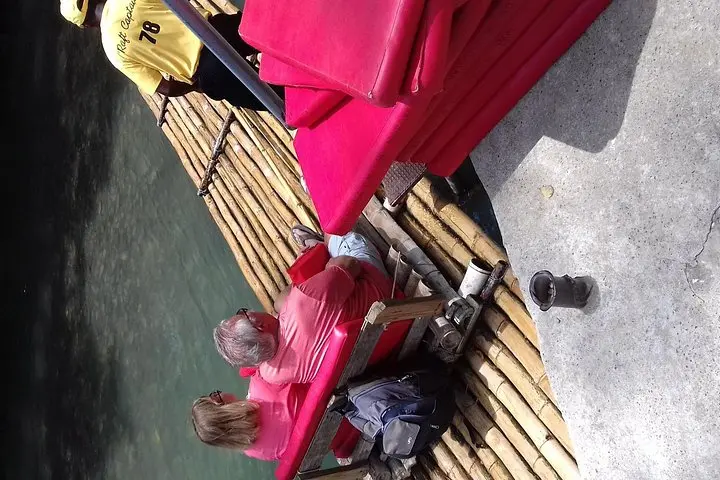
The raft eases away from the manicured bank and the world narrows to river and canopy. Bamboo planks sigh, the pole sings against shoal stones, and the Martha Brae—slow, wide, and obligingly calm—pulls the raft forward as if escorting visitors through a living chapter of Jamaica. Guides who grew up on the river point out medicinal herbs, call out birds perched low in the mangroves, and tell the islanded stories that gave the river its name.
The raft eases away from the manicured bank and the world narrows to river and canopy. Bamboo planks sigh, the pole sings against shoal stones, and the Martha Brae—slow, wide, and obligingly calm—pulls the raft forward as if escorting visitors through a living chapter of Jamaica. Guides who grew up on the river point out medicinal herbs, call out birds perched low in the mangroves, and tell the islanded stories that gave the river its name.
The Martha Brae runs through Trelawny parish, a landscape shaped by limestone and coral uplift. The river's shallow, meandering channel cuts a green corridor through alluvial soil and pockets of karst topography; where cliffs appear, they're older limestone cliffs pocked with solution holes and the occasional cave. The rafting experience at Martha Brae has roots in plantation-era travel—rafts once ferried goods and people—and today it doubles as a cultural doorway: guides recite the Legend of Martha Brae, a local folktale about a runaway slave and an ill-fated romance, while Ms. Martha's herb garden showcases plants Jamaicans have used for generations for teas, poultices, and household remedies.
On the river you notice small things: the current nudging the raft around bends, dragonflies skimming the surface as if daring you to look away, and the faint citrus scent from lemon grass that grows along the bank. The property where rafts launch covers a compact horseshoe-shaped island of lawn and shade—an easy, welcoming stage for the walk through the herb garden and a tasting of welcome fruit drink before boarding.
Practicalities are straightforward. Rafting here is gentle—described as suitable for all fitness levels—and the standard excursion runs roughly 6–8 hours including pickup from Montego Bay, the garden walk, and the three-mile raft downriver. Wear quick-dry shoes, sun protection, and bring a light rain layer during the wet months. Guides provide interpretation, and some groups will stop for an optional swim; lifeguards are not standard, so non-swimmers should stay cautious.
Timing matters: aim for morning departures to avoid afternoon heat and sporadic tropical showers. If you’re interested in herbs and roadside lore, ask to linger in Ms. Martha’s herb garden—staff often demonstrate simple preparations and explain plant uses that speak to Jamaica’s African, Arawak, and European influences.
Conservation here is low-key but present: the operators encourage no-littering and limit group sizes to keep the river quiet. For photographers, the best shots come when the light catches the river’s glass between patches of shade; bring a waterproof pocket for your camera and a wide lens for the canopy-scored landscape. The Martha Brae is not an adrenaline run, but it is a slow-motion introduction to Jamaican ecology and culture—relaxed, informative, and quietly memorable.