THE ADVENTURE COLLECTIVE® · Independent discovery and booking for outdoor travel

Cover Rajasthan’s headline cities in eight days: forts on hilltops, marble memorials, and carved Jain temples linked by scenic drives through the Aravalli foothills. This private tour balances cultural depth with manageable pacing across Jaipur, Pushkar, Jodhpur, Udaipur and Chittorgarh.
Cover Rajasthan’s headline cities in eight days: forts on hilltops, marble memorials, and carved Jain temples linked by scenic drives through the Aravalli foothills. This private tour balances cultural depth with manageable pacing across Jaipur, Pushkar, Jodhpur, Udaipur and Chittorgarh.
You step out of the plane into Jaipur’s warm, dust-bright air and the city unfolds: ochre forts clinging to the hills, a honeycomb of windows on Hawa Mahal, and markets that hum with spices and thread. Over the next eight days you ride in an air-conditioned vehicle across the ancient Aravalli foothills, following caravan routes into Pushkar’s placid lake, the blue-washed lanes of Jodhpur, and the mirror-like waters of Udaipur.
Verified experiences and guided adventures in the surrounding area.
Operated by Jee Tours · Jaipur, Rajasthan
You step out of the plane into Jaipur’s warm, dust-bright air and the city unfolds: ochre forts clinging to the hills, a honeycomb of windows on Hawa Mahal, and markets that hum with spices and thread. Over the next eight days you ride in an air-conditioned vehicle across the ancient Aravalli foothills, following caravan routes into Pushkar’s placid lake, the blue-washed lanes of Jodhpur, and the mirror-like waters of Udaipur.
This loop visits structures that map Rajasthan’s princely past — Amber and Mehrangarh forts, the UNESCO-listed Chittorgarh citadel, and the ornate Ranakpur Jain temple whose 1,444 carved pillars display medieval stonecraft. Geologically the region sits on the Aravalli Range, among India’s oldest folded rocks, which give rise to abrupt escarpments and hilltop citadels that dominated trade and defense for centuries. Cultural notes: expect vibrant bazaars (Johri and Sardar), evening folk performances at Bagore-ki-Haveli, and strict temple dress codes in some Jain and Hindu shrines.
Practical guidance: this is an easy-paced, privately driven itinerary with long transfer days (4–6+ hours). Pack lightweight, respectful clothing for temple visits, comfortable walking shoes for uneven fort and palace floors, sunscreen, and a refillable water bottle. Mornings and late afternoons are best for photography and walking; mid-day drives are useful for covering distance. Book entrance tickets where possible and carry cash for smaller bazaars. If you want shorter drives, ask about customized pick-up points — the route is flexible but distances between cities are substantial.
Private air-conditioned transfers are included as part of the tour package for scheduled pick-up and drop-off points in Jaipur.
Some options include entry tickets and a professional local guide if selected; check your booking option to confirm which sites are covered.
Yes — full clothing covering shoulders and knees is required at several temples; Ranakpur also enforces use of audio guides for foreign visitors.
October to March offers cooler temperatures and clearer skies, making sightseeing and photography more comfortable.
Jee Tours operates guided outdoor trips and adventures with an emphasis on safety, stewardship, and memorable experiences.
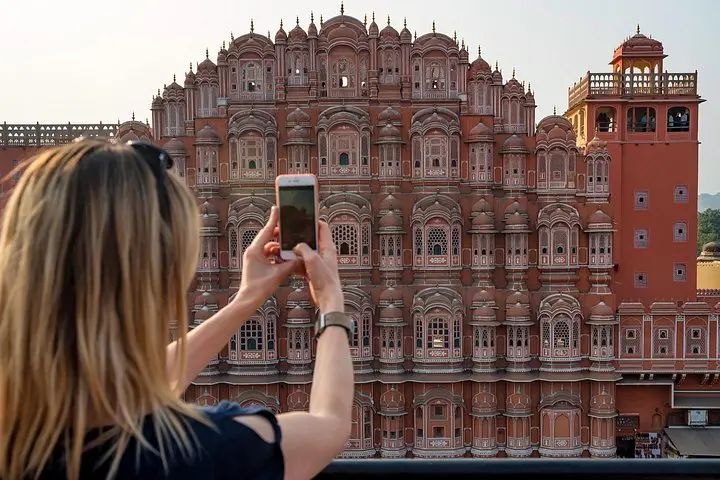
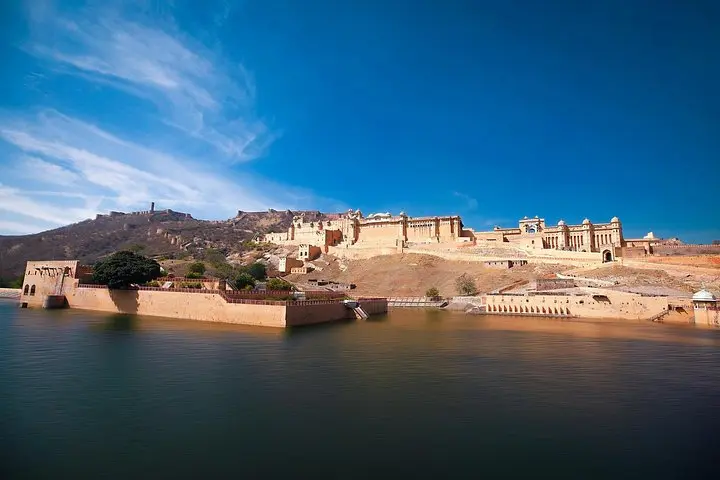
You step out of the plane into Jaipur’s warm, dust-bright air and the city unfolds: ochre forts clinging to the hills, a honeycomb of windows on Hawa Mahal, and markets that hum with spices and thread. Over the next eight days you ride in an air-conditioned vehicle across the ancient Aravalli foothills, following caravan routes into Pushkar’s placid lake, the blue-washed lanes of Jodhpur, and the mirror-like waters of Udaipur.
You step out of the plane into Jaipur’s warm, dust-bright air and the city unfolds: ochre forts clinging to the hills, a honeycomb of windows on Hawa Mahal, and markets that hum with spices and thread. Over the next eight days you ride in an air-conditioned vehicle across the ancient Aravalli foothills, following caravan routes into Pushkar’s placid lake, the blue-washed lanes of Jodhpur, and the mirror-like waters of Udaipur.
This loop visits structures that map Rajasthan’s princely past — Amber and Mehrangarh forts, the UNESCO-listed Chittorgarh citadel, and the ornate Ranakpur Jain temple whose 1,444 carved pillars display medieval stonecraft. Geologically the region sits on the Aravalli Range, among India’s oldest folded rocks, which give rise to abrupt escarpments and hilltop citadels that dominated trade and defense for centuries. Cultural notes: expect vibrant bazaars (Johri and Sardar), evening folk performances at Bagore-ki-Haveli, and strict temple dress codes in some Jain and Hindu shrines.
Practical guidance: this is an easy-paced, privately driven itinerary with long transfer days (4–6+ hours). Pack lightweight, respectful clothing for temple visits, comfortable walking shoes for uneven fort and palace floors, sunscreen, and a refillable water bottle. Mornings and late afternoons are best for photography and walking; mid-day drives are useful for covering distance. Book entrance tickets where possible and carry cash for smaller bazaars. If you want shorter drives, ask about customized pick-up points — the route is flexible but distances between cities are substantial.