THE ADVENTURE COLLECTIVE® · Independent discovery and booking for outdoor travel

Explore a hidden limestone cave with a cold blue pool and a tide-born sand island reachable by short boat ride from Labuan Bajo. This easy, three-hour outing pairs a swim inside a stalactite-ringed grotto with timed stops at a photogenic sandbank.
Explore a hidden limestone cave with a cold blue pool and a tide-born sand island reachable by short boat ride from Labuan Bajo. This easy, three-hour outing pairs a swim inside a stalactite-ringed grotto with timed stops at a photogenic sandbank.
You push off from a small fiberglass boat and the sound of the village slips behind you; the island line of Flores tightens on the horizon. A short ride and a narrow scramble down a carved stone stair reveal a round mouth opening into cool blue water — the cave’s pool is calm, unexpectedly deep, and edged by stalactites that drip in the dim light. Outside, a low sand island appears and disappears with the tide, a photo-ready crescent that the guide times with the day.
Verified experiences and guided adventures in the surrounding area.
Operated by Gili Recommended · Labuan Bajo, East Nusa Tenggara
You push off from a small fiberglass boat and the sound of the village slips behind you; the island line of Flores tightens on the horizon. A short ride and a narrow scramble down a carved stone stair reveal a round mouth opening into cool blue water — the cave’s pool is calm, unexpectedly deep, and edged by stalactites that drip in the dim light. Outside, a low sand island appears and disappears with the tide, a photo-ready crescent that the guide times with the day.
Geologically this is a coastal karst hole; decades of wave action and solution have hollowed the limestone, leaving a sheltered sink of aquamarine fed by seawater and rain. The area around Labuan Bajo has long been a maritime crossroads — local fishing communities and Komodo-era sailors have used these coves for shelter and provisioning.
Expect to swim in cold, clear water, wade onto tidal sand banks when conditions allow, and move carefully on wet rock and carved steps. Guides typically provide snorkel gear and a short orientation before entry. The experience is less a strenuous expedition than a hands-on encounter with coastal geology and a chance to photograph a rare tidal feature.
Practical notes: plan for calm seas (the sand island is tide-dependent), wear water shoes with grip, bring a dry bag and reef-safe sunscreen, and allow roughly three hours including boat transit and time at the cave. If you have mobility or cardiovascular concerns, check restrictions — the approach requires a brief climb and pool swim. Early mornings and late afternoons offer softer light and fewer boats, improving both photos and water clarity.
The tour is approximately three hours total, including short boat transfers, time at the cave, and any stop at the sand island.
Yes—snorkeling equipment is listed as included, but you may bring your own mask if you prefer.
Non-swimmers can enjoy the cave edges and sand island but should wear a life vest and stay within the guide’s designated safe zones; swimming into the pool requires basic comfort in water.
The sand island is tide-dependent and usually visible at low tide; guides plan visits around tide charts but visibility cannot be guaranteed.
Gili Recommended operates guided outdoor trips and adventures with an emphasis on safety, stewardship, and memorable experiences.
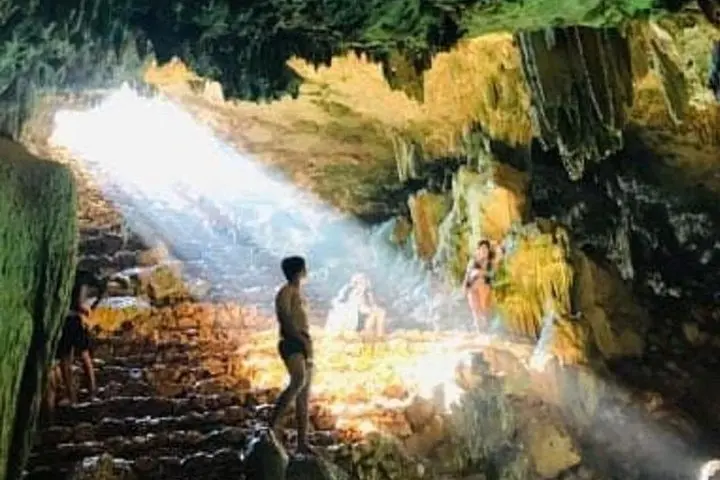

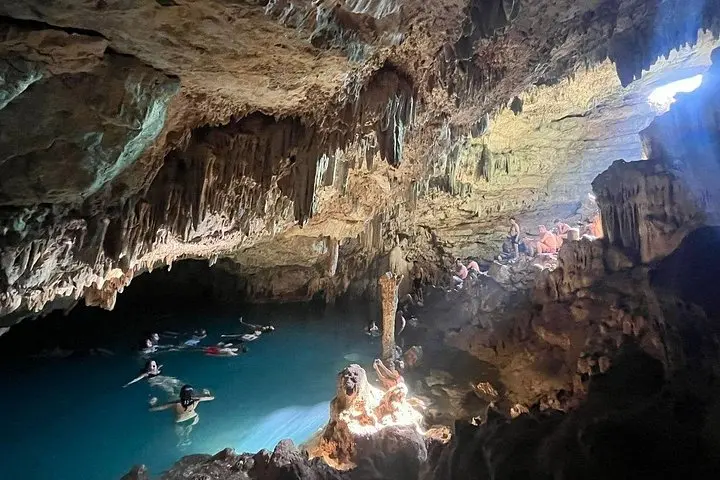
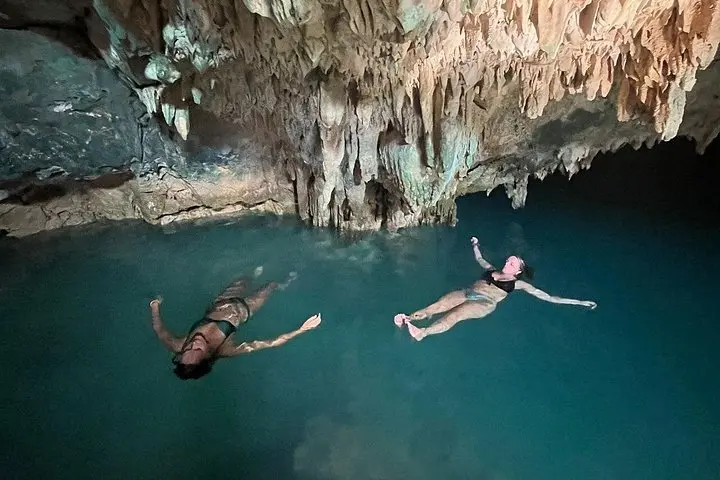
You push off from a small fiberglass boat and the sound of the village slips behind you; the island line of Flores tightens on the horizon. A short ride and a narrow scramble down a carved stone stair reveal a round mouth opening into cool blue water — the cave’s pool is calm, unexpectedly deep, and edged by stalactites that drip in the dim light. Outside, a low sand island appears and disappears with the tide, a photo-ready crescent that the guide times with the day.
You push off from a small fiberglass boat and the sound of the village slips behind you; the island line of Flores tightens on the horizon. A short ride and a narrow scramble down a carved stone stair reveal a round mouth opening into cool blue water — the cave’s pool is calm, unexpectedly deep, and edged by stalactites that drip in the dim light. Outside, a low sand island appears and disappears with the tide, a photo-ready crescent that the guide times with the day.
Geologically this is a coastal karst hole; decades of wave action and solution have hollowed the limestone, leaving a sheltered sink of aquamarine fed by seawater and rain. The area around Labuan Bajo has long been a maritime crossroads — local fishing communities and Komodo-era sailors have used these coves for shelter and provisioning.
Expect to swim in cold, clear water, wade onto tidal sand banks when conditions allow, and move carefully on wet rock and carved steps. Guides typically provide snorkel gear and a short orientation before entry. The experience is less a strenuous expedition than a hands-on encounter with coastal geology and a chance to photograph a rare tidal feature.
Practical notes: plan for calm seas (the sand island is tide-dependent), wear water shoes with grip, bring a dry bag and reef-safe sunscreen, and allow roughly three hours including boat transit and time at the cave. If you have mobility or cardiovascular concerns, check restrictions — the approach requires a brief climb and pool swim. Early mornings and late afternoons offer softer light and fewer boats, improving both photos and water clarity.