THE ADVENTURE COLLECTIVE® · Independent discovery and booking for outdoor travel

Spend two days chasing tigers and exploring Ranthambore Fort’s rocky ridges. This practical guide covers what to expect on morning safaris, logistics from Jaipur, and how to prepare for high-quality wildlife viewing.
Spend two days chasing tigers and exploring Ranthambore Fort’s rocky ridges. This practical guide covers what to expect on morning safaris, logistics from Jaipur, and how to prepare for high-quality wildlife viewing.
Before dawn the jeep rumbles along a ribbon of cracked tarmac, the Vindhya-Aravalli skyline pale behind a scatter of granite outcrops. Early light picks out scrub, tamarind and the glossy backs of peafowl as the forest stirs; this is Ranthambore — an old landscape where stones, waterholes and the occasional tiger share center stage.
Verified experiences and guided adventures in the surrounding area.
Operated by Rajasthan Dream Vacations · Sawai Madhopur, Rajasthan
Before dawn the jeep rumbles along a ribbon of cracked tarmac, the Vindhya-Aravalli skyline pale behind a scatter of granite outcrops. Early light picks out scrub, tamarind and the glossy backs of peafowl as the forest stirs; this is Ranthambore — an old landscape where stones, waterholes and the occasional tiger share center stage.
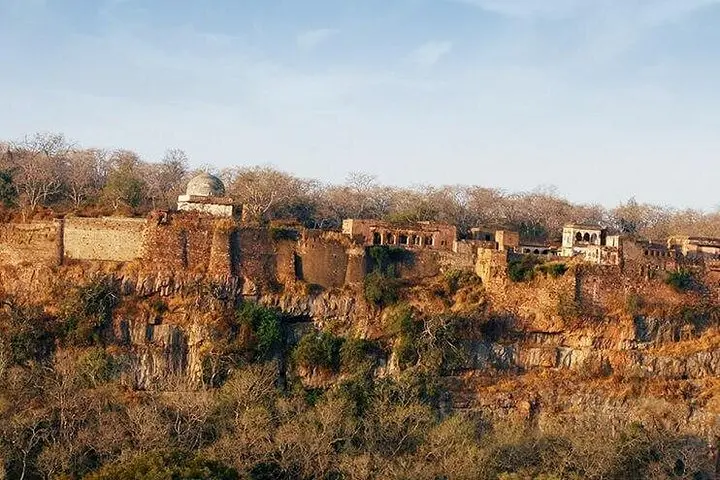
The park sits on terrain shaped by the Aravali and Vindhya ranges, with sandstone ridges, seasonal lakes and dry deciduous forest covering roughly 392 sq km. Ranthambore Fort, rising within the park, dates to Chauhan rule in the 10th century and anchors the area’s layered human history — from hunting grounds to one of India’s flagship tiger reserves.
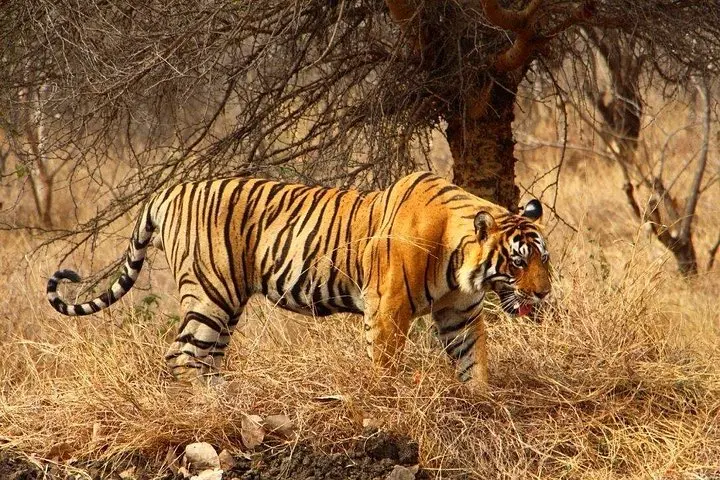
Wildlife here centers on the Bengal tiger, but chinkara, sambar, spotted deer and over 300 bird species animate the scrub and water margins. Cultural touches in nearby Sawai Madhopur—markets, Rajasthani cuisine and railway-era bungalows—make for straightforward logistics and an immediate sense of place.
Practically: most itineraries start in Jaipur (about 140 km, 3–4 hours by road) with a private transfer to Sawai Madhopur and two scheduled park drives (commonly 3–4 hours each). Book early-morning safaris for the best light and sightings; travel light, wear neutral colors, bring binoculars, and keep voices low. Tickets and permits are required for each drive and mobile tickets are accepted. Respect park rules: no feeding, stay seated in the vehicle, and follow your guide’s instructions. With basic planning and patience, two days here deliver focused wildlife viewing, a slice of Rajput history and the dry, compelling rhythms of north Indian forest country.
No—tiger sightings are never guaranteed. Two well-timed drives improve your odds, but sightings depend on animal movement and park conditions.
The road distance is about 130–150 km and typically takes 3–4 hours by car, depending on traffic and route.
Vehicle capacity varies—jeeps/gypsies usually seat 5–7 people; canters hold more. Private tour options may use dedicated vehicles for transfers but park vehicles follow reserve rules.
Ticket inclusion depends on the booking option; mobile tickets are accepted and you must carry valid ID for entry to the park.
Rajasthan Dream Vacations operates guided outdoor trips and adventures with an emphasis on safety, stewardship, and memorable experiences.

Before dawn the jeep rumbles along a ribbon of cracked tarmac, the Vindhya-Aravalli skyline pale behind a scatter of granite outcrops. Early light picks out scrub, tamarind and the glossy backs of peafowl as the forest stirs; this is Ranthambore — an old landscape where stones, waterholes and the occasional tiger share center stage.
Before dawn the jeep rumbles along a ribbon of cracked tarmac, the Vindhya-Aravalli skyline pale behind a scatter of granite outcrops. Early light picks out scrub, tamarind and the glossy backs of peafowl as the forest stirs; this is Ranthambore — an old landscape where stones, waterholes and the occasional tiger share center stage.
The park sits on terrain shaped by the Aravali and Vindhya ranges, with sandstone ridges, seasonal lakes and dry deciduous forest covering roughly 392 sq km. Ranthambore Fort, rising within the park, dates to Chauhan rule in the 10th century and anchors the area’s layered human history — from hunting grounds to one of India’s flagship tiger reserves.
Wildlife here centers on the Bengal tiger, but chinkara, sambar, spotted deer and over 300 bird species animate the scrub and water margins. Cultural touches in nearby Sawai Madhopur—markets, Rajasthani cuisine and railway-era bungalows—make for straightforward logistics and an immediate sense of place.
Practically: most itineraries start in Jaipur (about 140 km, 3–4 hours by road) with a private transfer to Sawai Madhopur and two scheduled park drives (commonly 3–4 hours each). Book early-morning safaris for the best light and sightings; travel light, wear neutral colors, bring binoculars, and keep voices low. Tickets and permits are required for each drive and mobile tickets are accepted. Respect park rules: no feeding, stay seated in the vehicle, and follow your guide’s instructions. With basic planning and patience, two days here deliver focused wildlife viewing, a slice of Rajput history and the dry, compelling rhythms of north Indian forest country.