THE ADVENTURE COLLECTIVE® · Independent discovery and booking for outdoor travel

Photograph moai under dark southern skies on Easter Island. This combined stargazing and astrophotography tour pairs cultural context with hands-on camera coaching at Anakena or Ahu Tongariki.
Photograph moai under dark southern skies on Easter Island. This combined stargazing and astrophotography tour pairs cultural context with hands-on camera coaching at Anakena or Ahu Tongariki.
The night opens slowly over Rapa Nui: a black ocean rim, a low island silhouette, and the moai platforms turning into dark cutouts against an arriving band of stars. On this combination tour you move between shore and stone—Anakena's pale sand and Ahu Tongariki's 15-stone line—waiting for the sky to pull its curtain back so your camera can record the show.
Verified experiences and guided adventures in the surrounding area.
Operated by Rapa Nui Stargazing · Hanga Roa, Valparaíso Region
The night opens slowly over Rapa Nui: a black ocean rim, a low island silhouette, and the moai platforms turning into dark cutouts against an arriving band of stars. On this combination tour you move between shore and stone—Anakena's pale sand and Ahu Tongariki's 15-stone line—waiting for the sky to pull its curtain back so your camera can record the show.
The island's carved heads are the work of Polynesian settlers from a thousand years ago; their placement on ahu (stone platforms) follows both ritual and coastal sightlines. The geology is raw—recent volcanic cones and fossilized coral around the bays—so views are uninterrupted by tall trees and light pollution, which makes Rapa Nui one of the southern hemisphere's clearer stargazing venues.
Expect a mix of cultural context and technical coaching: guides discuss traditional navigation and the meaning of the moai while helping with exposure, composition, and long exposures. Sessions target either a single iconic platform at night or a dawn-into-sunrise shoot; national park permits are required for some sites, so plan ahead.
Practicalities are straightforward—short drives from Hanga Roa, minimal hiking, and long static periods waiting for exposures. Bring a full battery set, a solid tripod, a headlamp with red filter, and warm layers for late-night wind. Time your visit for new-moon windows for best Milky Way contrast and let the island's silence sharpen both your lens and your attention.
Yes—access to some ahu at night requires a Parque Nacional Rapa Nui permit; organizers may request proof, so buy it online in advance.
Yes—guides focus on photography and will advise on exposure, ISO, focus techniques, and composition for night and sunrise shots.
Suitable for beginners with basic camera familiarity; guides provide coaching, but learning long-exposure techniques beforehand speeds progress.
Tour operators typically email a selection of edited photos within several days; internet on Rapa Nui can be slow, so delivery may take longer.
Rapa Nui Stargazing operates guided outdoor trips and adventures with an emphasis on safety, stewardship, and memorable experiences.
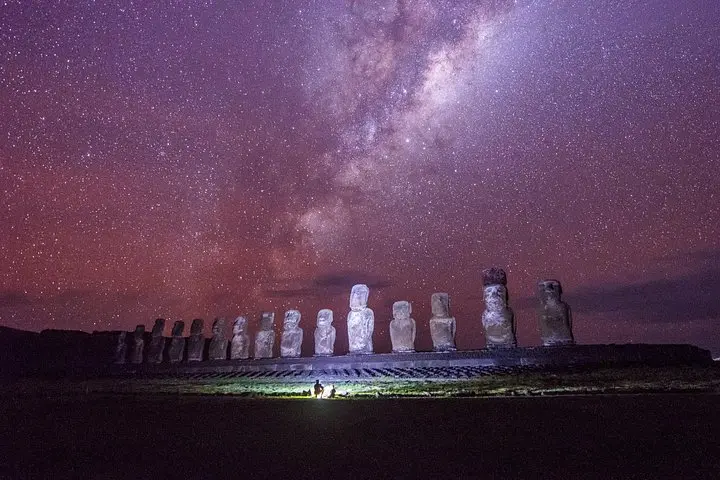
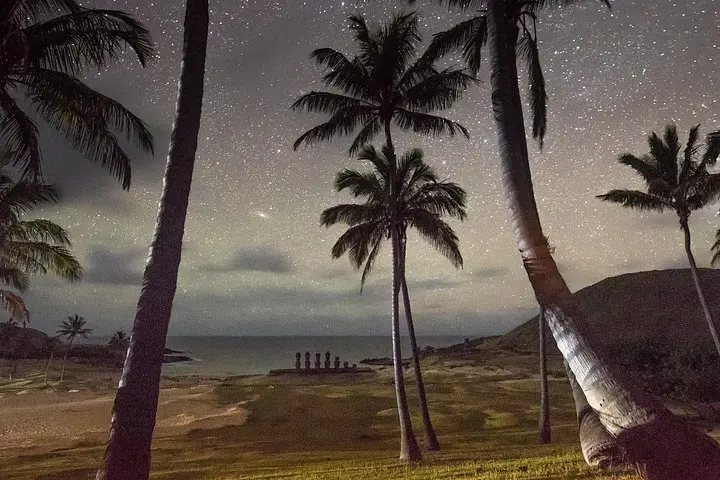
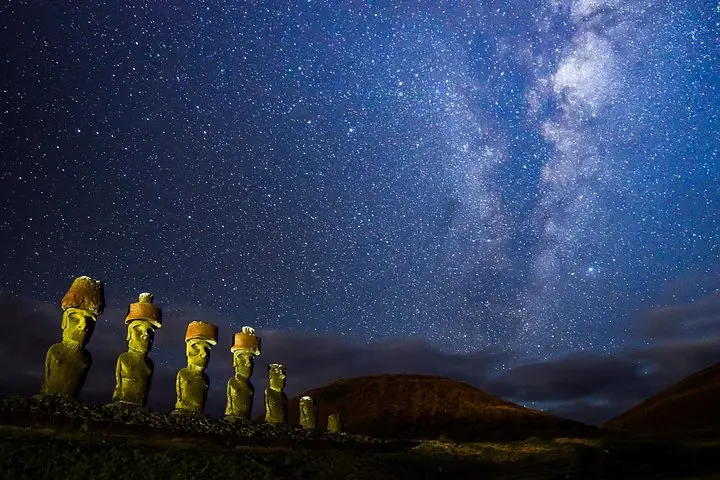
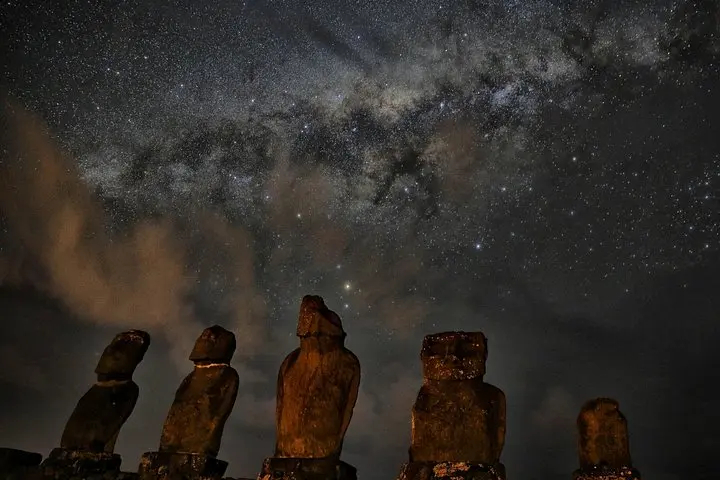
The night opens slowly over Rapa Nui: a black ocean rim, a low island silhouette, and the moai platforms turning into dark cutouts against an arriving band of stars. On this combination tour you move between shore and stone—Anakena's pale sand and Ahu Tongariki's 15-stone line—waiting for the sky to pull its curtain back so your camera can record the show.
The night opens slowly over Rapa Nui: a black ocean rim, a low island silhouette, and the moai platforms turning into dark cutouts against an arriving band of stars. On this combination tour you move between shore and stone—Anakena's pale sand and Ahu Tongariki's 15-stone line—waiting for the sky to pull its curtain back so your camera can record the show.
The island's carved heads are the work of Polynesian settlers from a thousand years ago; their placement on ahu (stone platforms) follows both ritual and coastal sightlines. The geology is raw—recent volcanic cones and fossilized coral around the bays—so views are uninterrupted by tall trees and light pollution, which makes Rapa Nui one of the southern hemisphere's clearer stargazing venues.
Expect a mix of cultural context and technical coaching: guides discuss traditional navigation and the meaning of the moai while helping with exposure, composition, and long exposures. Sessions target either a single iconic platform at night or a dawn-into-sunrise shoot; national park permits are required for some sites, so plan ahead.
Practicalities are straightforward—short drives from Hanga Roa, minimal hiking, and long static periods waiting for exposures. Bring a full battery set, a solid tripod, a headlamp with red filter, and warm layers for late-night wind. Time your visit for new-moon windows for best Milky Way contrast and let the island's silence sharpen both your lens and your attention.