THE ADVENTURE COLLECTIVE® · Independent discovery and booking for outdoor travel

See Easter Island’s signature sites in a compact, guided loop: the offshore-facing moai of Ahu Akivi, the red scoria quarry at Puna Pau, and the restored waterfront platforms at Tahai. Ideal for travelers wanting a concise introduction to Rapa Nui’s archaeology, geology, and coastal views.
See Easter Island’s signature sites in a compact, guided loop: the offshore-facing moai of Ahu Akivi, the red scoria quarry at Puna Pau, and the restored waterfront platforms at Tahai. Ideal for travelers wanting a concise introduction to Rapa Nui’s archaeology, geology, and coastal views.
You step off an air-conditioned van into wind-swept light, the Pacific daring you to look farther. In the space of an hour the island reads like a compact chapter of Polynesian history: volcanic cones, quarries, and stone figures that still hold a quiet, stubborn presence by the shore.
Verified experiences and guided adventures in the surrounding area.
Operated by Maururu Travel · Hanga Roa, Valparaíso Region
You step off an air-conditioned van into wind-swept light, the Pacific daring you to look farther. In the space of an hour the island reads like a compact chapter of Polynesian history: volcanic cones, quarries, and stone figures that still hold a quiet, stubborn presence by the shore.
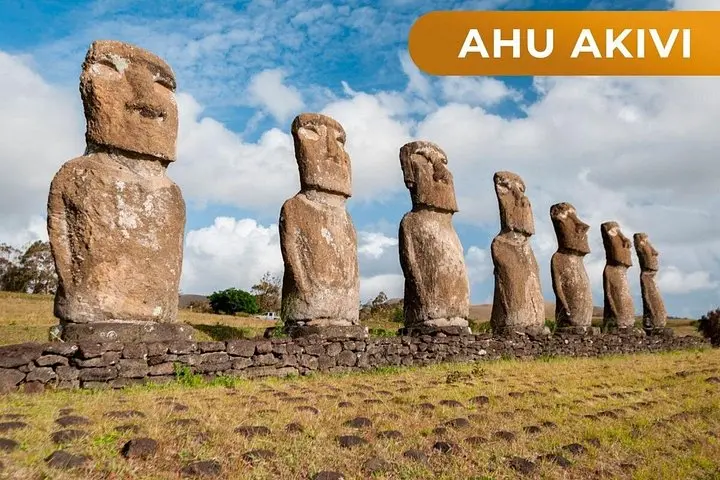
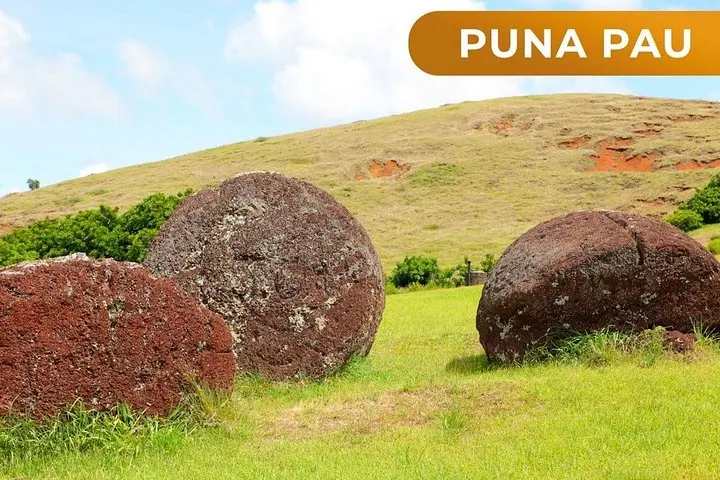
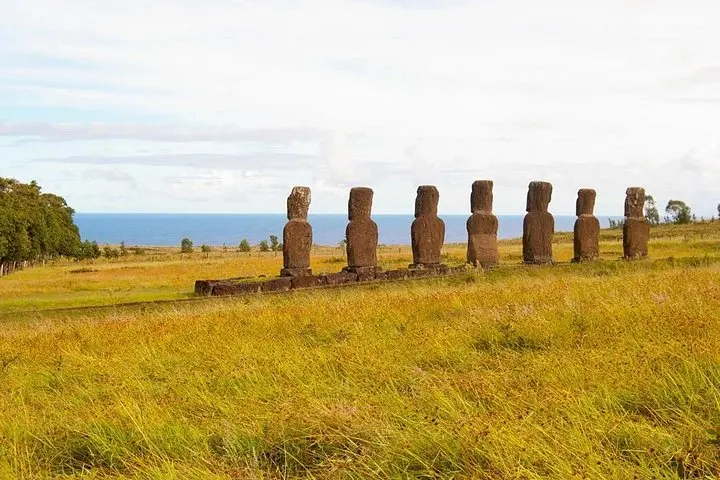
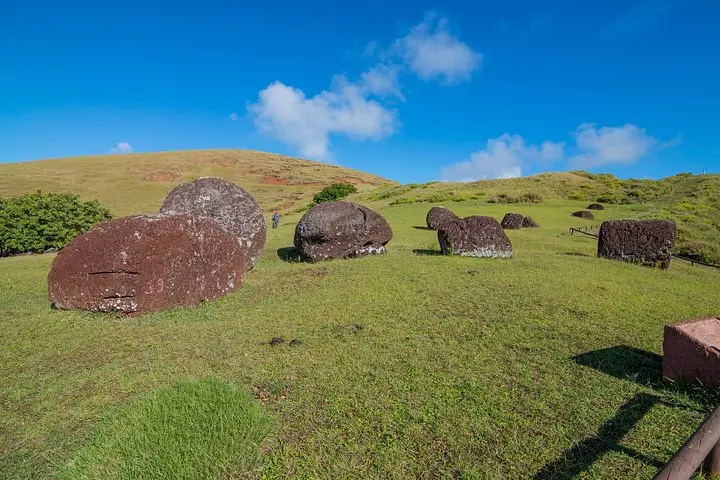
This short loop visits three signatures of Rapa Nui culture. Ahu Akivi presents the only seven moai oriented offshore, traditionally tied to King Hotu Matu'a and the island’s voyaging origin stories. Puna Pau is a small scoria quarry where the red stone pukaos—the rounded headdresses—were shaped and moved across rough terrain. Tahai is a restored complex of platforms and statues that gives a clear sense of ritual placement and past coastal life.
Geologically the island is young volcanic rock: basalt and red scoria cut by shallow quarries and wind-carved slopes. Culturally, the moai are both ancestor figures and markers of community authority; the sites you visit were political and ceremonial centers as much as artistic achievements.
Practically, expect short, mostly level walks between viewpoint areas, uneven packed-earth surfaces, and exposed sun. The tour runs about 45–60 minutes with hotel pickup included; guides provide context but keep the pace accessible. Bring sun protection, a refillable water bottle, and a respectful attitude—these sites are fragile and managed under conservation protocols. Morning or late-afternoon light is best for photography and for fewer crowds. For travelers wanting a compact primer on Rapa Nui’s archaeology, geology and coastal drama, this half-day loop delivers a concentrated, well-guided introduction without strenuous hiking.
The tour runs about 45–60 minutes and visits Puna Pau quarry, Ahu Akivi, and the restored Tahai complex.
Yes—hotel pickup is listed among the inclusions; vehicles are air-conditioned.
The tour is rated easy and suitable for most fitness levels; infants must sit on laps. Some sites have uneven surfaces that may challenge wheelchair users.
Photography is allowed, but climbing on or touching moai and ahu is prohibited to protect fragile stone and ongoing restoration efforts.
Maururu Travel operates guided outdoor trips and adventures with an emphasis on safety, stewardship, and memorable experiences.
You step off an air-conditioned van into wind-swept light, the Pacific daring you to look farther. In the space of an hour the island reads like a compact chapter of Polynesian history: volcanic cones, quarries, and stone figures that still hold a quiet, stubborn presence by the shore.
You step off an air-conditioned van into wind-swept light, the Pacific daring you to look farther. In the space of an hour the island reads like a compact chapter of Polynesian history: volcanic cones, quarries, and stone figures that still hold a quiet, stubborn presence by the shore.
This short loop visits three signatures of Rapa Nui culture. Ahu Akivi presents the only seven moai oriented offshore, traditionally tied to King Hotu Matu'a and the island’s voyaging origin stories. Puna Pau is a small scoria quarry where the red stone pukaos—the rounded headdresses—were shaped and moved across rough terrain. Tahai is a restored complex of platforms and statues that gives a clear sense of ritual placement and past coastal life.
Geologically the island is young volcanic rock: basalt and red scoria cut by shallow quarries and wind-carved slopes. Culturally, the moai are both ancestor figures and markers of community authority; the sites you visit were political and ceremonial centers as much as artistic achievements.
Practically, expect short, mostly level walks between viewpoint areas, uneven packed-earth surfaces, and exposed sun. The tour runs about 45–60 minutes with hotel pickup included; guides provide context but keep the pace accessible. Bring sun protection, a refillable water bottle, and a respectful attitude—these sites are fragile and managed under conservation protocols. Morning or late-afternoon light is best for photography and for fewer crowds. For travelers wanting a compact primer on Rapa Nui’s archaeology, geology and coastal drama, this half-day loop delivers a concentrated, well-guided introduction without strenuous hiking.