
Rapa Nui Private Full Day Tour — Complete Island Circuit: Rano Raraku to Anakena
Cover the island’s signature sites in a single day: Rano Raraku’s quarry, the towering Ahu Tongariki, Orongo’s ceremonial rim and the coral beach of Anakena. This private full‑day tour blends geology, living culture and short walks for a compact Rapa Nui immersion.
An Adventure In Hanga Roa.
Cover the island’s signature sites in a single day: Rano Raraku’s quarry, the towering Ahu Tongariki, Orongo’s ceremonial rim and the coral beach of Anakena. This private full‑day tour blends geology, living culture and short walks for a compact Rapa Nui immersion.
Read the full experience
You step off the vehicle onto wind-swept volcanic soil; the Pacific presses against the cliffs and the first moai stare out over the ocean. A private full-day circuit on Rapa Nui (Easter Island) moves at a deliberate pace—short walks between vast open sites, close-up views of carved stone faces, and a late-afternoon break on white coral sand.
You step off the vehicle onto wind-swept volcanic soil; the Pacific presses against the cliffs and the first moai stare out over the ocean. A private full-day circuit on Rapa Nui (Easter Island) moves at a deliberate pace—short walks between vast open sites, close-up views of carved stone faces, and a late-afternoon break on white coral sand.
Geology and human history are braided here. Rano Raraku is a volcanic quarry where almost every stage of moai production can be read in the rock; Ahu Tongariki’s restored platform illustrates monumental engineering and post-contact recovery. Orongo sits on the rim of Rano Kau, its petroglyphs and stone houses speaking to the Birdman cult that rose as island society shifted. Anakena’s coral sand and palm-shaded platform Ahu Nau Nau recall origin myths of Hotu Matu’a and the island’s Polynesian ties.
On a practical level the tour is accessible: short, maintained paths, guided interpretive stops, and vehicle transfers limit long hikes but do require getting on and off a van several times. Expect sun, wind and sudden showers; bring layers, sun protection and a water bottle.
Timing matters—early light at Tongariki and afternoon warmth at Anakena are different experiences. Respect roped areas and local protocols: moai are fragile cultural monuments.
For photographers, plan lens choices (wide for platforms, telephoto for crater details). For travelers, carry your passport (entrance and conservation checks), move at the guide’s pace, and leave no trace—these sites are best preserved when visitors stay on paths and keep curiosity hands-off.
Frequently asked questions
Yes—many archaeological sites fall within Rapa Nui National Park; a park pass or fee is required and helps fund conservation.
Yes, Anakena has calm, warm waters suitable for swimming, but always check local conditions and currents before entering.
The tour accommodates families—short site walks and vehicle transfers make it manageable, though some paths are uneven and not fully stroller-friendly.
Flights depart mainland Chile (Santiago) to Mataveri Airport on Rapa Nui—book in advance, especially in high season; flight time is roughly 5–6 hours from Santiago.
About This Experience
Kapua Tours & Experience operates guided outdoor trips and adventures with an emphasis on safety, stewardship, and memorable experiences.
Adventure tips
Recommended gear
- Sun hat and sunglasses: Shields eyes and face from strong equatorial sun and glare off volcanic rock.
- Reusable water bottle: Staying hydrated through the day’s stops keeps energy steady under sun and wind.
- Light waterproof/windbreaker: Protects against sudden coastal showers and persistent trade winds on exposed rims.
- Sturdy walking shoes: Provides traction on uneven quarry tracks, grassy slopes and coastal rock.
Photos of the experience
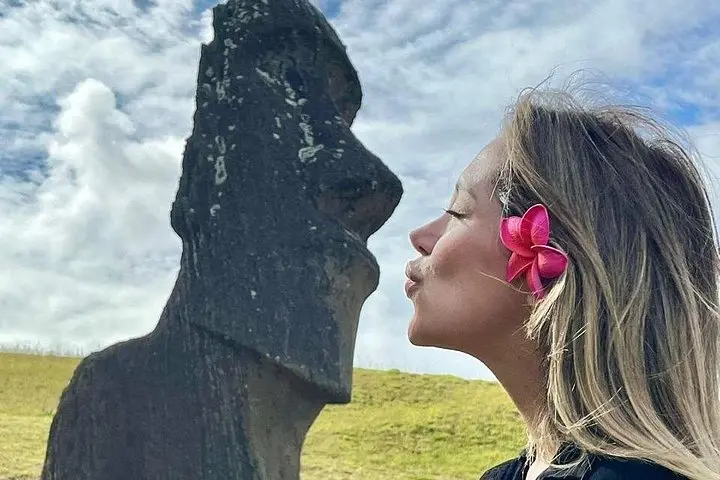
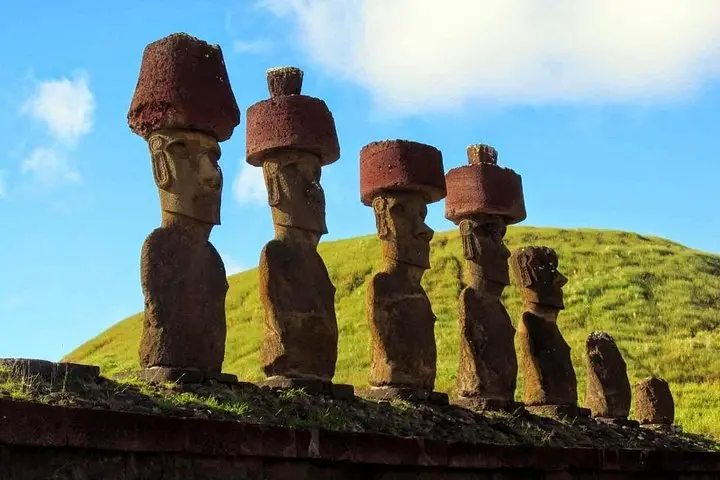
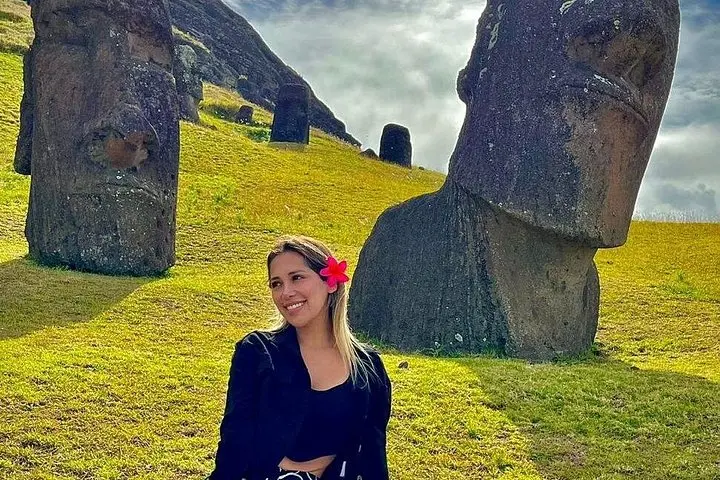

Related adventures & guides
Read the full experience
You step off the vehicle onto wind-swept volcanic soil; the Pacific presses against the cliffs and the first moai stare out over the ocean. A private full-day circuit on Rapa Nui (Easter Island) moves at a deliberate pace—short walks between vast open sites, close-up views of carved stone faces, and a late-afternoon break on white coral sand.
You step off the vehicle onto wind-swept volcanic soil; the Pacific presses against the cliffs and the first moai stare out over the ocean. A private full-day circuit on Rapa Nui (Easter Island) moves at a deliberate pace—short walks between vast open sites, close-up views of carved stone faces, and a late-afternoon break on white coral sand.
Geology and human history are braided here. Rano Raraku is a volcanic quarry where almost every stage of moai production can be read in the rock; Ahu Tongariki’s restored platform illustrates monumental engineering and post-contact recovery. Orongo sits on the rim of Rano Kau, its petroglyphs and stone houses speaking to the Birdman cult that rose as island society shifted. Anakena’s coral sand and palm-shaded platform Ahu Nau Nau recall origin myths of Hotu Matu’a and the island’s Polynesian ties.
On a practical level the tour is accessible: short, maintained paths, guided interpretive stops, and vehicle transfers limit long hikes but do require getting on and off a van several times. Expect sun, wind and sudden showers; bring layers, sun protection and a water bottle.
Timing matters—early light at Tongariki and afternoon warmth at Anakena are different experiences. Respect roped areas and local protocols: moai are fragile cultural monuments.
For photographers, plan lens choices (wide for platforms, telephoto for crater details). For travelers, carry your passport (entrance and conservation checks), move at the guide’s pace, and leave no trace—these sites are best preserved when visitors stay on paths and keep curiosity hands-off.
Make a day of it nearby.
Verified experiences and guided adventures in the surrounding area.