THE ADVENTURE COLLECTIVE® · Independent discovery and booking for outdoor travel

Descend into Raufarhólshellir, one of Iceland’s longest lava tubes, and trace the path of molten rock from an eruption 5,200 years ago. This accessible, one-hour tour pairs geology with practical logistics for travelers based in Reykjavík.
Descend into Raufarhólshellir, one of Iceland’s longest lava tubes, and trace the path of molten rock from an eruption 5,200 years ago. This accessible, one-hour tour pairs geology with practical logistics for travelers based in Reykjavík.
You step away from the coastal breeze and into a cool, stone corridor where darkness still remembers the heat that carved it. The passage narrows, platforms lift you above rough pahoehoe floor, and the guide's light picks out rope-like lava textures coiled along the ceiling. For roughly an hour you move through a place where molten rock once pushed like a living thing through underground channels.
Verified experiences and guided adventures in the surrounding area.
Operated by Raufarhólshellir · Hveragerði, Southern Region
You step away from the coastal breeze and into a cool, stone corridor where darkness still remembers the heat that carved it. The passage narrows, platforms lift you above rough pahoehoe floor, and the guide's light picks out rope-like lava textures coiled along the ceiling. For roughly an hour you move through a place where molten rock once pushed like a living thing through underground channels.
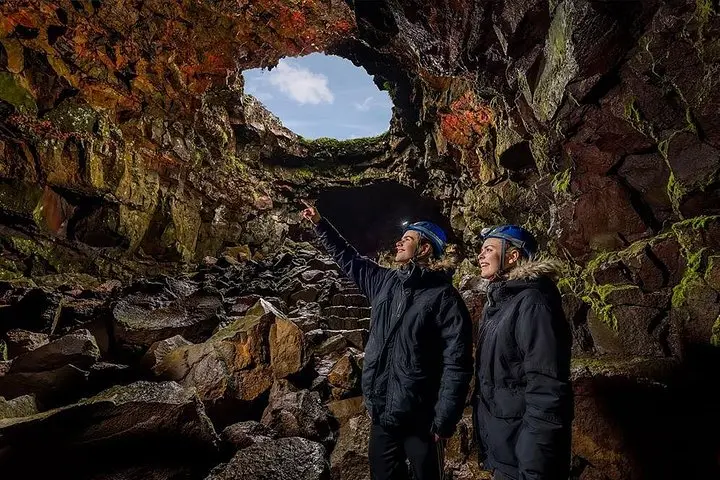
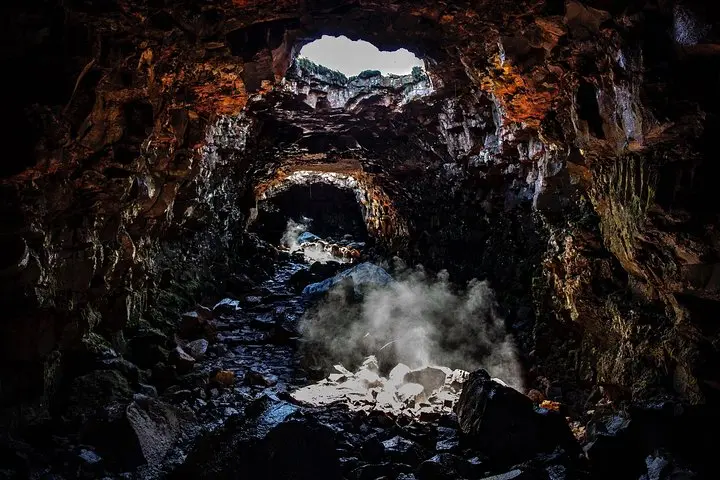
Raufarhólshellir formed during the Leitahraun eruption about 5,200 years ago; the tunnel preserves flow features—lava ropes, collapse skylights, and layered benches—that tell the story of Iceland’s fire and ice. The site sits close to Hveragerði and Reykjavík, in a landscape scarred by repeated volcanic events that shaped the Reykjanes region. Local guides connect geology to human use: how early farmers navigated volcanic fields and how modern communities harness geothermal heat nearby.
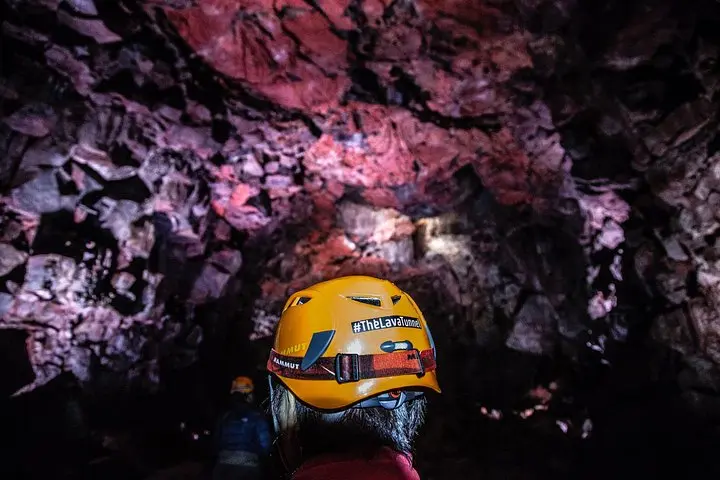
Practically, the tour is short and accessible: well-lit platforms and stairs reduce scrambling, but surfaces are uneven and damp. Helmets and headlamps are provided; bring sturdy, closed-toe shoes and a waterproof layer. Expect a steady 5–10°C (41–50°F) inside year-round, and plan transportation—this tour requires self-driving to the site. Photography is welcome but be mindful of tripods and group flow. Respect the cave: stay on walkways, follow the guide, and leave nothing behind. In one compact hour you gain a tactile lesson in volcanic mechanics and a vivid counterpoint to Iceland’s open-air glaciers and hot rivers.
Temperatures inside generally stay around 5–10°C (41–50°F), cooler than outside in summer but milder than winter air.
Yes—helmets and headlamps are included in the tour price; you only need to bring appropriate footwear and outer layers.
The walk is rated easy but includes uneven ground and stairs; it’s not recommended for children under 3 or guests with serious back, knee, or mobility limitations.
Photography is allowed; use group courtesy—avoid blocking walkways with tripods and follow guide directions about lighting to protect features.
Raufarhólshellir operates guided outdoor trips and adventures with an emphasis on safety, stewardship, and memorable experiences.
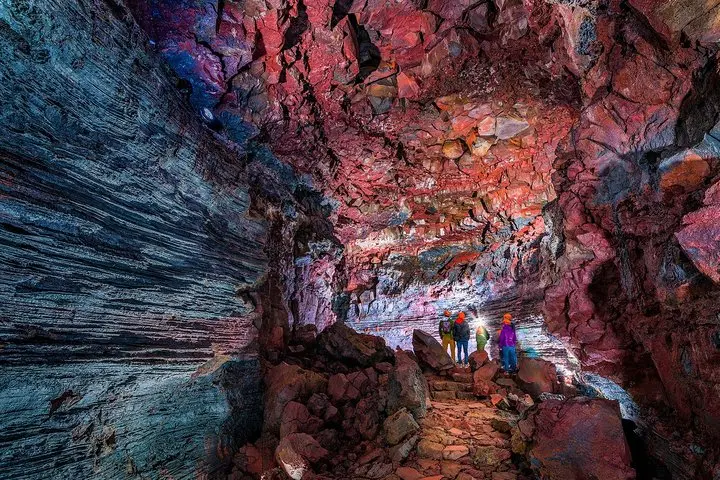
You step away from the coastal breeze and into a cool, stone corridor where darkness still remembers the heat that carved it. The passage narrows, platforms lift you above rough pahoehoe floor, and the guide's light picks out rope-like lava textures coiled along the ceiling. For roughly an hour you move through a place where molten rock once pushed like a living thing through underground channels.
You step away from the coastal breeze and into a cool, stone corridor where darkness still remembers the heat that carved it. The passage narrows, platforms lift you above rough pahoehoe floor, and the guide's light picks out rope-like lava textures coiled along the ceiling. For roughly an hour you move through a place where molten rock once pushed like a living thing through underground channels.
Raufarhólshellir formed during the Leitahraun eruption about 5,200 years ago; the tunnel preserves flow features—lava ropes, collapse skylights, and layered benches—that tell the story of Iceland’s fire and ice. The site sits close to Hveragerði and Reykjavík, in a landscape scarred by repeated volcanic events that shaped the Reykjanes region. Local guides connect geology to human use: how early farmers navigated volcanic fields and how modern communities harness geothermal heat nearby.
Practically, the tour is short and accessible: well-lit platforms and stairs reduce scrambling, but surfaces are uneven and damp. Helmets and headlamps are provided; bring sturdy, closed-toe shoes and a waterproof layer. Expect a steady 5–10°C (41–50°F) inside year-round, and plan transportation—this tour requires self-driving to the site. Photography is welcome but be mindful of tripods and group flow. Respect the cave: stay on walkways, follow the guide, and leave nothing behind. In one compact hour you gain a tactile lesson in volcanic mechanics and a vivid counterpoint to Iceland’s open-air glaciers and hot rivers.