THE ADVENTURE COLLECTIVE® · Independent discovery and booking for outdoor travel

Paddle the turquoise arms of Resurrection Bay from a private beach on Lowell Road and meet sea otters, harbor seals and spawning salmon up close. This accessible 3.5–4 hour outing pairs easy paddling with rich natural and cultural context for first-timers and time‑pressed travelers.
Paddle the turquoise arms of Resurrection Bay from a private beach on Lowell Road and meet sea otters, harbor seals and spawning salmon up close. This accessible 3.5–4 hour outing pairs easy paddling with rich natural and cultural context for first-timers and time‑pressed travelers.
The van eases off the paved street and the world opens: a gravel ribbon of Lowell Road, a coastline of cobalt and turquoise, mountains that descend into water. Guides point out the flats where tide and current fight, and the driver-guide narrates a Seward that is at once maritime village and gateway—homes clinging to the shoreline, a working harbor, and the long sweep of Resurrection Bay daring you to cross it.
Verified experiences and guided adventures in the surrounding area.
Operated by Sunny Cove Kayaking · Seward, Alaska
The van eases off the paved street and the world opens: a gravel ribbon of Lowell Road, a coastline of cobalt and turquoise, mountains that descend into water. Guides point out the flats where tide and current fight, and the driver-guide narrates a Seward that is at once maritime village and gateway—homes clinging to the shoreline, a working harbor, and the long sweep of Resurrection Bay daring you to cross it.
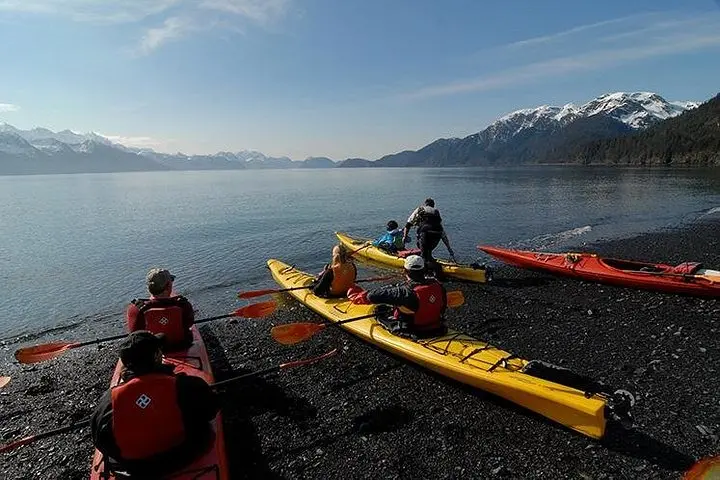
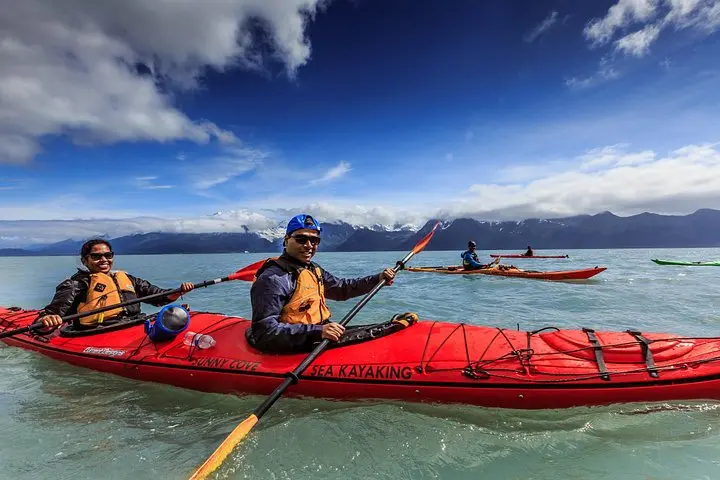
On the beach the kayaks wait—low-profile doubles ready for first-time paddlers and returners alike. After a concise safety briefing, groups push into water that is refrigerated by glacial runoff but warmed by long summer light. Expect about 3–5 miles (5–8 km) of paddling over roughly three hours on the water; the whole outing runs about 3.5–4 hours including transport and a short beach walk at Tonsina Creek to see salmon runs in season.
This stretch of coastline is steeped in layered histories. The native Alutiiq (Sugpiaq) people have fished these bays for millennia. In the 19th century Seward—named for Secretary of State William H. Seward—became a transportation hub; the arrival of the railroad and later the gold rush reshaped its shoreline and economy. Geologically, Resurrection Bay is a fjord carved by ice—its steep walls and hanging valleys are the fingerprints of glaciers, and the water’s turquoise hue hints at suspended rock flour.
Wildlife is part of the itinerary: sea otters float like living buoys, harbor seals peek from kelp beds, bald eagles crouch on driftwood, and in summer months salmon leap upriver. Guides know the currents and habits here; they’ll steer you close enough for photos without disturbing the animals.
Practical matters matter: the operator supplies personal flotation devices, spray skirts, dry bags and waterproof boots, but layers are your responsibility—think breathable base, insulating midlayer, and a waterproof shell. Wear footwear that can get wet and warm socks. Hydrate before launch and bring a small snack for energy; the cold water saps calories fast. Sunscreen and sunglasses help—the glare off Resurrection Bay is sharp even on overcast days.
Logistics are straightforward. Meet in Seward near the harbor and allow 10 minutes to find paid parking; avoid the Kenai Fjords Tours lot (2-hour max). Trips run mid-July to early September for salmon viewing, but the operator runs seasonally as conditions allow; all sales are final and tours can be canceled for weather.
For new kayakers this is an accessible, wildlife-rich window into Alaska’s coastal fjord country—short on exertion but high on immediacy. Bring curiosity and a respect for the shore: here, the sea and the mountains keep the itinerary honest.
Paddling is typically around 180 minutes (about 3 hours), covering roughly 3–5 miles depending on conditions and group pace.
Common sightings include sea otters, harbor seals, bald eagles and seasonal salmon runs at Tonsina Creek (mid-July–early September).
No—this trip is designed for first-time kayakers; guides provide instruction and stable tandem kayaks are used.
Minimum age is 8 years and 50 lb; maximum height 6'4", max weight 250 lb and 44" waist—check booking forms for exact limits.
Yes—PFDs, spray skirts, dry bags and waterproof boots are included by the operator.
All sales are final; trips may be canceled by the operator for bad weather, and refunds are not provided for voluntary cancellations.
Sunny Cove Kayaking operates guided outdoor trips and adventures with an emphasis on safety, stewardship, and memorable experiences.
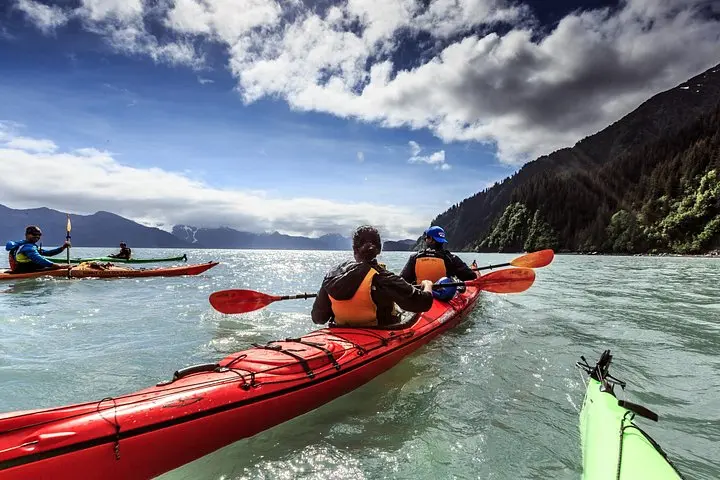
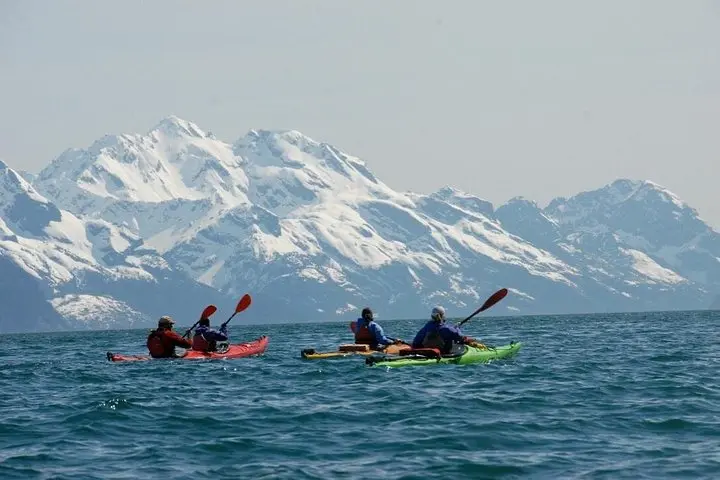
The van eases off the paved street and the world opens: a gravel ribbon of Lowell Road, a coastline of cobalt and turquoise, mountains that descend into water. Guides point out the flats where tide and current fight, and the driver-guide narrates a Seward that is at once maritime village and gateway—homes clinging to the shoreline, a working harbor, and the long sweep of Resurrection Bay daring you to cross it.
The van eases off the paved street and the world opens: a gravel ribbon of Lowell Road, a coastline of cobalt and turquoise, mountains that descend into water. Guides point out the flats where tide and current fight, and the driver-guide narrates a Seward that is at once maritime village and gateway—homes clinging to the shoreline, a working harbor, and the long sweep of Resurrection Bay daring you to cross it.
On the beach the kayaks wait—low-profile doubles ready for first-time paddlers and returners alike. After a concise safety briefing, groups push into water that is refrigerated by glacial runoff but warmed by long summer light. Expect about 3–5 miles (5–8 km) of paddling over roughly three hours on the water; the whole outing runs about 3.5–4 hours including transport and a short beach walk at Tonsina Creek to see salmon runs in season.
This stretch of coastline is steeped in layered histories. The native Alutiiq (Sugpiaq) people have fished these bays for millennia. In the 19th century Seward—named for Secretary of State William H. Seward—became a transportation hub; the arrival of the railroad and later the gold rush reshaped its shoreline and economy. Geologically, Resurrection Bay is a fjord carved by ice—its steep walls and hanging valleys are the fingerprints of glaciers, and the water’s turquoise hue hints at suspended rock flour.
Wildlife is part of the itinerary: sea otters float like living buoys, harbor seals peek from kelp beds, bald eagles crouch on driftwood, and in summer months salmon leap upriver. Guides know the currents and habits here; they’ll steer you close enough for photos without disturbing the animals.
Practical matters matter: the operator supplies personal flotation devices, spray skirts, dry bags and waterproof boots, but layers are your responsibility—think breathable base, insulating midlayer, and a waterproof shell. Wear footwear that can get wet and warm socks. Hydrate before launch and bring a small snack for energy; the cold water saps calories fast. Sunscreen and sunglasses help—the glare off Resurrection Bay is sharp even on overcast days.
Logistics are straightforward. Meet in Seward near the harbor and allow 10 minutes to find paid parking; avoid the Kenai Fjords Tours lot (2-hour max). Trips run mid-July to early September for salmon viewing, but the operator runs seasonally as conditions allow; all sales are final and tours can be canceled for weather.
For new kayakers this is an accessible, wildlife-rich window into Alaska’s coastal fjord country—short on exertion but high on immediacy. Bring curiosity and a respect for the shore: here, the sea and the mountains keep the itinerary honest.