THE ADVENTURE COLLECTIVE® · Independent discovery and booking for outdoor travel

Spend a half-day from Chania exploring Rethymno’s Venetian Fortezza, wandering its quiet old town and visiting the restored St. Irini Monastery. This private tour includes hotel pickup, entrance fees and local insight into Cretan history and craft.
Spend a half-day from Chania exploring Rethymno’s Venetian Fortezza, wandering its quiet old town and visiting the restored St. Irini Monastery. This private tour includes hotel pickup, entrance fees and local insight into Cretan history and craft.
You roll away from Chania along the coast and the road opens into olive-silver slopes and the brooding silhouette of Crete’s White Mountains; the sea to your left dares you to look up from the window. Within roughly an hour the landscape tightens and Rethymno’s walled skyline arrives—stone battlements and red-tiled roofs cut against the Aegean light.
Verified experiences and guided adventures in the surrounding area.
Operated by MOYSIDIS TRAVEL · Rethymno, Crete
You roll away from Chania along the coast and the road opens into olive-silver slopes and the brooding silhouette of Crete’s White Mountains; the sea to your left dares you to look up from the window. Within roughly an hour the landscape tightens and Rethymno’s walled skyline arrives—stone battlements and red-tiled roofs cut against the Aegean light.
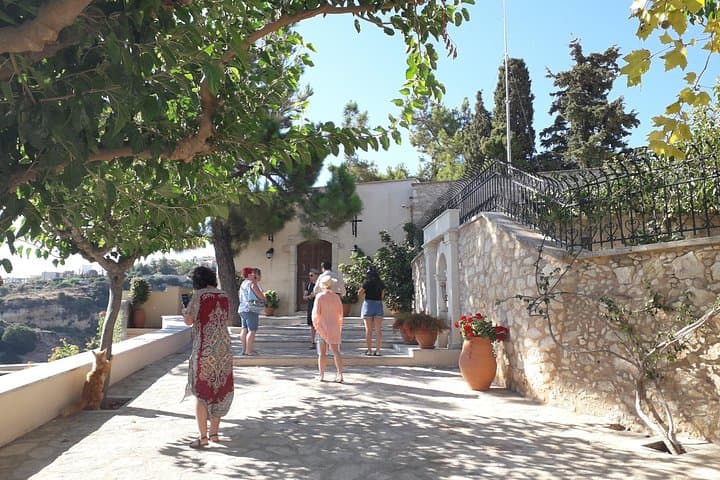
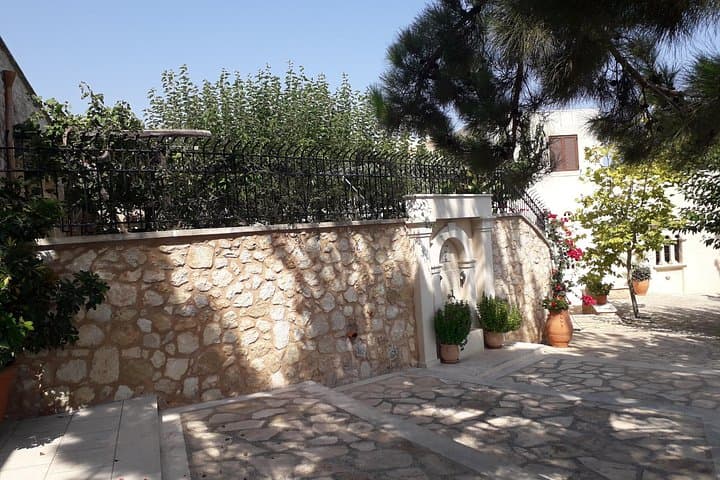
History sits plainly here: the Venetian Fortezza (built 1573–1590) watches the harbor where Rimondi’s lion-head fountain still spills, and narrow lanes funnel the city’s street performers and artisans into public rooms of sunlit stone. A short drive inland takes you to St. Irini Monastery, first recorded in 1362, abandoned and looted in the 19th century, then brought back to life by a restoration in 1989; the resident nuns now make olive-oil-based cosmetics and paint icons by hand.
Geology matters—water that feeds Rethymno flows from springs on the White Mountains, and the area’s limestone and shale shape both the cliffs and the fortress foundations. Expect a cultural mix: Venetian architecture, Ottoman traces, and modern Cretan music in cafés.
Practicalities are straightforward for a 5–6 hour private tour: hotel pick-up/drop-off, bottled spring water and Wi‑Fi on board, entrance fees included. Wear modest clothes for the monastery (knees and shoulders covered), sturdy shoes for cobbled streets, sun protection, and bring small change for cafés and local crafts. Peak season means heat and crowds—plan mornings for cooler light and clearer photos.
Travel time is about one hour from Chania to Rethymno and roughly 20–30 minutes more to St. Irini, depending on traffic and exact pickup location.
Yes—the tour includes entrance tickets to St. Irini Monastery and the Venetian Fortezza fortress as part of the booking.
Yes; the tour is listed as suitable for all fitness levels and offers infant seats when requested, though children should be supervised on uneven terrain.
The tour is accompanied by a professional guide; English is commonly provided on Viator private tours, and you can request language needs when booking.
MOYSIDIS TRAVEL operates guided outdoor trips and adventures with an emphasis on safety, stewardship, and memorable experiences.


You roll away from Chania along the coast and the road opens into olive-silver slopes and the brooding silhouette of Crete’s White Mountains; the sea to your left dares you to look up from the window. Within roughly an hour the landscape tightens and Rethymno’s walled skyline arrives—stone battlements and red-tiled roofs cut against the Aegean light.
You roll away from Chania along the coast and the road opens into olive-silver slopes and the brooding silhouette of Crete’s White Mountains; the sea to your left dares you to look up from the window. Within roughly an hour the landscape tightens and Rethymno’s walled skyline arrives—stone battlements and red-tiled roofs cut against the Aegean light.
History sits plainly here: the Venetian Fortezza (built 1573–1590) watches the harbor where Rimondi’s lion-head fountain still spills, and narrow lanes funnel the city’s street performers and artisans into public rooms of sunlit stone. A short drive inland takes you to St. Irini Monastery, first recorded in 1362, abandoned and looted in the 19th century, then brought back to life by a restoration in 1989; the resident nuns now make olive-oil-based cosmetics and paint icons by hand.
Geology matters—water that feeds Rethymno flows from springs on the White Mountains, and the area’s limestone and shale shape both the cliffs and the fortress foundations. Expect a cultural mix: Venetian architecture, Ottoman traces, and modern Cretan music in cafés.
Practicalities are straightforward for a 5–6 hour private tour: hotel pick-up/drop-off, bottled spring water and Wi‑Fi on board, entrance fees included. Wear modest clothes for the monastery (knees and shoulders covered), sturdy shoes for cobbled streets, sun protection, and bring small change for cafés and local crafts. Peak season means heat and crowds—plan mornings for cooler light and clearer photos.