THE ADVENTURE COLLECTIVE® · Independent discovery and booking for outdoor travel

Ride Icelandic horses up into Reykjadalur Valley, where steam vents and a naturally hot river await. This small-group, four-hour tour pairs steady mounts with a guided soak in a geothermal stream—an efficient, sensory way to experience South Iceland’s geology and horse culture.
Ride Icelandic horses up into Reykjadalur Valley, where steam vents and a naturally hot river await. This small-group, four-hour tour pairs steady mounts with a guided soak in a geothermal stream—an efficient, sensory way to experience South Iceland’s geology and horse culture.
The ride begins before dawn at a low stable on the edge of Hveragerði, where cold air carries mineral steam like a promise. Riders mount sure-footed Icelandic horses—short, sturdy animals with a steady gait—and file out onto gravel riding roads that climb gently into the valley. The landscape changes fast: scrubbed lava fields give way to mossy banks and steam vents that huff like the land itself exhaling. By the time the path narrows and the river’s hiss grows loud, the routine city thoughts have been replaced by something simpler: balance, breath and the steady click of hooves.
Verified experiences and guided adventures in the surrounding area.
Operated by solhestar · Hveragerði, Southern Region
The ride begins before dawn at a low stable on the edge of Hveragerði, where cold air carries mineral steam like a promise. Riders mount sure-footed Icelandic horses—short, sturdy animals with a steady gait—and file out onto gravel riding roads that climb gently into the valley. The landscape changes fast: scrubbed lava fields give way to mossy banks and steam vents that huff like the land itself exhaling. By the time the path narrows and the river’s hiss grows loud, the routine city thoughts have been replaced by something simpler: balance, breath and the steady click of hooves.
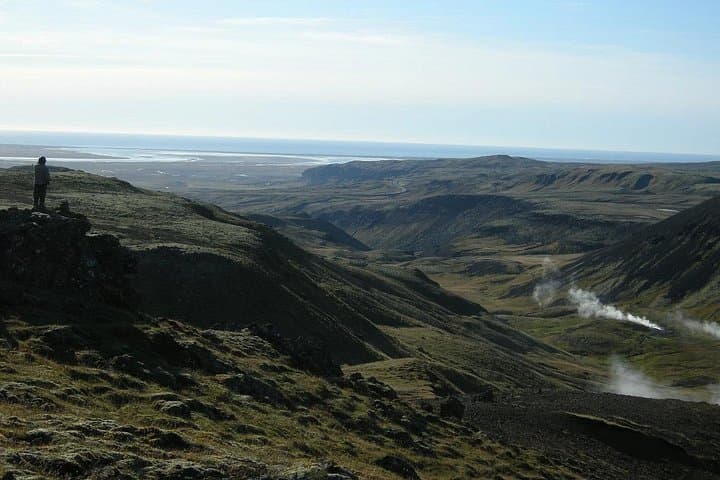
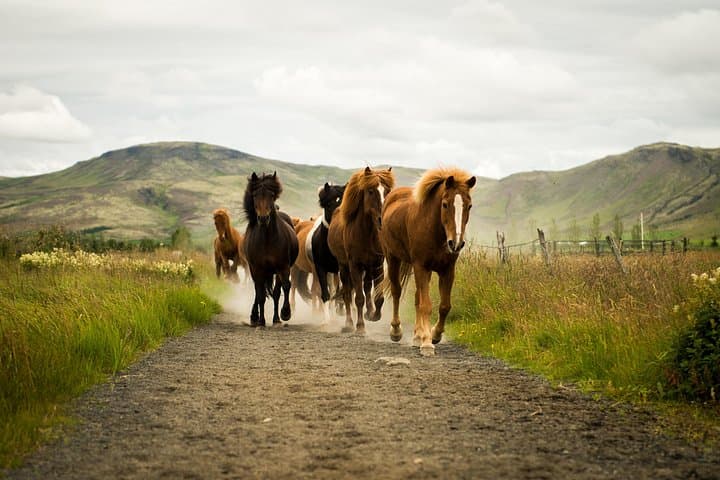
Reykjadalur—literally “Smoky Valley”—is a direct expression of Iceland’s geology. The valley sits on a network of hot springs fed by shallow geothermal systems; centuries of volcanic activity shaped the ridges and saddlebacks you traverse on horseback. Hveragerði, the nearest town, has long been a horticultural oddity in Iceland—greenhouses warmed by geothermal pipes—and the area’s use of thermal energy blends practical culture with spectacle. Horse culture is equally deep here: the Icelandic horse has been pure-bred and protected for a thousand years, bred for stamina across uneven volcanic terrain.
The tour is small by design (maximum five riders), which keeps the experience intimate and the pace deliberate. Guides pair riders by ability, and helmets and rain gear are supplied—practicalities that matter when mountain weather flips on a dime. Expect a total outing of roughly four hours that includes riding, a short guided walk to the hot stream, and time to soak. Terrain is mixed: packed dirt roads, grassy tracks, and muddy sections near geothermal runoff. Elevation gain is modest—around 200–300 meters—so the challenge is less about altitude and more about balance and comfort in changing conditions.
Practical planning tips: arrive 30 minutes early for briefings and saddling; weight limits and health restrictions are enforced for safety. Dress in layers, bring quick-dry clothing, and plan for wet feet—river-soaking is part of the point. The guides provide light snacks and a warm drink afterward, which feels earned after a cold ride and a hot dip.
For travelers, the magic of the trip is in contrasts: bracing air and warm water, quiet hoofbeats and the distant grumble of geothermal vents. It’s an accessible way to ski the edge of Iceland’s raw elements without technical climbing or long treks—just a steady mount, wide views and a warm river daring you to step in.
Total tour time is about 4 hours, including a guided ride up the valley, short walk to the hot river, time to soak, and return to the stable.
Yes—helmets are provided and required for all riders; guides will fit them during the pre-ride check-in.
No expert skills required: basic horseback riding experience helps, and guides pair riders by ability, but participants should be comfortable mounting, dismounting and maintaining balance.
The tour is not recommended for pregnant guests or those with serious back or heart conditions; weight limits are enforced—confirm details at booking.
You can bring a camera but leave electronics in a waterproof bag before entering the water; the guides will advise where to stash items safely.
The operator may cancel for severe weather; their policy allows full refunds if you cancel at least 24 hours before departure and they reserve the right to cancel for safety.
solhestar operates guided outdoor trips and adventures with an emphasis on safety, stewardship, and memorable experiences.
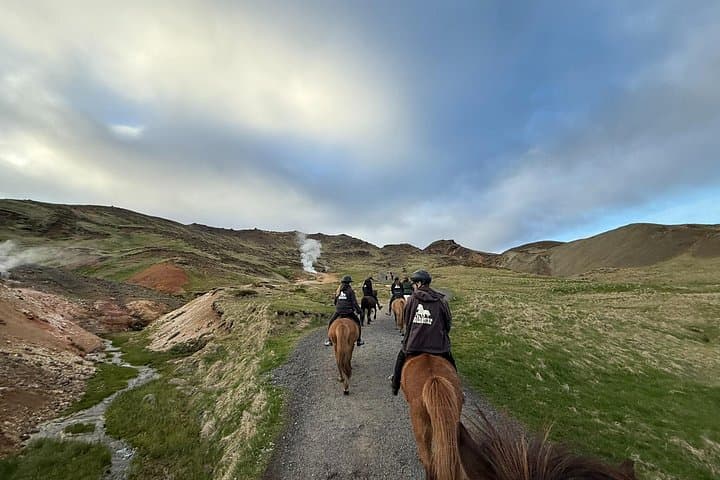
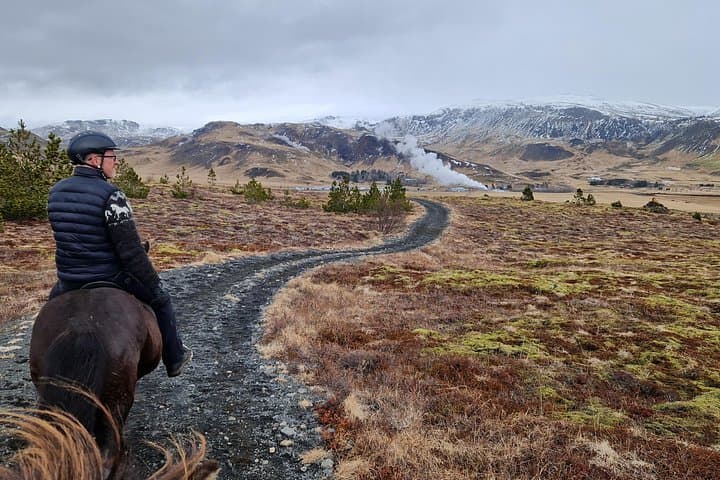
The ride begins before dawn at a low stable on the edge of Hveragerði, where cold air carries mineral steam like a promise. Riders mount sure-footed Icelandic horses—short, sturdy animals with a steady gait—and file out onto gravel riding roads that climb gently into the valley. The landscape changes fast: scrubbed lava fields give way to mossy banks and steam vents that huff like the land itself exhaling. By the time the path narrows and the river’s hiss grows loud, the routine city thoughts have been replaced by something simpler: balance, breath and the steady click of hooves.
The ride begins before dawn at a low stable on the edge of Hveragerði, where cold air carries mineral steam like a promise. Riders mount sure-footed Icelandic horses—short, sturdy animals with a steady gait—and file out onto gravel riding roads that climb gently into the valley. The landscape changes fast: scrubbed lava fields give way to mossy banks and steam vents that huff like the land itself exhaling. By the time the path narrows and the river’s hiss grows loud, the routine city thoughts have been replaced by something simpler: balance, breath and the steady click of hooves.
Reykjadalur—literally “Smoky Valley”—is a direct expression of Iceland’s geology. The valley sits on a network of hot springs fed by shallow geothermal systems; centuries of volcanic activity shaped the ridges and saddlebacks you traverse on horseback. Hveragerði, the nearest town, has long been a horticultural oddity in Iceland—greenhouses warmed by geothermal pipes—and the area’s use of thermal energy blends practical culture with spectacle. Horse culture is equally deep here: the Icelandic horse has been pure-bred and protected for a thousand years, bred for stamina across uneven volcanic terrain.
The tour is small by design (maximum five riders), which keeps the experience intimate and the pace deliberate. Guides pair riders by ability, and helmets and rain gear are supplied—practicalities that matter when mountain weather flips on a dime. Expect a total outing of roughly four hours that includes riding, a short guided walk to the hot stream, and time to soak. Terrain is mixed: packed dirt roads, grassy tracks, and muddy sections near geothermal runoff. Elevation gain is modest—around 200–300 meters—so the challenge is less about altitude and more about balance and comfort in changing conditions.
Practical planning tips: arrive 30 minutes early for briefings and saddling; weight limits and health restrictions are enforced for safety. Dress in layers, bring quick-dry clothing, and plan for wet feet—river-soaking is part of the point. The guides provide light snacks and a warm drink afterward, which feels earned after a cold ride and a hot dip.
For travelers, the magic of the trip is in contrasts: bracing air and warm water, quiet hoofbeats and the distant grumble of geothermal vents. It’s an accessible way to ski the edge of Iceland’s raw elements without technical climbing or long treks—just a steady mount, wide views and a warm river daring you to step in.