THE ADVENTURE COLLECTIVE® · Independent discovery and booking for outdoor travel

A five-hour private drive across the Reykjanes Peninsula exposes boiling mud pools, recent lava fields and the human edge of Icelandic fishing culture. This tour mixes short walks, coastal viewpoints and clear geology—ideal for travelers who want dramatic landscapes without a full-day hike.
A five-hour private drive across the Reykjanes Peninsula exposes boiling mud pools, recent lava fields and the human edge of Icelandic fishing culture. This tour mixes short walks, coastal viewpoints and clear geology—ideal for travelers who want dramatic landscapes without a full-day hike.
A wind-driven coastline opens ahead as your private vehicle threads the low, black ridges of the Reykjanes Peninsula. Steam hisses from mud pools and the ocean throws spray against basalt cliffs; the landscape feels active, new and slightly hostile, as if the ground itself is still deciding where to sit.
Verified experiences and guided adventures in the surrounding area.
Operated by Reykjanes Tours Iceland · Grindavík, Southern Peninsula
A wind-driven coastline opens ahead as your private vehicle threads the low, black ridges of the Reykjanes Peninsula. Steam hisses from mud pools and the ocean throws spray against basalt cliffs; the landscape feels active, new and slightly hostile, as if the ground itself is still deciding where to sit.
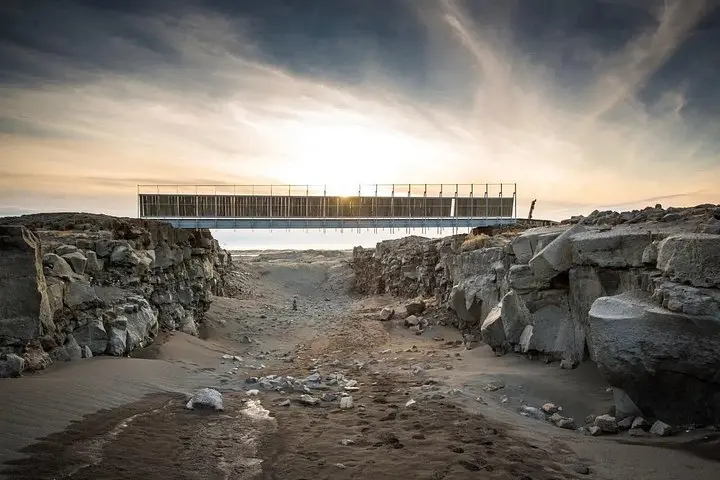
This route follows a living geology. Reykjanes sits where the Eurasian and North American plates pull apart; the man-made footbridge at the so-called Bridge Between Continents marks that tectonic seam. Fagradalsfjall’s recent eruptions rewrote the shorelines and added fresh lava fields, while Seltún/Krýsuvík’s sulfurous fumaroles and altered clays record long-term geothermal chemistry. Grindavík is a working fishing town shaped by volatile ground and ocean weather—its culture is pragmatic, centered on sea harvest and adapting to the land’s mood.
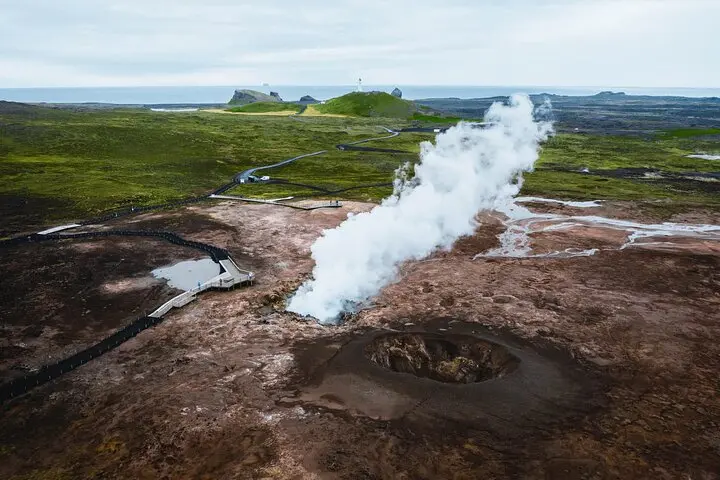
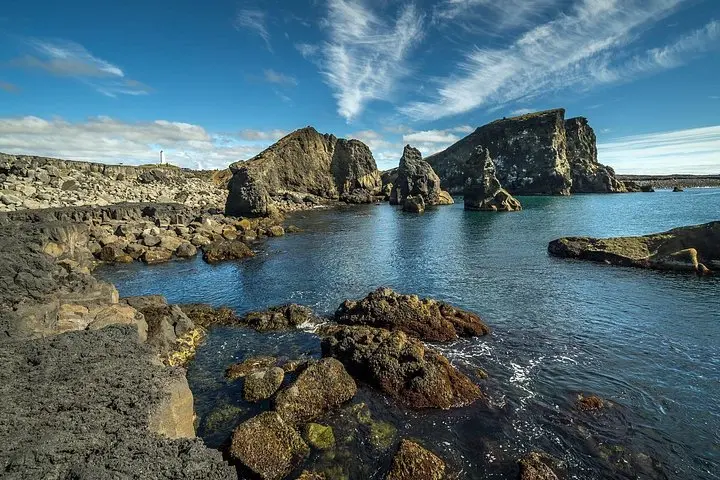
Expect a mix of short walks and photo stops: a puffing geothermal field with acid-tinged mud pools, valahnúkur’s layered tuff and pillow lava, Brimketill’s wave-carved pool, and Kleifarvatn’s stark rift-lake views. The terrain is mainly packed gravel, coastal basalt and boardwalks across fragile ground; weather can change fast and winds push hard.
Practical notes: bring a waterproof jacket, sturdy boots, and layers; cameras and binoculars reward curiosity. Tours run about five hours with photo and lunch stops; mobility needs are modest but uneven surfaces mean sensible footwear. Respect fenced geothermal areas, follow your guide, and leave fragile moss and geological features undisturbed—this place is actively forming under your feet.
The tour runs about five hours; walking is limited to short, guided stops (5–30 minutes) on mostly even or boardwalk surfaces.
Most operators offer pickup from Reykjavík hotels or central points; confirm pickup when booking and allow time for driving to the peninsula (about 40–60 minutes each way).
Only visit marked paths and fenced viewpoints — geothermal ground can be thin and acidic; follow your guide’s instructions at all times.
Short walks are family-friendly but uneven ground and some stairs at viewpoints may limit access for those with mobility constraints—check specifics with the operator.
Reykjanes Tours Iceland operates guided outdoor trips and adventures with an emphasis on safety, stewardship, and memorable experiences.
A wind-driven coastline opens ahead as your private vehicle threads the low, black ridges of the Reykjanes Peninsula. Steam hisses from mud pools and the ocean throws spray against basalt cliffs; the landscape feels active, new and slightly hostile, as if the ground itself is still deciding where to sit.
A wind-driven coastline opens ahead as your private vehicle threads the low, black ridges of the Reykjanes Peninsula. Steam hisses from mud pools and the ocean throws spray against basalt cliffs; the landscape feels active, new and slightly hostile, as if the ground itself is still deciding where to sit.
This route follows a living geology. Reykjanes sits where the Eurasian and North American plates pull apart; the man-made footbridge at the so-called Bridge Between Continents marks that tectonic seam. Fagradalsfjall’s recent eruptions rewrote the shorelines and added fresh lava fields, while Seltún/Krýsuvík’s sulfurous fumaroles and altered clays record long-term geothermal chemistry. Grindavík is a working fishing town shaped by volatile ground and ocean weather—its culture is pragmatic, centered on sea harvest and adapting to the land’s mood.
Expect a mix of short walks and photo stops: a puffing geothermal field with acid-tinged mud pools, valahnúkur’s layered tuff and pillow lava, Brimketill’s wave-carved pool, and Kleifarvatn’s stark rift-lake views. The terrain is mainly packed gravel, coastal basalt and boardwalks across fragile ground; weather can change fast and winds push hard.
Practical notes: bring a waterproof jacket, sturdy boots, and layers; cameras and binoculars reward curiosity. Tours run about five hours with photo and lunch stops; mobility needs are modest but uneven surfaces mean sensible footwear. Respect fenced geothermal areas, follow your guide, and leave fragile moss and geological features undisturbed—this place is actively forming under your feet.