THE ADVENTURE COLLECTIVE® · Independent discovery and booking for outdoor travel

Explore Raufarhólshellir’s colorful lava tube by torchlight, then head into the Icelandic countryside to hunt the Northern Lights with expert guides. Practical tips on gear, terrain, and how to maximize your aurora odds.
Explore Raufarhólshellir’s colorful lava tube by torchlight, then head into the Icelandic countryside to hunt the Northern Lights with expert guides. Practical tips on gear, terrain, and how to maximize your aurora odds.
A cool bus hum carries the group out of Reykjavík as the sky slides from dusk toward a hard, star-flecked black. Within an hour the city lights fall away and the ground opens into the raw, low hills of the Blue Mountains. Guides hand out helmets and torches, then the group descends into Raufarhólshellir — a lava tube that stretches roughly 900 meters from its entrance and reveals bands of colors carved by molten rock and mineral deposits.
Verified experiences and guided adventures in the surrounding area.
Operated by Arctic Adventures · Reykjavík, Capital Region
A cool bus hum carries the group out of Reykjavík as the sky slides from dusk toward a hard, star-flecked black. Within an hour the city lights fall away and the ground opens into the raw, low hills of the Blue Mountains. Guides hand out helmets and torches, then the group descends into Raufarhólshellir — a lava tube that stretches roughly 900 meters from its entrance and reveals bands of colors carved by molten rock and mineral deposits.
The cave is less a polished cavern and more a geological ledger: flow lines, collapsed skylights and textures left by lava as it cooled over 5,000 years ago. Guides explain how Iceland’s hotspot and rift-system created both the tube beneath your feet and the volcanic coastline you'll scan later for auroras.
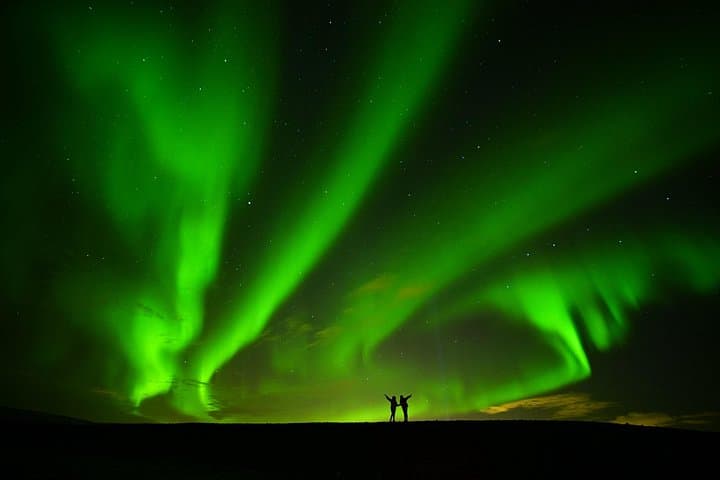
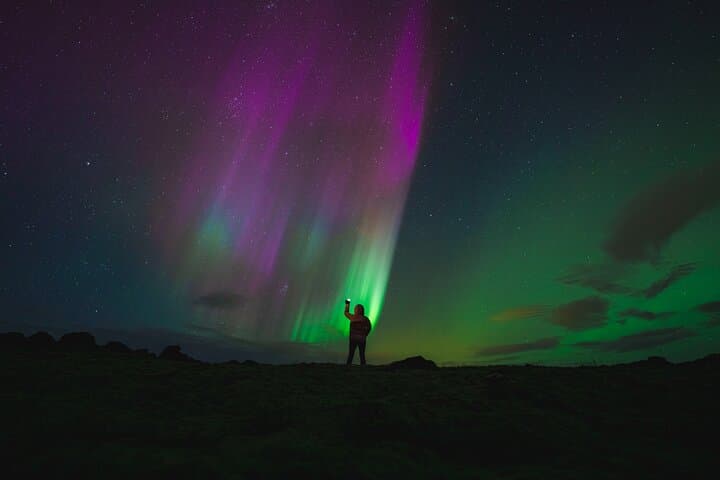
Above ground, the culture of the evening is practical and convivial — blankets, hot cocoa, and patient watching. Guides choose dark, open vantage points away from town (Þingvellir or Reykjanes are common options) and offer photography assistance if the aurora appears.
Practical guidance: expect 45–60 minutes of cave time on uneven but maintained paths; carry warm, windproof layers and sturdy, treaded shoes; bring a camera with manual settings or borrow the guide’s photo; plan for a 5-hour evening with pick-up in Reykjavík and possible late return. If the lights don’t appear, most operators offer a free retry, so budget an extra night if aurora viewing is a priority.
The guided visit lasts about 45–60 minutes, and you can walk up to roughly 900 meters into parts of the tube along maintained paths and footbridges.
Auroras are a natural phenomenon and sightings can’t be guaranteed; the operator offers a free retry if the lights are not visible on your booked night.
Yes—most ages can participate since the walking is moderate, but anyone uncomfortable on uneven ground should consider this before booking.
Yes, the tour includes pickup and drop-off from central Reykjavík locations; exact pickup points are confirmed at booking.
Arctic Adventures operates guided outdoor trips and adventures with an emphasis on safety, stewardship, and memorable experiences.
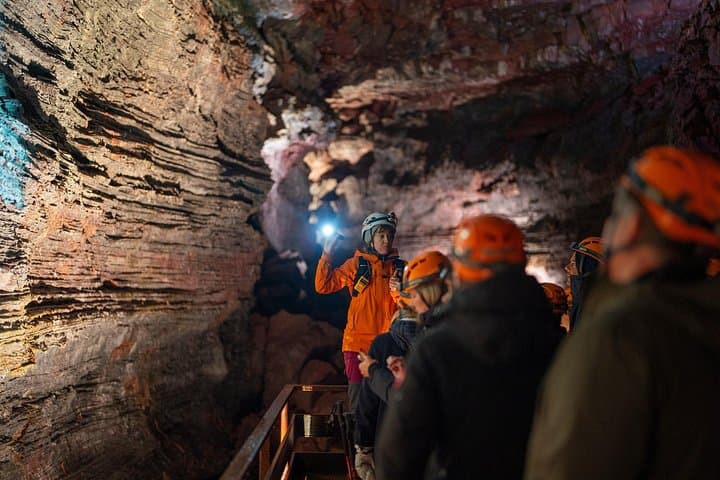
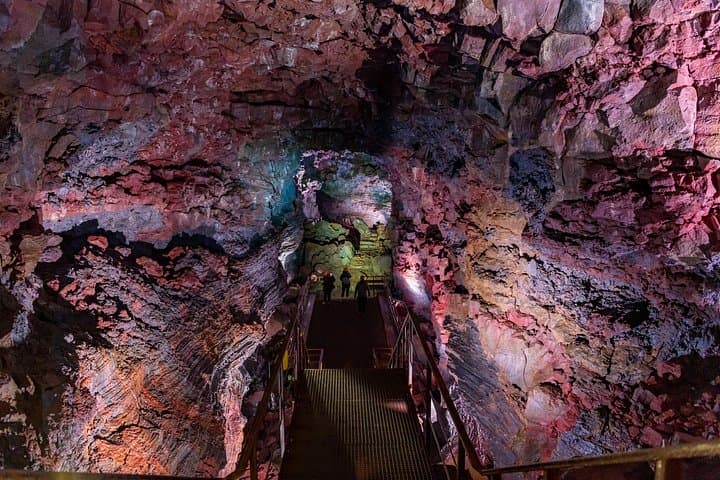
A cool bus hum carries the group out of Reykjavík as the sky slides from dusk toward a hard, star-flecked black. Within an hour the city lights fall away and the ground opens into the raw, low hills of the Blue Mountains. Guides hand out helmets and torches, then the group descends into Raufarhólshellir — a lava tube that stretches roughly 900 meters from its entrance and reveals bands of colors carved by molten rock and mineral deposits.
A cool bus hum carries the group out of Reykjavík as the sky slides from dusk toward a hard, star-flecked black. Within an hour the city lights fall away and the ground opens into the raw, low hills of the Blue Mountains. Guides hand out helmets and torches, then the group descends into Raufarhólshellir — a lava tube that stretches roughly 900 meters from its entrance and reveals bands of colors carved by molten rock and mineral deposits.
The cave is less a polished cavern and more a geological ledger: flow lines, collapsed skylights and textures left by lava as it cooled over 5,000 years ago. Guides explain how Iceland’s hotspot and rift-system created both the tube beneath your feet and the volcanic coastline you'll scan later for auroras.
Above ground, the culture of the evening is practical and convivial — blankets, hot cocoa, and patient watching. Guides choose dark, open vantage points away from town (Þingvellir or Reykjanes are common options) and offer photography assistance if the aurora appears.
Practical guidance: expect 45–60 minutes of cave time on uneven but maintained paths; carry warm, windproof layers and sturdy, treaded shoes; bring a camera with manual settings or borrow the guide’s photo; plan for a 5-hour evening with pick-up in Reykjavík and possible late return. If the lights don’t appear, most operators offer a free retry, so budget an extra night if aurora viewing is a priority.