THE ADVENTURE COLLECTIVE® · Independent discovery and booking for outdoor travel

Board at Reykjavík’s Old Harbour for a 60–90 minute wildlife cruise to Engey, Akurey or Lundey. Expect close-up views of Atlantic puffins, seabirds and occasional seals while learning local natural history from an experienced crew.
Board at Reykjavík’s Old Harbour for a 60–90 minute wildlife cruise to Engey, Akurey or Lundey. Expect close-up views of Atlantic puffins, seabirds and occasional seals while learning local natural history from an experienced crew.
The bow cuts through cold salt air as Reykjavík shrinks behind you — Harpa’s glass face and Hallgrímskirkja’s steeple becoming small landmarks against an open sea.
Verified experiences and guided adventures in the surrounding area.
Operated by Elding Whale Watching · Reykjavík, Capital Region
The bow cuts through cold salt air as Reykjavík shrinks behind you — Harpa’s glass face and Hallgrímskirkja’s steeple becoming small landmarks against an open sea.
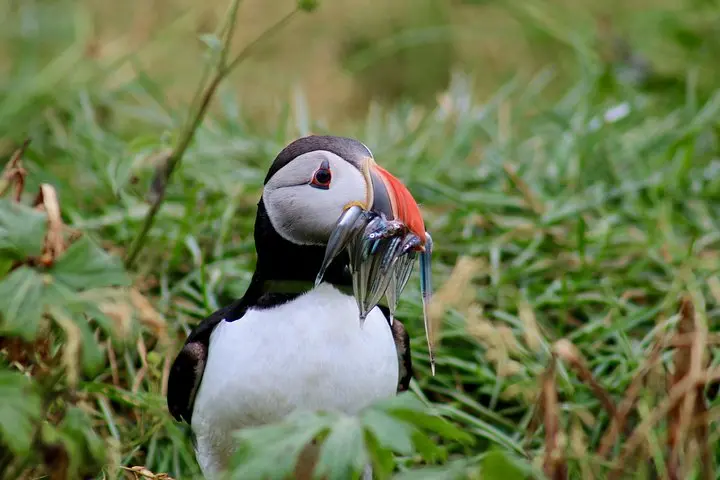
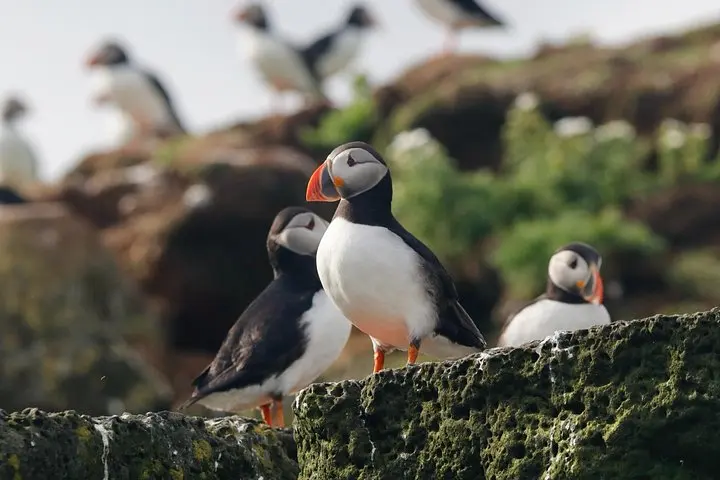
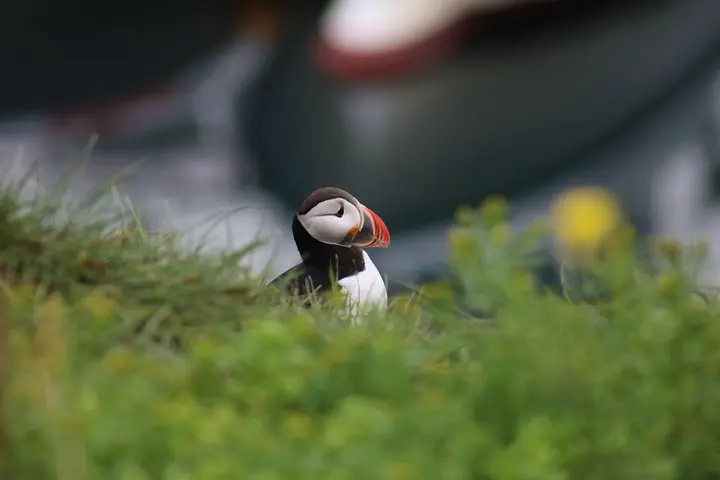
Within 60–90 minutes the captain eases the throttle and the boat drifts toward one of three volcanic islets — Engey, Akurey or Lundey — where thousands of Atlantic puffins crowd cliff edges and grassy burrows. The birds bob and flutter with purpose; terns and guillemots wheel around them, and seals sometimes haul out on sun-warmed rocks as curious observers.
This short voyage sits on layered history: Reykjavík’s Old Harbour evolved from a fishing hub into a modern port, and these islands' black basalt is the product of Iceland’s volcanic past. Puffins were once part of coastal subsistence, but today the colonies are managed for conservation and tourism, and local crews are careful to minimize disturbance.
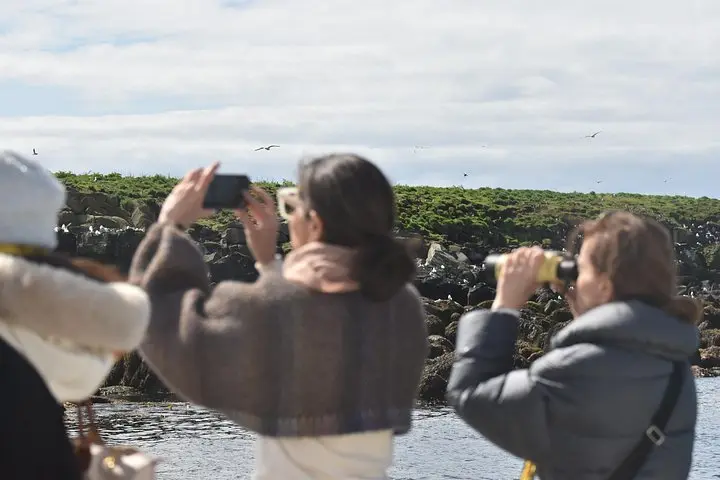
Practical guidance is straightforward. Meet at the Old Harbour; cruises run 60–90 minutes and cover a short coastal circuit (typically a few to several kilometers round trip, depending on the island visited). Dress in windproof layers and sturdy, non-slip shoes; bring binoculars or a telephoto lens — binoculars are supplied. Expect engine-off moments for quiet viewing and follow crew instructions: the islands are reserves, so boats approach as close as regulations allow but landing is not permitted.
Weather governs departures; tours can be canceled for safety. For best light and active birds, aim for morning or late-evening summer departures. Respect the wildlife, keep noise low, and your short time on the water will feel both elemental and distinctly Icelandic.
No — the islands are nature reserves and landing is not permitted; boats will sail as close as regulations allow for viewing.
Very likely during the breeding season (May–August) when puffins return to nest and seals commonly haul out on exposed rocks, though wildlife sightings can’t be guaranteed.
Yes — tours are family-friendly and suitable for most ages, but keep children supervised on deck and bring appropriate clothing.
Accessibility is limited: many boats have steep stairs and thresholds, so the fleet may not be fully suitable for low-mobility travelers; check with the operator beforehand.
Elding Whale Watching operates guided outdoor trips and adventures with an emphasis on safety, stewardship, and memorable experiences.
The bow cuts through cold salt air as Reykjavík shrinks behind you — Harpa’s glass face and Hallgrímskirkja’s steeple becoming small landmarks against an open sea.
The bow cuts through cold salt air as Reykjavík shrinks behind you — Harpa’s glass face and Hallgrímskirkja’s steeple becoming small landmarks against an open sea.
Within 60–90 minutes the captain eases the throttle and the boat drifts toward one of three volcanic islets — Engey, Akurey or Lundey — where thousands of Atlantic puffins crowd cliff edges and grassy burrows. The birds bob and flutter with purpose; terns and guillemots wheel around them, and seals sometimes haul out on sun-warmed rocks as curious observers.
This short voyage sits on layered history: Reykjavík’s Old Harbour evolved from a fishing hub into a modern port, and these islands' black basalt is the product of Iceland’s volcanic past. Puffins were once part of coastal subsistence, but today the colonies are managed for conservation and tourism, and local crews are careful to minimize disturbance.
Practical guidance is straightforward. Meet at the Old Harbour; cruises run 60–90 minutes and cover a short coastal circuit (typically a few to several kilometers round trip, depending on the island visited). Dress in windproof layers and sturdy, non-slip shoes; bring binoculars or a telephoto lens — binoculars are supplied. Expect engine-off moments for quiet viewing and follow crew instructions: the islands are reserves, so boats approach as close as regulations allow but landing is not permitted.
Weather governs departures; tours can be canceled for safety. For best light and active birds, aim for morning or late-evening summer departures. Respect the wildlife, keep noise low, and your short time on the water will feel both elemental and distinctly Icelandic.