THE ADVENTURE COLLECTIVE® · Independent discovery and booking for outdoor travel

Spend a single day off Reykjavík’s Old Harbour chasing puffin colonies and humpback whales. This two-in-one boat combo pairs a small, intimate island run for puffins with a longer bay excursion for whales—complete with naturalist commentary and a whale-sighting guarantee.
Spend a single day off Reykjavík’s Old Harbour chasing puffin colonies and humpback whales. This two-in-one boat combo pairs a small, intimate island run for puffins with a longer bay excursion for whales—complete with naturalist commentary and a whale-sighting guarantee.
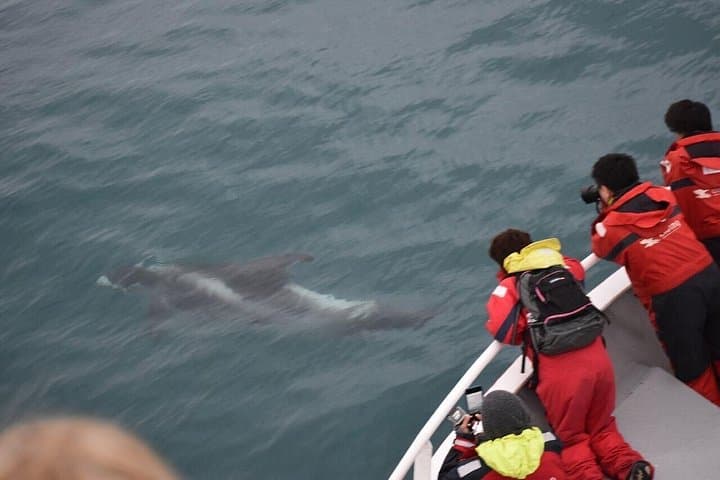
The harbour air tastes of salt and diesel; gulls wheel like small, opinionated compasses over the Old Harbour as a line of red jackets gathers under the Elding sign. Passengers step onto a compact puffin boat first, breath fogging in the sea breeze, then later board a larger vessel that pushes out into Faxaflói Bay where the water seems to think in long, slow sentences. Guides move between decks with the cadence of people who track patterns—a rise of birds, a distant spout—and they hand over binoculars like passports: a way to enter another rhythm of life.
Verified experiences and guided adventures in the surrounding area.
Operated by Elding Whale Watching · Reykjavík, Capital Region
The harbour air tastes of salt and diesel; gulls wheel like small, opinionated compasses over the Old Harbour as a line of red jackets gathers under the Elding sign. Passengers step onto a compact puffin boat first, breath fogging in the sea breeze, then later board a larger vessel that pushes out into Faxaflói Bay where the water seems to think in long, slow sentences. Guides move between decks with the cadence of people who track patterns—a rise of birds, a distant spout—and they hand over binoculars like passports: a way to enter another rhythm of life.
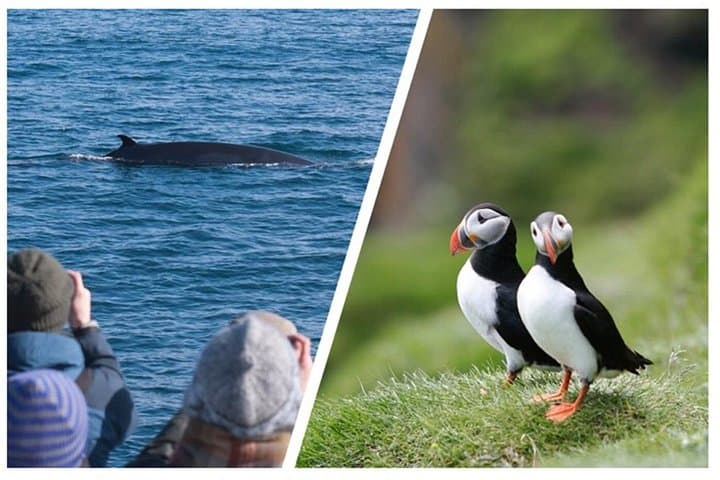
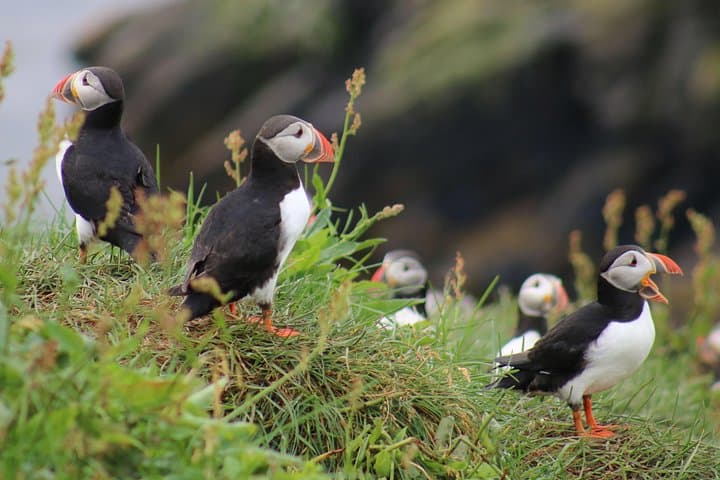
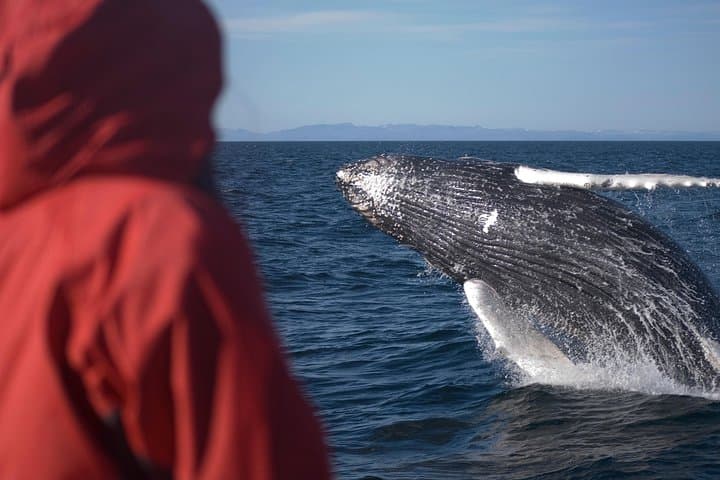
Iceland’s coastal waters have long defined Reykjavík: Viking landing points, fishing grounds that fed the town, and now waterways where tourism and research meet. Geologically, the bay sits in the shadow of a volcanic island chain and a coastline carved by glacial retreat, so the sea here mixes cold Atlantic currents with pockets of rich forage that whales follow and sea birds exploit. The islands visited on the puffin leg—Lundey, Akurey, Engey—are breeding islands whose cliffs and grassy mounds host thousands of puffins each summer. On the whale leg, guides search the open water for humpbacks and minkes that come to fatten on herring and capelin.
There’s a pragmatic side to the poetry: tours include protective suits, a heated saloon, and live commentary from naturalists and a marine biologist who explains how feeding cycles shape sightings. Between trips, the two-hour break gives travelers space to sample the Old Harbour’s seafood stalls, check a marine exhibition, or stretch legs on the waterfront promenade.
Practical planning matters. Sea conditions can switch quickly; mornings often offer flatter water and better light for photography, while summer brings the densest puffin congregations. The operator offers a sighting guarantee for whales, and life vests are mandatory for children under 13.
For travelers, timing and layering are the two simple rules. Book earlier in the day for calmer seas, bring a zoom lens or binoculars supplied onboard, and plan lunch at one of the harbour’s eateries so you’re back on time. If you’re prone to motion sickness, take medication before you board; the guides cannot predict every swell, but they do manage safety with a steady, professional hand.
This two-in-one tour balances intimacy with wildlife—close-up puffin islands on a small craft and broader oceanic theater on a larger vessel—so it’s an efficient way to experience Reykjavík’s marine life in a single half-day and a half. Expect brisk air, sudden animal moments, and the practical comfort of heated viewing spaces that make the day feel like a careful exchange: you give attention to the sea, and the sea returns a spectacle worth the trip.
No prior experience required; tours are suitable for most people but you should be able to climb stairs and stand on a moving deck.
Puffin tours focus on colonies on nearby islands; the whale tour targets humpback and minke whales, with porpoises and dolphins also possible.
Yes—the operator offers a whale guarantee: if no cetaceans are seen you can rebook for free on another day.
Children are welcome but under-13s must wear life vests; service animals are permitted but pets are not recommended due to boat conditions.
Cameras are welcome; small monopods are fine but large tripods aren’t practical on deck—bring a telephoto lens for best results.
The fleet is not fully wheelchair accessible due to stairs and thresholds; wheelchair users should contact the operator in advance to arrange assistance and possibly use a foldable chair.
Elding Whale Watching operates guided outdoor trips and adventures with an emphasis on safety, stewardship, and memorable experiences.
The harbour air tastes of salt and diesel; gulls wheel like small, opinionated compasses over the Old Harbour as a line of red jackets gathers under the Elding sign. Passengers step onto a compact puffin boat first, breath fogging in the sea breeze, then later board a larger vessel that pushes out into Faxaflói Bay where the water seems to think in long, slow sentences. Guides move between decks with the cadence of people who track patterns—a rise of birds, a distant spout—and they hand over binoculars like passports: a way to enter another rhythm of life.
The harbour air tastes of salt and diesel; gulls wheel like small, opinionated compasses over the Old Harbour as a line of red jackets gathers under the Elding sign. Passengers step onto a compact puffin boat first, breath fogging in the sea breeze, then later board a larger vessel that pushes out into Faxaflói Bay where the water seems to think in long, slow sentences. Guides move between decks with the cadence of people who track patterns—a rise of birds, a distant spout—and they hand over binoculars like passports: a way to enter another rhythm of life.
Iceland’s coastal waters have long defined Reykjavík: Viking landing points, fishing grounds that fed the town, and now waterways where tourism and research meet. Geologically, the bay sits in the shadow of a volcanic island chain and a coastline carved by glacial retreat, so the sea here mixes cold Atlantic currents with pockets of rich forage that whales follow and sea birds exploit. The islands visited on the puffin leg—Lundey, Akurey, Engey—are breeding islands whose cliffs and grassy mounds host thousands of puffins each summer. On the whale leg, guides search the open water for humpbacks and minkes that come to fatten on herring and capelin.
There’s a pragmatic side to the poetry: tours include protective suits, a heated saloon, and live commentary from naturalists and a marine biologist who explains how feeding cycles shape sightings. Between trips, the two-hour break gives travelers space to sample the Old Harbour’s seafood stalls, check a marine exhibition, or stretch legs on the waterfront promenade.
Practical planning matters. Sea conditions can switch quickly; mornings often offer flatter water and better light for photography, while summer brings the densest puffin congregations. The operator offers a sighting guarantee for whales, and life vests are mandatory for children under 13.
For travelers, timing and layering are the two simple rules. Book earlier in the day for calmer seas, bring a zoom lens or binoculars supplied onboard, and plan lunch at one of the harbour’s eateries so you’re back on time. If you’re prone to motion sickness, take medication before you board; the guides cannot predict every swell, but they do manage safety with a steady, professional hand.
This two-in-one tour balances intimacy with wildlife—close-up puffin islands on a small craft and broader oceanic theater on a larger vessel—so it’s an efficient way to experience Reykjavík’s marine life in a single half-day and a half. Expect brisk air, sudden animal moments, and the practical comfort of heated viewing spaces that make the day feel like a careful exchange: you give attention to the sea, and the sea returns a spectacle worth the trip.