THE ADVENTURE COLLECTIVE® · Independent discovery and booking for outdoor travel

Walk from Mandraki Harbor into Rhodes’ medieval core on a private three‑hour tour that covers the city walls, the Street of the Knights, the Palace of the Grand Master and the Archaeological Museum. Small groups and multilingual guides make this a compact, informative introduction to the island’s layered history.
Walk from Mandraki Harbor into Rhodes’ medieval core on a private three‑hour tour that covers the city walls, the Street of the Knights, the Palace of the Grand Master and the Archaeological Museum. Small groups and multilingual guides make this a compact, informative introduction to the island’s layered history.
Morning light slices across Mandraki Harbor as the tour assembles by the two deer statues — the starting point for a three‑hour walk through Rhodes’ layered past. The sea smells faintly of pine resin and salt; the cobbles already warm underfoot. Your guide sets the pace, and the Old Town opens like a city‑scale museum: stone alleys, crenellated walls, and doorways that still hold the geometry of power.
Verified experiences and guided adventures in the surrounding area.
Operated by European Voyages · Rhodes, South Aegean
Morning light slices across Mandraki Harbor as the tour assembles by the two deer statues — the starting point for a three‑hour walk through Rhodes’ layered past. The sea smells faintly of pine resin and salt; the cobbles already warm underfoot. Your guide sets the pace, and the Old Town opens like a city‑scale museum: stone alleys, crenellated walls, and doorways that still hold the geometry of power.
The route threads medieval military architecture with ancient Greek fragments. The Knights Hospitaller fortified these streets in the 14th century, raising walls and the Palace of the Grand Master, whose restored halls display mosaics and medieval fittings. Earlier civilizations left shards and pottery now housed in the Archaeological Museum, itself a 15th‑century hospital building adapted to display antiquities. Ottoman layers — notably the pink Suleymaniye Mosque — recall later occupation, while the Roloi clock tower offers a vantage across tile roofs and the Aegean.
Geology is subtle but present: sun‑bleached limestone and local marble underpin buildings and steps, softening under summer sun and slicking when wet in shoulder seasons. Culturally, the tour is compact history — military strategy, maritime trade, and religious shifts packed into narrow streets.
Practical guide: expect ~3 hours of mostly flat but uneven walking; cobblestones and stairs demand steady shoes. Bring water, sun protection, and modest dress for mosque exteriors. The tour is private with multilingual guides and small groups, making it efficient for focused questions and photography stops. Start early for cooler temperatures and clearer photos; afternoons are busiest in high season.
Admission fees are typically not included; check with the operator beforehand and bring payment if you wish to enter interior exhibits.
Tours start at Mandraki Harbor near the deer statues and usually finish at the Archaeological Museum in the Old Town.
Parts of the Old Town have cobblestones and steps; while short stretches are stroller accessible, full wheelchair access is limited — contact the operator for specifics.
Guides are available in English, Spanish, French, German and Italian according to the listing; confirm your preference when booking.
European Voyages operates guided outdoor trips and adventures with an emphasis on safety, stewardship, and memorable experiences.
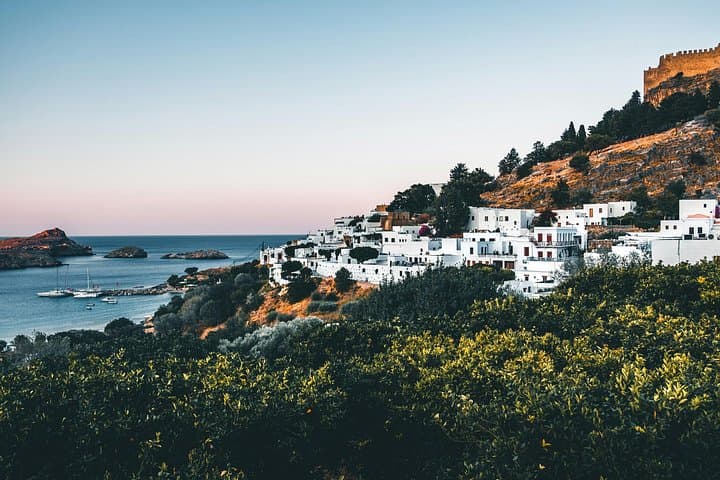
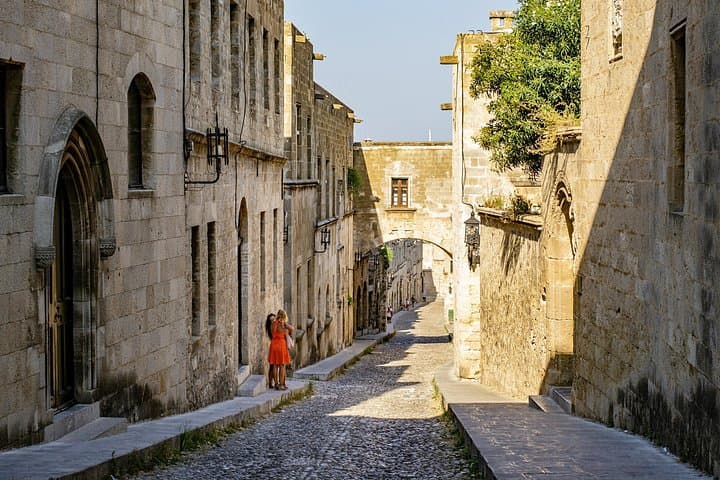
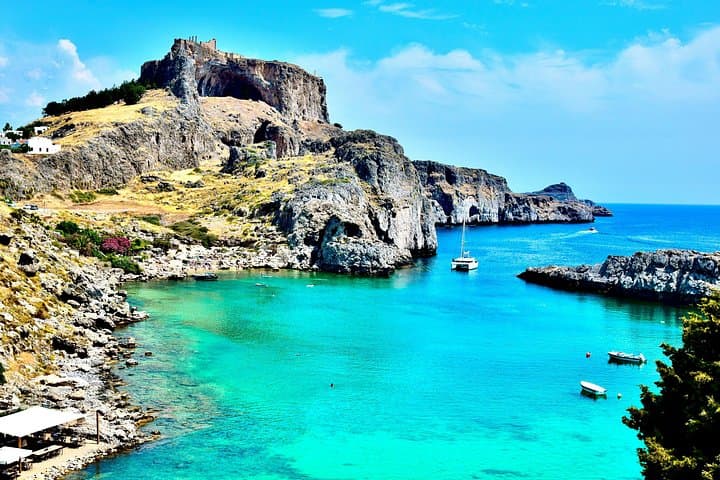
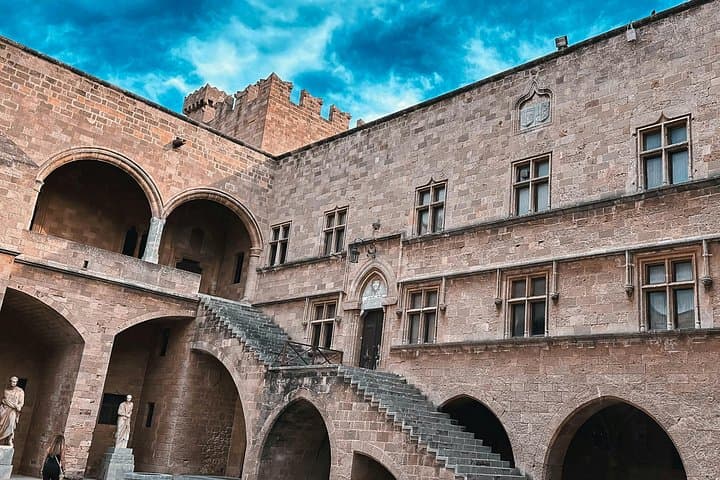
Morning light slices across Mandraki Harbor as the tour assembles by the two deer statues — the starting point for a three‑hour walk through Rhodes’ layered past. The sea smells faintly of pine resin and salt; the cobbles already warm underfoot. Your guide sets the pace, and the Old Town opens like a city‑scale museum: stone alleys, crenellated walls, and doorways that still hold the geometry of power.
Morning light slices across Mandraki Harbor as the tour assembles by the two deer statues — the starting point for a three‑hour walk through Rhodes’ layered past. The sea smells faintly of pine resin and salt; the cobbles already warm underfoot. Your guide sets the pace, and the Old Town opens like a city‑scale museum: stone alleys, crenellated walls, and doorways that still hold the geometry of power.
The route threads medieval military architecture with ancient Greek fragments. The Knights Hospitaller fortified these streets in the 14th century, raising walls and the Palace of the Grand Master, whose restored halls display mosaics and medieval fittings. Earlier civilizations left shards and pottery now housed in the Archaeological Museum, itself a 15th‑century hospital building adapted to display antiquities. Ottoman layers — notably the pink Suleymaniye Mosque — recall later occupation, while the Roloi clock tower offers a vantage across tile roofs and the Aegean.
Geology is subtle but present: sun‑bleached limestone and local marble underpin buildings and steps, softening under summer sun and slicking when wet in shoulder seasons. Culturally, the tour is compact history — military strategy, maritime trade, and religious shifts packed into narrow streets.
Practical guide: expect ~3 hours of mostly flat but uneven walking; cobblestones and stairs demand steady shoes. Bring water, sun protection, and modest dress for mosque exteriors. The tour is private with multilingual guides and small groups, making it efficient for focused questions and photography stops. Start early for cooler temperatures and clearer photos; afternoons are busiest in high season.