THE ADVENTURE COLLECTIVE® · Independent discovery and booking for outdoor travel

A five-day loop through Bulgaria’s Rhodope Mountains and cultural heartlands — gorge hikes, cave mysteries, Ottoman bridges, and Thracian ruins with guided context and comfortable hotels. Practical advice for hikers and history lovers inside.
A five-day loop through Bulgaria’s Rhodope Mountains and cultural heartlands — gorge hikes, cave mysteries, Ottoman bridges, and Thracian ruins with guided context and comfortable hotels. Practical advice for hikers and history lovers inside.
You step out of the van and the air changes—cool, resinous, and slightly damp. The road drops into Vucha Gorge and the cliffs lean in like an audience; streams dare you to follow their chatter downstream. Over five days you move from limestone gorges and echoing caves to Ottoman stone bridges and cobbled streets where 19th-century houses peer into back alleys.
Verified experiences and guided adventures in the surrounding area.
Operated by BulTrips · Sofia, Sofia City Province
You step out of the van and the air changes—cool, resinous, and slightly damp. The road drops into Vucha Gorge and the cliffs lean in like an audience; streams dare you to follow their chatter downstream. Over five days you move from limestone gorges and echoing caves to Ottoman stone bridges and cobbled streets where 19th-century houses peer into back alleys.
Geology here is bold: karst limestone carved by millennia of water into caves such as the Devil’s Throat and narrow gorges like Trigrad. Cultural layers sit on top—Thracian sanctuaries, Roman roads (the old Via Militaris), medieval Ottoman bridges, and Bulgarian Revival towns like Koprivshtica and Zlatograd that preserve crafts and wooden architecture.
Expect led wooden stairs and steep eye-opening switchbacks on the Devil’s Path, a river that vanishes into the throat of a cave, and a 16th-century stone span known locally as the Devil’s Bridge. Plovdiv provides a counterpoint: Roman theaters, Byzantine layers, and a lively arts quarter for evenings.
Practical edge: bring sturdy hiking shoes for 30–90 minute ascents, a light rain layer, and a daypack with water—some trails are exposed and can be slippery after rain. The itinerary uses paved drives between sites, but many highlights require short walks and steps. Mornings are best for narrow gorges and caves when light and crowds are kinder; afternoons suit Plovdiv’s museums and taverns. Guides here are experienced in both natural history and Thracian lore—follow their notes on fragile archaeology and stay on marked paths to protect the sites.
Hikes are generally short but steep, often on wooden stairs and steep paths; they require moderate fitness rather than technical climbing skills.
Many cave sites have steps and uneven passages—accessibility is limited; check with the operator for specific cave accessibility and alternatives.
Guides are typically educated and experienced; English-language guiding is provided—confirm any other language needs at booking.
Breakfast is included each day; traditional dinners are offered but you can request dietary accommodations in advance.
BulTrips operates guided outdoor trips and adventures with an emphasis on safety, stewardship, and memorable experiences.


You step out of the van and the air changes—cool, resinous, and slightly damp. The road drops into Vucha Gorge and the cliffs lean in like an audience; streams dare you to follow their chatter downstream. Over five days you move from limestone gorges and echoing caves to Ottoman stone bridges and cobbled streets where 19th-century houses peer into back alleys.
You step out of the van and the air changes—cool, resinous, and slightly damp. The road drops into Vucha Gorge and the cliffs lean in like an audience; streams dare you to follow their chatter downstream. Over five days you move from limestone gorges and echoing caves to Ottoman stone bridges and cobbled streets where 19th-century houses peer into back alleys.
Geology here is bold: karst limestone carved by millennia of water into caves such as the Devil’s Throat and narrow gorges like Trigrad. Cultural layers sit on top—Thracian sanctuaries, Roman roads (the old Via Militaris), medieval Ottoman bridges, and Bulgarian Revival towns like Koprivshtica and Zlatograd that preserve crafts and wooden architecture.
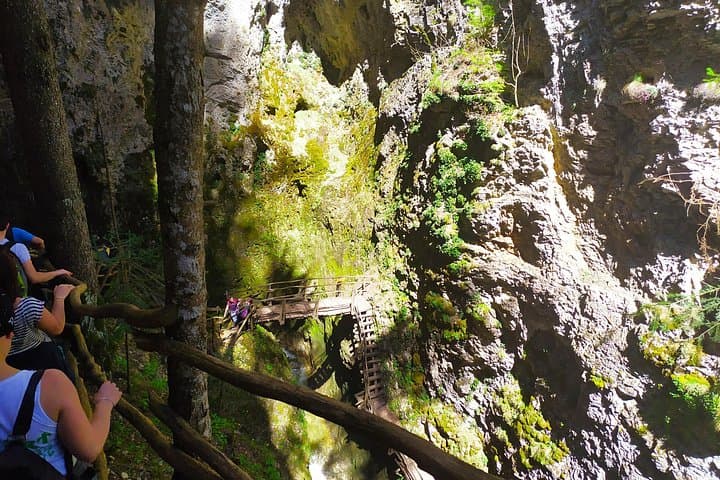
Expect led wooden stairs and steep eye-opening switchbacks on the Devil’s Path, a river that vanishes into the throat of a cave, and a 16th-century stone span known locally as the Devil’s Bridge. Plovdiv provides a counterpoint: Roman theaters, Byzantine layers, and a lively arts quarter for evenings.
Practical edge: bring sturdy hiking shoes for 30–90 minute ascents, a light rain layer, and a daypack with water—some trails are exposed and can be slippery after rain. The itinerary uses paved drives between sites, but many highlights require short walks and steps. Mornings are best for narrow gorges and caves when light and crowds are kinder; afternoons suit Plovdiv’s museums and taverns. Guides here are experienced in both natural history and Thracian lore—follow their notes on fragile archaeology and stay on marked paths to protect the sites.