THE ADVENTURE COLLECTIVE® · Independent discovery and booking for outdoor travel

Skim the Algarve coast aboard a swift RIB, passing Alvor, Portimão and Carvoeiro before arriving at Algar de Benagil—one of Europe’s most photographed sea caves. This two-hour trip from Lagos balances speed, comfort and local expertise to show the caves up close (without landing).
Skim the Algarve coast aboard a swift RIB, passing Alvor, Portimão and Carvoeiro before arriving at Algar de Benagil—one of Europe’s most photographed sea caves. This two-hour trip from Lagos balances speed, comfort and local expertise to show the caves up close (without landing).
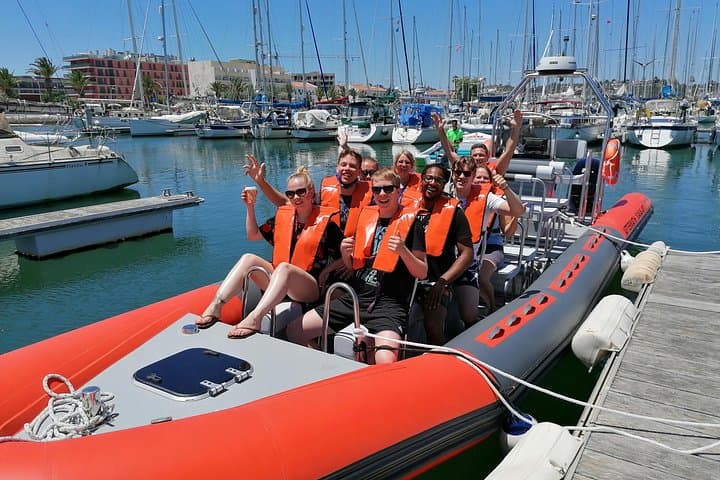
The RIB slices a bright line across the Algarve sea as Lagos Marina falls away behind you—white buildings, fishermen’s nets, the slow blink of harbor lights. Wind picks up at the bow and the pilot calls out landmarks with a practised, casual rhythm: Alvor’s sweep of sand, Portimão’s cliffs, the honeycombed cliffs of Carvoeiro. Then the coastline tightens into the limestone teeth that have made this shore famous; every head on the boat leans forward when a slit of water reveals a cave mouth.
Verified experiences and guided adventures in the surrounding area.
Operated by Lagos Grotto Trips · Benagil, Algarve
The RIB slices a bright line across the Algarve sea as Lagos Marina falls away behind you—white buildings, fishermen’s nets, the slow blink of harbor lights. Wind picks up at the bow and the pilot calls out landmarks with a practised, casual rhythm: Alvor’s sweep of sand, Portimão’s cliffs, the honeycombed cliffs of Carvoeiro. Then the coastline tightens into the limestone teeth that have made this shore famous; every head on the boat leans forward when a slit of water reveals a cave mouth.
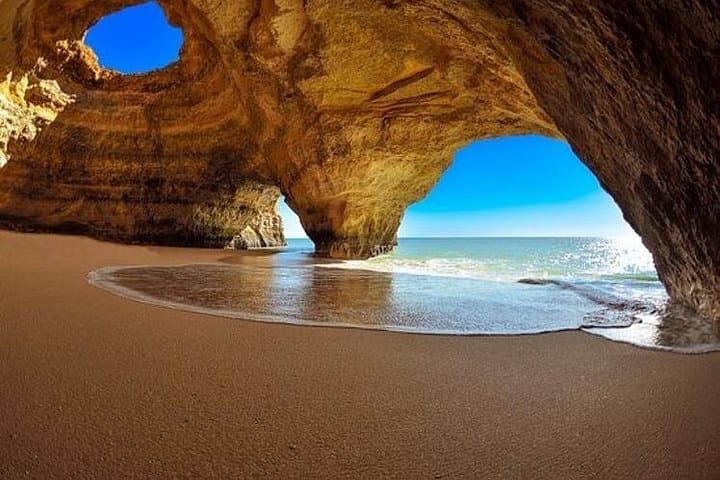
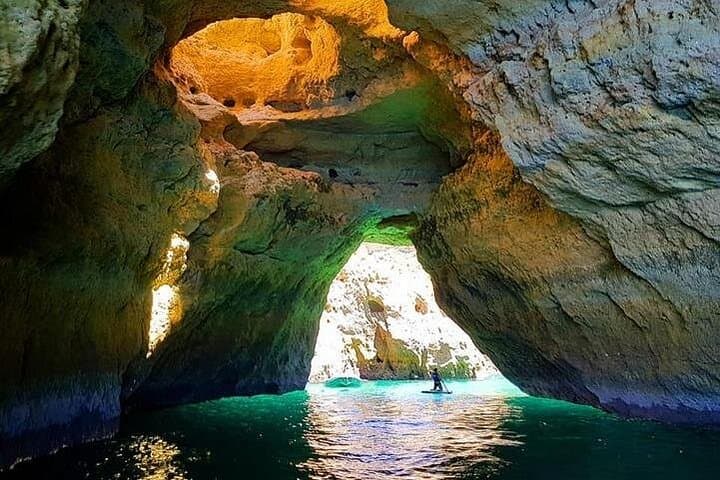
Algar de Benagil is the crescendo. From the deck the cave reads like a geological chapter: a rounded chamber hollowed by centuries of waves, a skylight punched through the roof where collapse met erosion. The light inside is direct and bright; turquoise pools sit like bowls in the sand. Carved from Miocene limestone, these caverns chart a long history of sea, stone, and human use—local fishermen once hid from storms and hauled in nets in the same folds of rock you now pass. Modern tourism has transformed the coast, but the features remain the same: arches, stacks, and narrow mouths where the Atlantic still dares you to look deeper.
Culturally the Algarve is a working coastline—small harbors, smoked fish stands, and a string of fishing villages that grew into tourist towns. Boat operators here balance local knowledge and safety: the RIB used on this route is an 18-seater with padded benches, built for speed and visibility so you cover Carvoeiro’s caves first, then Benagil as the best light arrives.
Practicalities matter. The tour departs Lagos Marina and runs about two hours round-trip; there is no landing at Benagil and no swimming from the boat. Guides are experienced and life jackets are supplied. Weather, tide, and safety determine how close the RIB gets to cave mouths—on rough days captains keep a respectful distance. Bring a windproof layer, sun protection, and a waterproof case for cameras and phones. If you’re prone to seasickness, take medication beforehand—RIBs are fast and the Atlantic can turn choppy.
For photographers aim for morning light or late afternoon when the cave walls warm to golden tones. For families, note restrictions for very young children and travelers with back or heart issues. Book early in summer—these trips sell out—and expect a lively, informative patrol of one of Europe’s most dramatic shorelines.
No—this operator approaches by boat only; landing inside the cave is not part of the tour for safety and conservation reasons.
The tour lasts about two hours and departs from Lagos Marina; arrive at the meeting point 15 minutes early.
Children aged 6 and older are generally allowed; infants and very young children are not recommended due to safety and seating constraints.
Trips are cancelled for rough seas or unsafe conditions—bookings are refundable if cancelled at least 24 hours ahead or for weather cancellations.
Yes, life jackets are provided for all passengers and crew will cover basic safety instructions before departure.
Open containers are not permitted; bring sealed water bottles and small snacks, but obey crew instructions regarding consumption.
Lagos Grotto Trips operates guided outdoor trips and adventures with an emphasis on safety, stewardship, and memorable experiences.

The RIB slices a bright line across the Algarve sea as Lagos Marina falls away behind you—white buildings, fishermen’s nets, the slow blink of harbor lights. Wind picks up at the bow and the pilot calls out landmarks with a practised, casual rhythm: Alvor’s sweep of sand, Portimão’s cliffs, the honeycombed cliffs of Carvoeiro. Then the coastline tightens into the limestone teeth that have made this shore famous; every head on the boat leans forward when a slit of water reveals a cave mouth.
The RIB slices a bright line across the Algarve sea as Lagos Marina falls away behind you—white buildings, fishermen’s nets, the slow blink of harbor lights. Wind picks up at the bow and the pilot calls out landmarks with a practised, casual rhythm: Alvor’s sweep of sand, Portimão’s cliffs, the honeycombed cliffs of Carvoeiro. Then the coastline tightens into the limestone teeth that have made this shore famous; every head on the boat leans forward when a slit of water reveals a cave mouth.
Algar de Benagil is the crescendo. From the deck the cave reads like a geological chapter: a rounded chamber hollowed by centuries of waves, a skylight punched through the roof where collapse met erosion. The light inside is direct and bright; turquoise pools sit like bowls in the sand. Carved from Miocene limestone, these caverns chart a long history of sea, stone, and human use—local fishermen once hid from storms and hauled in nets in the same folds of rock you now pass. Modern tourism has transformed the coast, but the features remain the same: arches, stacks, and narrow mouths where the Atlantic still dares you to look deeper.
Culturally the Algarve is a working coastline—small harbors, smoked fish stands, and a string of fishing villages that grew into tourist towns. Boat operators here balance local knowledge and safety: the RIB used on this route is an 18-seater with padded benches, built for speed and visibility so you cover Carvoeiro’s caves first, then Benagil as the best light arrives.
Practicalities matter. The tour departs Lagos Marina and runs about two hours round-trip; there is no landing at Benagil and no swimming from the boat. Guides are experienced and life jackets are supplied. Weather, tide, and safety determine how close the RIB gets to cave mouths—on rough days captains keep a respectful distance. Bring a windproof layer, sun protection, and a waterproof case for cameras and phones. If you’re prone to seasickness, take medication beforehand—RIBs are fast and the Atlantic can turn choppy.
For photographers aim for morning light or late afternoon when the cave walls warm to golden tones. For families, note restrictions for very young children and travelers with back or heart issues. Book early in summer—these trips sell out—and expect a lively, informative patrol of one of Europe’s most dramatic shorelines.