THE ADVENTURE COLLECTIVE® · Independent discovery and booking for outdoor travel

Cruise from Richards Bay into the wild heart of iSimangaliso’s St. Lucia Estuary—five to six hours of close-up hippo and crocodile viewing, birdlife-rich mangroves and guided nature walks. Plan for sun, binoculars and a moderate level of fitness.
Cruise from Richards Bay into the wild heart of iSimangaliso’s St. Lucia Estuary—five to six hours of close-up hippo and crocodile viewing, birdlife-rich mangroves and guided nature walks. Plan for sun, binoculars and a moderate level of fitness.
The motor hums low as the estuary widens, and the first hippo rises like a dark island, blowing steam into the cool air. From Richards Bay the road loosens into parkland; by water the landscape opens—mangrove fingers, wide sandbanks and islands that change with tides.
Verified experiences and guided adventures in the surrounding area.
Operated by Tanomuntu Tour and Travel · Richards Bay, KwaZulu-Natal
The motor hums low as the estuary widens, and the first hippo rises like a dark island, blowing steam into the cool air. From Richards Bay the road loosens into parkland; by water the landscape opens—mangrove fingers, wide sandbanks and islands that change with tides.
This cruise threads the St. Lucia Estuary through iSimangaliso Wetland Park, South Africa’s UNESCO-protected coastline where river, sea and dune systems meet. Geologically the estuary is a dynamic mix of sediment, mangrove root systems and shifting dunes that have shaped local settlements and Zulu fishing traditions for centuries. Colonial trade and more recent conservation efforts have left layered cultural footprints; local guides blend natural history with community stories on most departures.
Expect concentrated wildlife viewing: hippos wallow in midday channels, Nile crocodiles sun on banks and dozens of waterbirds—herons, kingfishers and the occasional African fish eagle—line the treeline. Guides pause at panoramic points for commentary and optional short nature walks or a visit to a Crocodile Centre nearby.
Practicalities are straightforward. Cruises run 5–6 hours including scenic park driving and boat time; dress in sun-protective layers, bring binoculars and a camera with a zoom lens. Motion-sickness meds help if you’re prone; maintain quiet on approaches to wildlife and follow guide instructions—boats stay at respectful distances. Morning and late-afternoon cruises give the best light and animal activity. This is a low-impact, high-reward way to see one of Africa’s most biodiverse coastal systems while supporting local conservation and guide-led interpretation.
Total time is typically 5–6 hours including scenic driving from Richards Bay, the estuary cruise and short guided stops.
Hippos and Nile crocodiles are commonly seen on the estuary cruises, though wildlife sightings can never be guaranteed.
Children are welcome but infants must sit on laps; parents should supervise near water and follow guide safety instructions.
Early morning and late afternoon tend to be most active for hippos, crocodiles and bird activity, plus the light is better for photography.
Tanomuntu Tour and Travel operates guided outdoor trips and adventures with an emphasis on safety, stewardship, and memorable experiences.
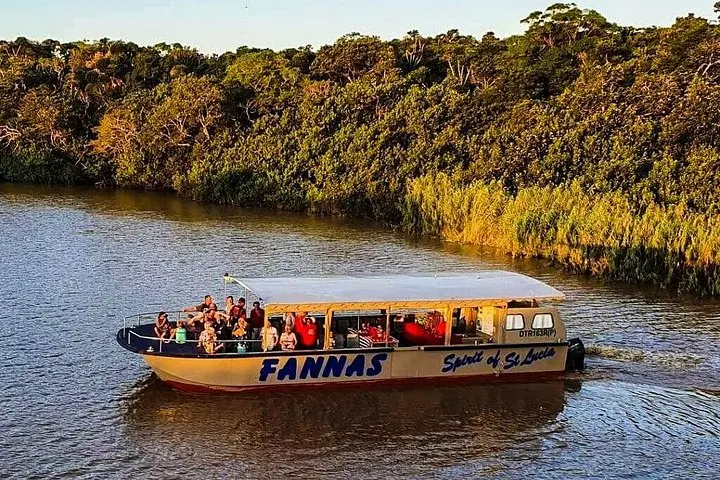
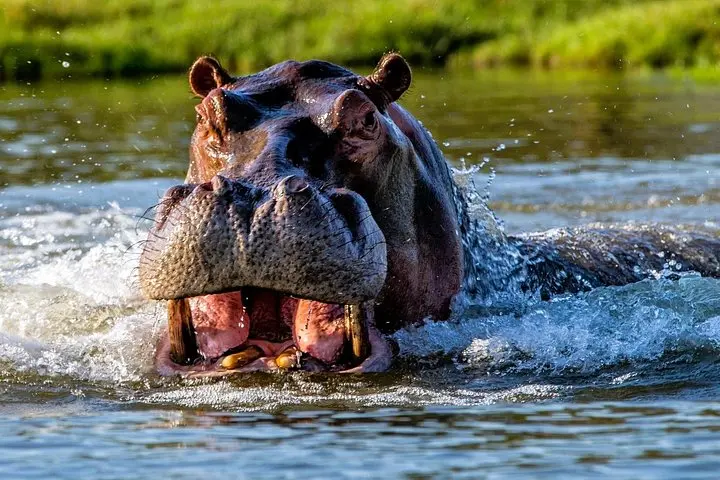
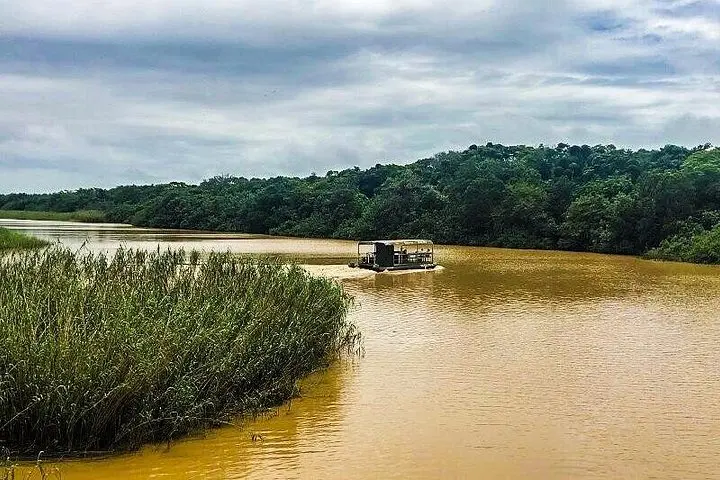
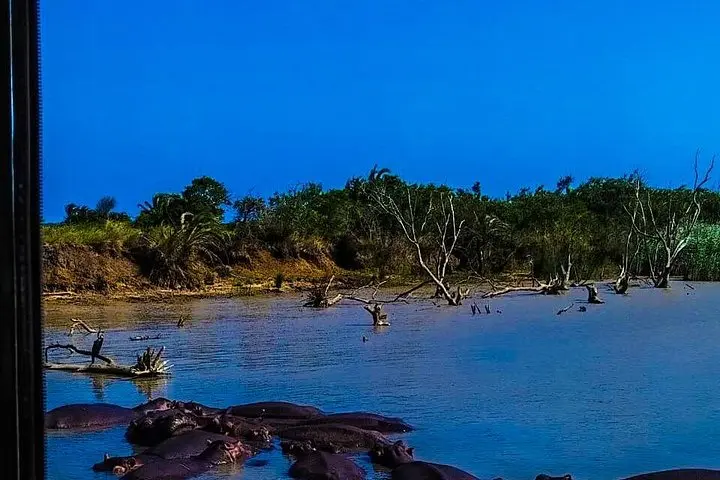
The motor hums low as the estuary widens, and the first hippo rises like a dark island, blowing steam into the cool air. From Richards Bay the road loosens into parkland; by water the landscape opens—mangrove fingers, wide sandbanks and islands that change with tides.
The motor hums low as the estuary widens, and the first hippo rises like a dark island, blowing steam into the cool air. From Richards Bay the road loosens into parkland; by water the landscape opens—mangrove fingers, wide sandbanks and islands that change with tides.
This cruise threads the St. Lucia Estuary through iSimangaliso Wetland Park, South Africa’s UNESCO-protected coastline where river, sea and dune systems meet. Geologically the estuary is a dynamic mix of sediment, mangrove root systems and shifting dunes that have shaped local settlements and Zulu fishing traditions for centuries. Colonial trade and more recent conservation efforts have left layered cultural footprints; local guides blend natural history with community stories on most departures.
Expect concentrated wildlife viewing: hippos wallow in midday channels, Nile crocodiles sun on banks and dozens of waterbirds—herons, kingfishers and the occasional African fish eagle—line the treeline. Guides pause at panoramic points for commentary and optional short nature walks or a visit to a Crocodile Centre nearby.
Practicalities are straightforward. Cruises run 5–6 hours including scenic park driving and boat time; dress in sun-protective layers, bring binoculars and a camera with a zoom lens. Motion-sickness meds help if you’re prone; maintain quiet on approaches to wildlife and follow guide instructions—boats stay at respectful distances. Morning and late-afternoon cruises give the best light and animal activity. This is a low-impact, high-reward way to see one of Africa’s most biodiverse coastal systems while supporting local conservation and guide-led interpretation.