THE ADVENTURE COLLECTIVE® · Independent discovery and booking for outdoor travel

Pedal through Raleigh’s historic core on a private 75-minute rickshaw tour that moves from the State Capitol to the Warehouse District, Moore Square, and City Market. Ideal for visitors who want a relaxed, narrated introduction to the city’s architecture, parks, and local culture.
Pedal through Raleigh’s historic core on a private 75-minute rickshaw tour that moves from the State Capitol to the Warehouse District, Moore Square, and City Market. Ideal for visitors who want a relaxed, narrated introduction to the city’s architecture, parks, and local culture.
The rickshaw hums to life beneath the portico of the Martin Marietta Center for the Performing Arts, and the city opens like a map under two pedaled wheels. In seventy-five focused minutes you glide from the formal columns of the performing arts center onto Fayetteville Street, past red-brick warehouses converted to galleries and breweries, and into green pockets where parks press against the pavement.
Verified experiences and guided adventures in the surrounding area.
Operated by Chris Ragland · Raleigh, North Carolina
The rickshaw hums to life beneath the portico of the Martin Marietta Center for the Performing Arts, and the city opens like a map under two pedaled wheels. In seventy-five focused minutes you glide from the formal columns of the performing arts center onto Fayetteville Street, past red-brick warehouses converted to galleries and breweries, and into green pockets where parks press against the pavement.
Raleigh’s downtown is compact but layered. Founded as North Carolina’s capital in 1792, the area mixes Greek Revival and Queen Anne architecture — you’ll pass the State Capitol and the Governor’s Mansion — with industrial-era warehouse blocks reshaped for contemporary life. The geology is low and even: the Piedmont plateau gives the tour a flat profile, so elevation gain is negligible and the pace is conversational rather than strenuous.
Cultural notes surface at every stop: the City Market’s cobbles recall 19th-century trade routes, the Warehouse District shows a recent cycle of adaptive reuse, and Moore Square’s renovation highlights the city’s investment in public space. Guides thread these details with local anecdotes, making the route feel like a neighborhood walk amplified.
Practical guidance: expect 75–80 minutes on paved streets and occasional cobblestones, roughly 2–4 miles of travel. Comfortable footwear, layered clothing, and a bottle of water keep the ride pleasant. Tours are private and stroller- and service-animal friendly; pickups can be arranged anywhere in downtown Raleigh. For photographers, early afternoon light flatters brick facades; for cooler air and smaller crowds, aim for morning departures.
The tour runs about 75–80 minutes and typically meets at the Martin Marietta Center for the Performing Arts; pickups anywhere in downtown Raleigh can be arranged.
Yes—infants can ride on laps and strollers are accessible, but confirm stroller size when booking to ensure secure storage.
Stops pass food and restroom options like City Market and Moore Square, but admissions and meals are not included in the tour price.
Full refunds are available if you cancel at least 24 hours before the departure; tours may cancel for bad weather.
Chris Ragland operates guided outdoor trips and adventures with an emphasis on safety, stewardship, and memorable experiences.
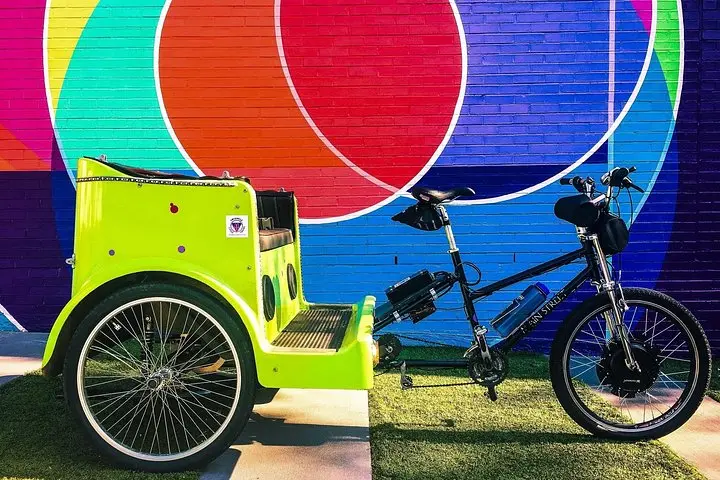
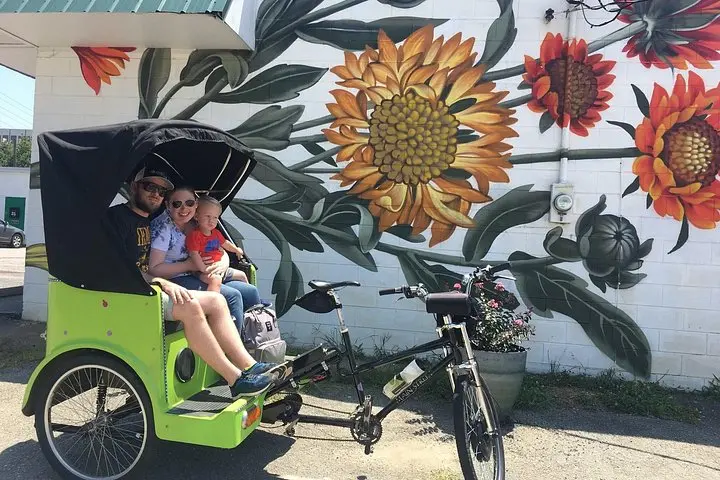
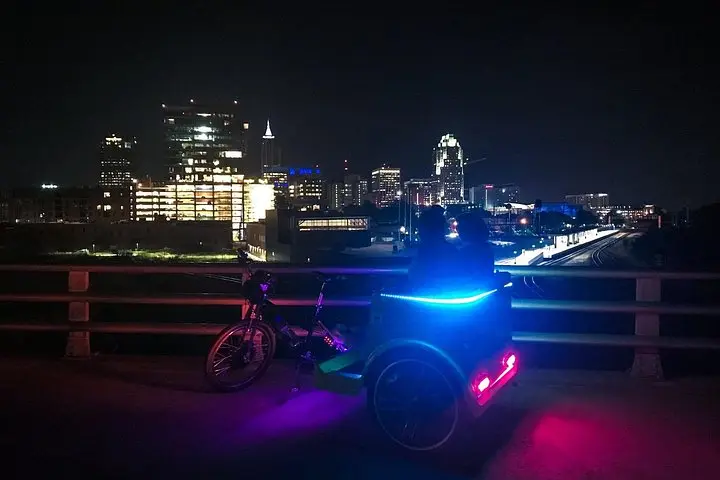
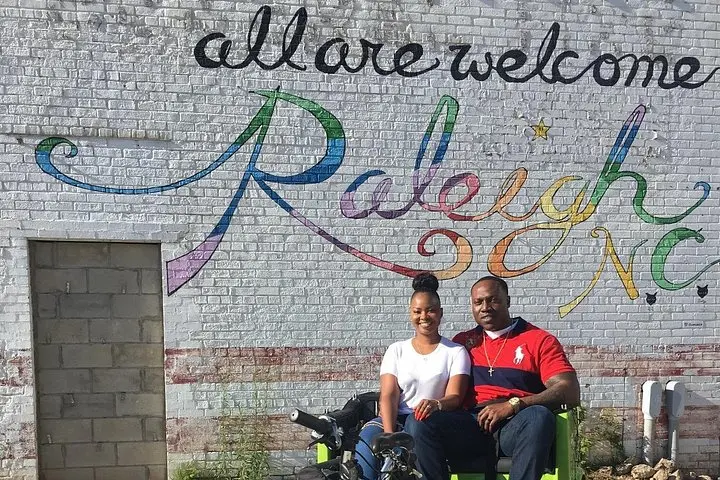
The rickshaw hums to life beneath the portico of the Martin Marietta Center for the Performing Arts, and the city opens like a map under two pedaled wheels. In seventy-five focused minutes you glide from the formal columns of the performing arts center onto Fayetteville Street, past red-brick warehouses converted to galleries and breweries, and into green pockets where parks press against the pavement.
The rickshaw hums to life beneath the portico of the Martin Marietta Center for the Performing Arts, and the city opens like a map under two pedaled wheels. In seventy-five focused minutes you glide from the formal columns of the performing arts center onto Fayetteville Street, past red-brick warehouses converted to galleries and breweries, and into green pockets where parks press against the pavement.
Raleigh’s downtown is compact but layered. Founded as North Carolina’s capital in 1792, the area mixes Greek Revival and Queen Anne architecture — you’ll pass the State Capitol and the Governor’s Mansion — with industrial-era warehouse blocks reshaped for contemporary life. The geology is low and even: the Piedmont plateau gives the tour a flat profile, so elevation gain is negligible and the pace is conversational rather than strenuous.
Cultural notes surface at every stop: the City Market’s cobbles recall 19th-century trade routes, the Warehouse District shows a recent cycle of adaptive reuse, and Moore Square’s renovation highlights the city’s investment in public space. Guides thread these details with local anecdotes, making the route feel like a neighborhood walk amplified.
Practical guidance: expect 75–80 minutes on paved streets and occasional cobblestones, roughly 2–4 miles of travel. Comfortable footwear, layered clothing, and a bottle of water keep the ride pleasant. Tours are private and stroller- and service-animal friendly; pickups can be arranged anywhere in downtown Raleigh. For photographers, early afternoon light flatters brick facades; for cooler air and smaller crowds, aim for morning departures.