THE ADVENTURE COLLECTIVE® · Independent discovery and booking for outdoor travel

Discover the Burren from horseback on a 3–4 hour guided trek from Lisdoonvarna. Ride through limestone pavement, old famine ruins and coastal viewpoints with vistas of the Aran Islands and Connemara.
Discover the Burren from horseback on a 3–4 hour guided trek from Lisdoonvarna. Ride through limestone pavement, old famine ruins and coastal viewpoints with vistas of the Aran Islands and Connemara.
You mount at a family-run yard on a cool Clare morning, leather creaking as the horse shifts beneath you. The trail opens into limestone fields that slope toward the Atlantic; wind pushes the grasses like an impatient tide and the cliffs and islands draw the eye west. The ride moves between hedgerows, across green roads and into patches of beech and ash where bird song animates the silence.
Verified experiences and guided adventures in the surrounding area.
Operated by Ireland Wild Escapes · Lisdoonvarna, County Clare
You mount at a family-run yard on a cool Clare morning, leather creaking as the horse shifts beneath you. The trail opens into limestone fields that slope toward the Atlantic; wind pushes the grasses like an impatient tide and the cliffs and islands draw the eye west. The ride moves between hedgerows, across green roads and into patches of beech and ash where bird song animates the silence.
The Burren’s landscape is Eire written in stone: exposed Carboniferous limestone, scattered karst pavements and remnants of ancient field walls. The route threads past famine-era stone ruins and earthy ring forts, reminders of a tough rural history. On clear days you’ll see the Aran Islands and the Connemara peaks across the water — geological neighbors formed in different eras but sharing the same seascape.
Locals prize the area for its hardy wildflowers, grazing sheep and the shoreline’s seals; culture here is practical and hospitable, with stables run by people who grew up on these slopes. Guides balance storytelling with horse welfare and route choice, tailoring pace for beginners or stronger riders.
Practical: rides run March–October and last 3–4 hours depending on your booking. Wear long trousers and boots with a heel; bring rainproof layers, water and a small pack. Expect uneven, sometimes rocky footing and short climbs up to around 350–400m in places—saddles and helmets are provided, but sensible footwear and a steady core make the day easier. If you want a beach gallop or a higher overlook above 1,200ft, mention it when you book — guides can adapt sections to match experience and weather.
Yes—guided treks cater to a range of abilities; guides pair riders with suitable horses and keep pace controlled for novices.
Yes, the stable enforces a maximum rider weight of 95 kg (about 209 lb) for animal welfare reasons—disclose your weight when booking.
Rides operate March–October and may be canceled for heavy rain or high winds; the operator offers a full refund if canceled at least 24 hours before departure or for unsafe conditions.
Routes can include beach gallops or climbs to higher lookouts on calmer days, but these are weather- and group-dependent—request them when you book.
Ireland Wild Escapes operates guided outdoor trips and adventures with an emphasis on safety, stewardship, and memorable experiences.
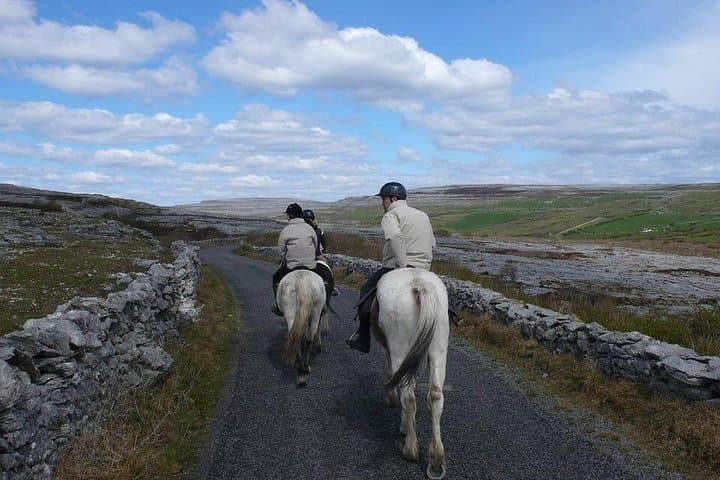


You mount at a family-run yard on a cool Clare morning, leather creaking as the horse shifts beneath you. The trail opens into limestone fields that slope toward the Atlantic; wind pushes the grasses like an impatient tide and the cliffs and islands draw the eye west. The ride moves between hedgerows, across green roads and into patches of beech and ash where bird song animates the silence.
You mount at a family-run yard on a cool Clare morning, leather creaking as the horse shifts beneath you. The trail opens into limestone fields that slope toward the Atlantic; wind pushes the grasses like an impatient tide and the cliffs and islands draw the eye west. The ride moves between hedgerows, across green roads and into patches of beech and ash where bird song animates the silence.
The Burren’s landscape is Eire written in stone: exposed Carboniferous limestone, scattered karst pavements and remnants of ancient field walls. The route threads past famine-era stone ruins and earthy ring forts, reminders of a tough rural history. On clear days you’ll see the Aran Islands and the Connemara peaks across the water — geological neighbors formed in different eras but sharing the same seascape.
Locals prize the area for its hardy wildflowers, grazing sheep and the shoreline’s seals; culture here is practical and hospitable, with stables run by people who grew up on these slopes. Guides balance storytelling with horse welfare and route choice, tailoring pace for beginners or stronger riders.
Practical: rides run March–October and last 3–4 hours depending on your booking. Wear long trousers and boots with a heel; bring rainproof layers, water and a small pack. Expect uneven, sometimes rocky footing and short climbs up to around 350–400m in places—saddles and helmets are provided, but sensible footwear and a steady core make the day easier. If you want a beach gallop or a higher overlook above 1,200ft, mention it when you book — guides can adapt sections to match experience and weather.