THE ADVENTURE COLLECTIVE® · Independent discovery and booking for outdoor travel

Hop a tuk‑tuk from Battambang and ride the original bamboo train, stroll riverbanks and village lanes, then climb Phnom Sampov to see the bat cave and memorial—an intense, informative afternoon blending living culture and recent history.
Hop a tuk‑tuk from Battambang and ride the original bamboo train, stroll riverbanks and village lanes, then climb Phnom Sampov to see the bat cave and memorial—an intense, informative afternoon blending living culture and recent history.
The tuk‑tuk pulls away from Battambang’s colonial facades and the countryside unfurls: low rice paddies, fruit orchards, and wooden homes where children wave from dirt tracks. You’ll pass a suspension bridge over a slow river, then feel the rickety thrill of the original bamboo train as it hums across reclaimed track—open to wind and wide, about 7 km of rural scenery that pushes you past market gardens and river bends.
Verified experiences and guided adventures in the surrounding area.
Operated by Battambang Tour: Mr Lychee · Battambang, Battambang Province
The tuk‑tuk pulls away from Battambang’s colonial facades and the countryside unfurls: low rice paddies, fruit orchards, and wooden homes where children wave from dirt tracks. You’ll pass a suspension bridge over a slow river, then feel the rickety thrill of the original bamboo train as it hums across reclaimed track—open to wind and wide, about 7 km of rural scenery that pushes you past market gardens and river bends.
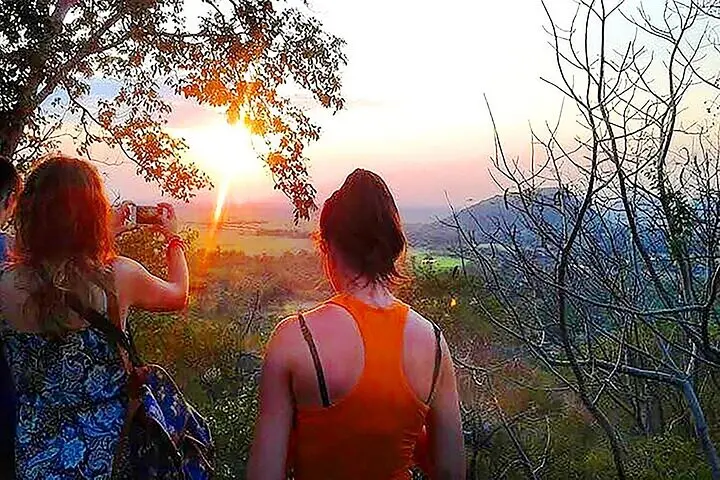
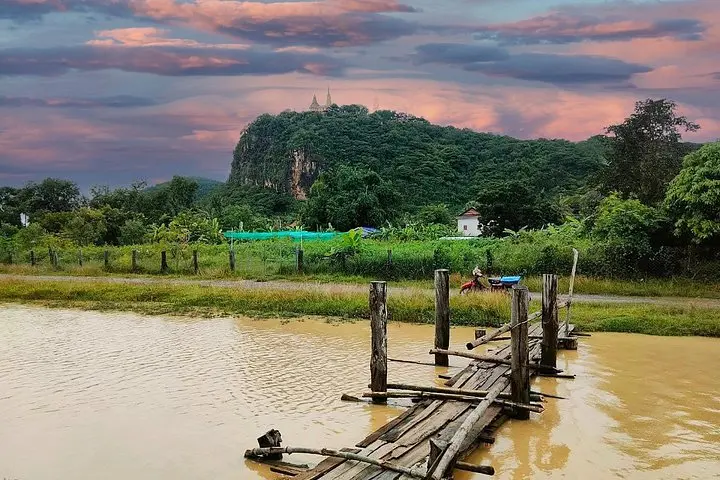
This route threads recent history and natural spectacle. Phnom Sampov, the hill known locally as Sampov, is a jagged rise of limestone and carved caves where Khmer Rouge atrocities occurred; a Buddhist pagoda and memorial garden now mark the site. Geologically, the hill is limestone karst, honeycombed with caverns where millions of bats roost and, at dusk, pour out in a swirling column.
Culturally, the tour moves slowly—local farmers tending orchards, pagoda rituals, and villagers who still rely on riverine transport. Guides provide context on the Pol Pot era at the “killing cave” memorial while emphasizing respect at those sites.
Practical guidance: this is a half‑day to full‑day outing (expect up to 7 hours including transfers). Wear sturdy closed‑toe shoes for uneven ground and several hundred steps to viewpoints. Carry sun protection and insect repellent; bottled water is provided but bring a refillable bottle. Keep valuables secure—monkeys on Sampov can be aggressive. The bamboo train ride is informal and can be bumpy; check closure updates in advance as operations are fragile. Plan for an afternoon schedule to time the bat exodus at dusk and leave comfortable time for the return to Battambang.
Rides typically cover rural stretches of track totaling several kilometers and are arranged in short segments; the village run described here is around 7 km of countryside viewing scattered across the outing.
Yes—this tour is labeled easy to moderate. Infants can sit on laps and specialized infant seats are available, but the Phnom Sampov steps and some uneven ground may be challenging for those with serious mobility issues.
Entrance to Phnom Sampov’s main sites (including the killing cave and bat cave viewpoint) is included in this tour, but small donations to temples or vendors are not covered.
Yes—operations are subject to local regulation and seasonal issues; check with your operator ahead of time for current status and possible route changes.
Battambang Tour: Mr Lychee operates guided outdoor trips and adventures with an emphasis on safety, stewardship, and memorable experiences.
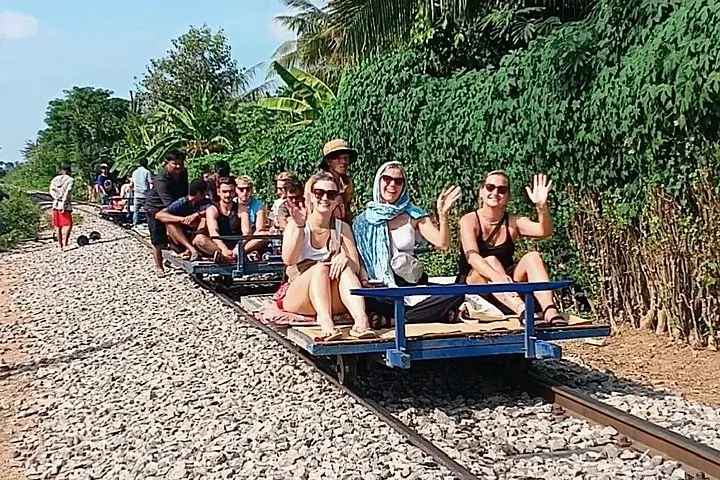
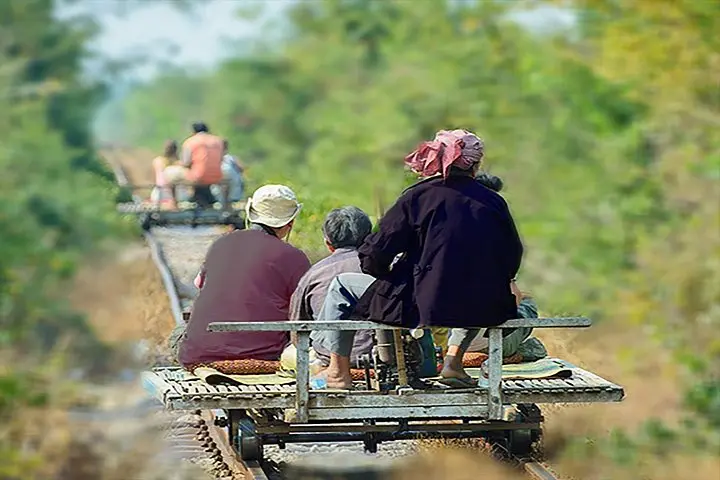
The tuk‑tuk pulls away from Battambang’s colonial facades and the countryside unfurls: low rice paddies, fruit orchards, and wooden homes where children wave from dirt tracks. You’ll pass a suspension bridge over a slow river, then feel the rickety thrill of the original bamboo train as it hums across reclaimed track—open to wind and wide, about 7 km of rural scenery that pushes you past market gardens and river bends.
The tuk‑tuk pulls away from Battambang’s colonial facades and the countryside unfurls: low rice paddies, fruit orchards, and wooden homes where children wave from dirt tracks. You’ll pass a suspension bridge over a slow river, then feel the rickety thrill of the original bamboo train as it hums across reclaimed track—open to wind and wide, about 7 km of rural scenery that pushes you past market gardens and river bends.
This route threads recent history and natural spectacle. Phnom Sampov, the hill known locally as Sampov, is a jagged rise of limestone and carved caves where Khmer Rouge atrocities occurred; a Buddhist pagoda and memorial garden now mark the site. Geologically, the hill is limestone karst, honeycombed with caverns where millions of bats roost and, at dusk, pour out in a swirling column.
Culturally, the tour moves slowly—local farmers tending orchards, pagoda rituals, and villagers who still rely on riverine transport. Guides provide context on the Pol Pot era at the “killing cave” memorial while emphasizing respect at those sites.
Practical guidance: this is a half‑day to full‑day outing (expect up to 7 hours including transfers). Wear sturdy closed‑toe shoes for uneven ground and several hundred steps to viewpoints. Carry sun protection and insect repellent; bottled water is provided but bring a refillable bottle. Keep valuables secure—monkeys on Sampov can be aggressive. The bamboo train ride is informal and can be bumpy; check closure updates in advance as operations are fragile. Plan for an afternoon schedule to time the bat exodus at dusk and leave comfortable time for the return to Battambang.