THE ADVENTURE COLLECTIVE® · Independent discovery and booking for outdoor travel

Ride across the Giza Plateau by camel or horse-drawn carriage and view the Great Pyramid, Khafre and Menkaure up close. This 4–5 hour tour blends easy walking with mounted or carriage segments, local history, and practical tips for navigating sun, sand and crowds.
Ride across the Giza Plateau by camel or horse-drawn carriage and view the Great Pyramid, Khafre and Menkaure up close. This 4–5 hour tour blends easy walking with mounted or carriage segments, local history, and practical tips for navigating sun, sand and crowds.
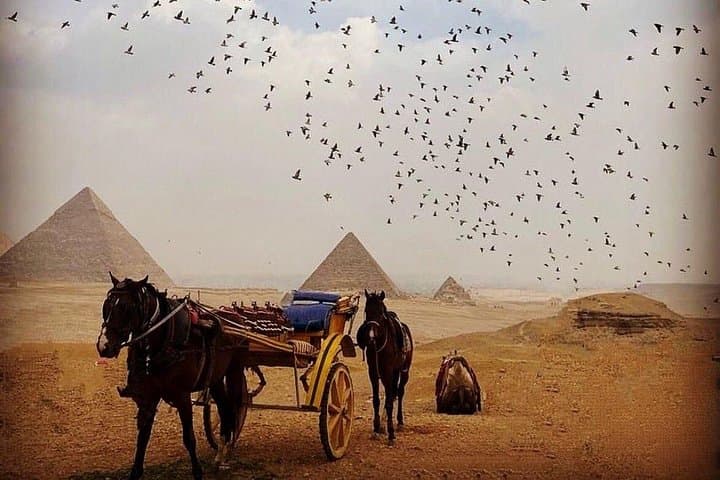
Dust and limestone dust the air as you step onto the Giza Plateau, the pyramids rising like engineered mountains against an open Egyptian sky. Early light slants across the Great Pyramid’s faces while camel shadows stretch across packed sand; horse-drawn carriages clatter along service tracks, offering a slower, human-paced view of structures built around 2600–2500 BCE.
Verified experiences and guided adventures in the surrounding area.
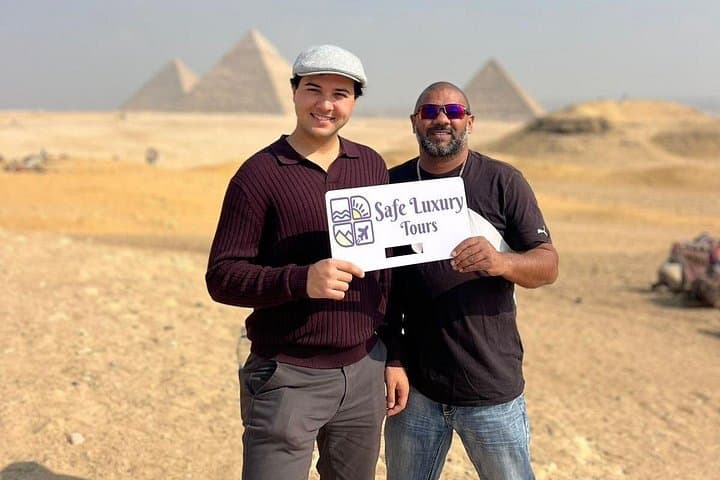
Operated by Safe luxury tours · Giza, Giza Governorate
Dust and limestone dust the air as you step onto the Giza Plateau, the pyramids rising like engineered mountains against an open Egyptian sky. Early light slants across the Great Pyramid’s faces while camel shadows stretch across packed sand; horse-drawn carriages clatter along service tracks, offering a slower, human-paced view of structures built around 2600–2500 BCE.
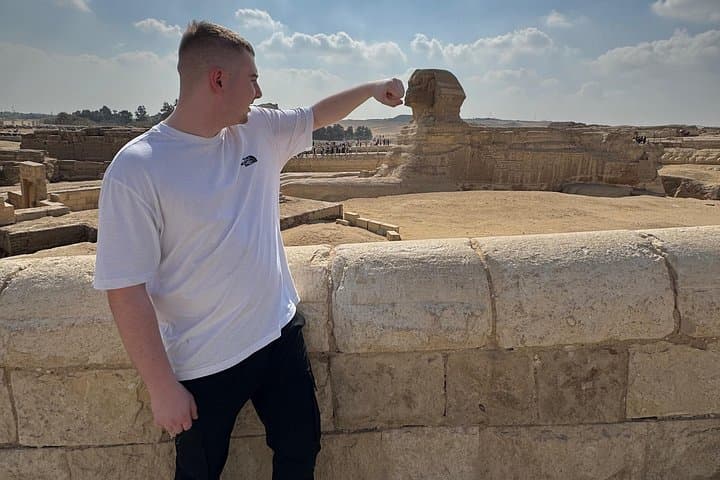
The plateau is both archaeological site and working landscape. The three main pyramids—Khufu, Khafre and Menkaure—stand over funerary temples, causeways and the Great Sphinx, whose lion body and human face watch the Nile’s plain. The limestone bedrock here records ancient quarrying; wind and occasional flash floods have shaped the surrounding sand deposits over millennia. Local guides bring cultural context: Old Kingdom burial practices, the workers’ village, and how modern Cairo grew toward this ancient edge.
Practical guidance follows the scene: tours last about 4–5 hours and are mostly flat walking with short mounted or carriage rides. Expect dusty paths, uneven ground near monuments, and sun exposure; start in the morning to avoid the hottest hours. Bring layered, breathable clothing, sturdy closed-toe shoes, sun protection and water—the operator usually provides bottled water and a local lunch.
Photographs are plentiful but respect marked areas and the site’s protective rules; entry tickets are typically included. Choosing camel or carriage changes the pace—camel for a canonical desert image, carriage for a steadier, lower-sway ride. Either option puts you within sightlines of structures older than written history, an outdoor experience that pairs cultural depth with sensory immediacy.
The tour runs about 4–5 hours, including stops at the pyramid complex, a mounted or carriage loop, and the Sphinx area.
Children can ride but must follow the operator’s safety rules; infants may be required to sit on laps during transit portions.
This tour typically includes site entry; confirm on booking and carry ID for ticket checks.
Tipping local guides, drivers and animal handlers is customary; small amounts in local currency are appropriate.
Safe luxury tours operates guided outdoor trips and adventures with an emphasis on safety, stewardship, and memorable experiences.
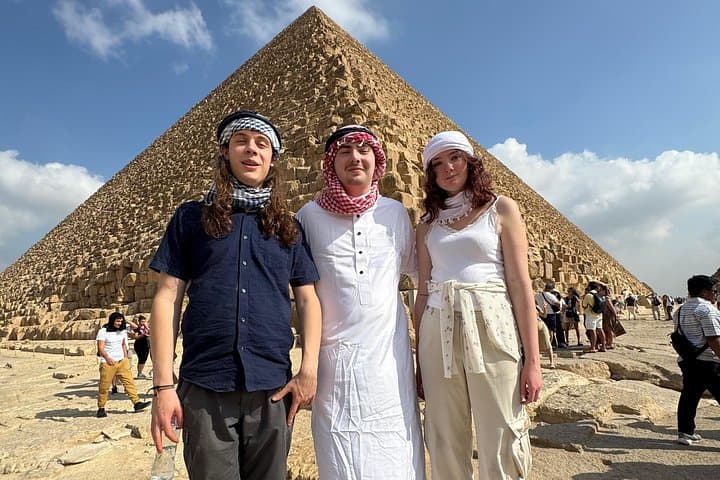
Dust and limestone dust the air as you step onto the Giza Plateau, the pyramids rising like engineered mountains against an open Egyptian sky. Early light slants across the Great Pyramid’s faces while camel shadows stretch across packed sand; horse-drawn carriages clatter along service tracks, offering a slower, human-paced view of structures built around 2600–2500 BCE.
Dust and limestone dust the air as you step onto the Giza Plateau, the pyramids rising like engineered mountains against an open Egyptian sky. Early light slants across the Great Pyramid’s faces while camel shadows stretch across packed sand; horse-drawn carriages clatter along service tracks, offering a slower, human-paced view of structures built around 2600–2500 BCE.
The plateau is both archaeological site and working landscape. The three main pyramids—Khufu, Khafre and Menkaure—stand over funerary temples, causeways and the Great Sphinx, whose lion body and human face watch the Nile’s plain. The limestone bedrock here records ancient quarrying; wind and occasional flash floods have shaped the surrounding sand deposits over millennia. Local guides bring cultural context: Old Kingdom burial practices, the workers’ village, and how modern Cairo grew toward this ancient edge.
Practical guidance follows the scene: tours last about 4–5 hours and are mostly flat walking with short mounted or carriage rides. Expect dusty paths, uneven ground near monuments, and sun exposure; start in the morning to avoid the hottest hours. Bring layered, breathable clothing, sturdy closed-toe shoes, sun protection and water—the operator usually provides bottled water and a local lunch.
Photographs are plentiful but respect marked areas and the site’s protective rules; entry tickets are typically included. Choosing camel or carriage changes the pace—camel for a canonical desert image, carriage for a steadier, lower-sway ride. Either option puts you within sightlines of structures older than written history, an outdoor experience that pairs cultural depth with sensory immediacy.