THE ADVENTURE COLLECTIVE® · Independent discovery and booking for outdoor travel

Saddle up on a smooth Peruvian Paso and ride through Pómac Historical Sanctuary to the pyramids of Sicán. This four-hour tour combines easy riding, birdwatching, and a close-up look at pre-Inca burial mounds.
Saddle up on a smooth Peruvian Paso and ride through Pómac Historical Sanctuary to the pyramids of Sicán. This four-hour tour combines easy riding, birdwatching, and a close-up look at pre-Inca burial mounds.
A morning saddle fits like a second skin as you rise from the sugarcane edge and push into the warm, whispering wood of Pómac. The Peruvian Paso horses step with a steady, rocking gait; the trees lean and watch, and the low sun finds the earthen contours of ancient mounds ahead. Within an hour you reach low, terraced pyramids—stone and adobe forms that read like a map of a culture’s ritual life.
Verified experiences and guided adventures in the surrounding area.
Operated by Rancho Santana Horseback Riding · Lambayeque, Lambayeque
A morning saddle fits like a second skin as you rise from the sugarcane edge and push into the warm, whispering wood of Pómac. The Peruvian Paso horses step with a steady, rocking gait; the trees lean and watch, and the low sun finds the earthen contours of ancient mounds ahead. Within an hour you reach low, terraced pyramids—stone and adobe forms that read like a map of a culture’s ritual life.
This slice of Lambayeque holds the archaeological complex of Sicán, where the Lord of Sicán’s burial and ceremonial Tumi knives were uncovered. Geologically, the sanctuary sits on alluvial plains shaped by rivers that once deposited the sediments that now support dry-forest species. Culturally, the forest has long been a working landscape—irrigated fields flank sacred mounds and an immense, gnarled carob tree marks a living timeline over 400 years old.
Expect an accessible four-hour loop that balances steady riding with stops at viewpoints and the main pyramids; guides offer context on pottery, metallurgy and the sanctuary’s creation in 2001 to protect both ruins and habitat. Practical notes: sun is strong, shade is patchy, and trails are sandy to packed earth—the Paso’s comfortable gait helps cover ground without tiring. Bring water, sun protection, and a camera or binoculars for birding pauses.
The ride is both a cultural visit and a nature outing: quiet, earth-scented, and surprisingly intimate with pre-Columbian history under an arid sky.
No—tours are suitable for beginners; guides use steady Peruvian Paso horses and give basic instructions, though riders should be able to sit independently.
Typical inclusions are horse, guide, and entrance to the Pómac Sanctuary; confirm transfers and meals when booking.
Children are usually permitted but weight and age limits may apply—check tour requirements and safety rules before booking.
Most visitors stay in Chiclayo and use local transfers or arranged pickup; public transport options exist but confirm pickup details with the operator.
Rancho Santana Horseback Riding operates guided outdoor trips and adventures with an emphasis on safety, stewardship, and memorable experiences.
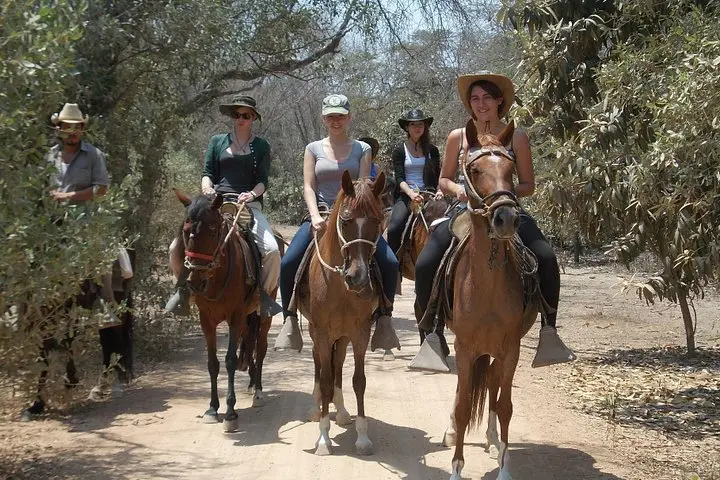
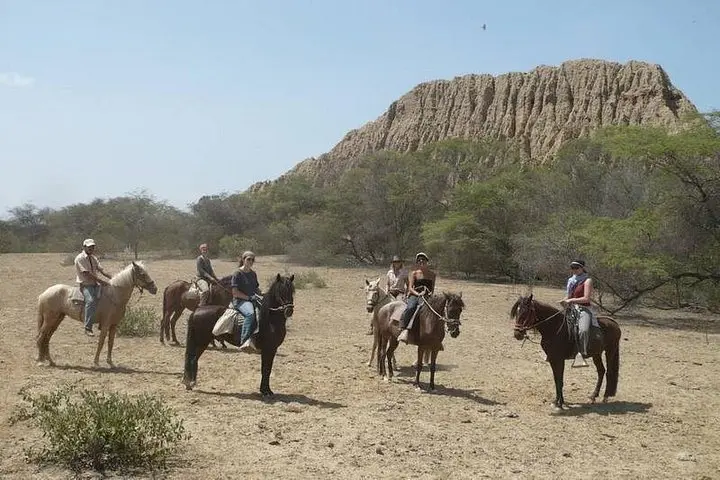
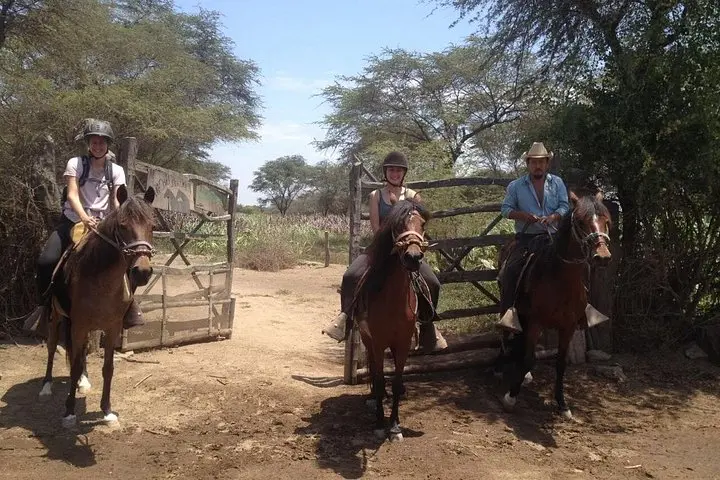
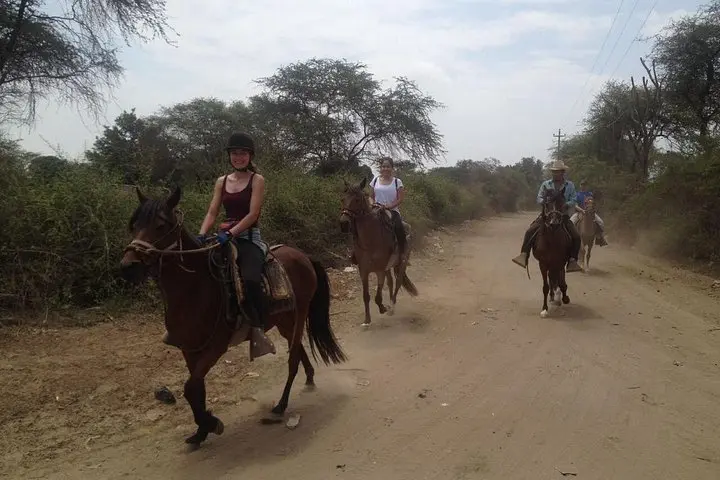
A morning saddle fits like a second skin as you rise from the sugarcane edge and push into the warm, whispering wood of Pómac. The Peruvian Paso horses step with a steady, rocking gait; the trees lean and watch, and the low sun finds the earthen contours of ancient mounds ahead. Within an hour you reach low, terraced pyramids—stone and adobe forms that read like a map of a culture’s ritual life.
A morning saddle fits like a second skin as you rise from the sugarcane edge and push into the warm, whispering wood of Pómac. The Peruvian Paso horses step with a steady, rocking gait; the trees lean and watch, and the low sun finds the earthen contours of ancient mounds ahead. Within an hour you reach low, terraced pyramids—stone and adobe forms that read like a map of a culture’s ritual life.
This slice of Lambayeque holds the archaeological complex of Sicán, where the Lord of Sicán’s burial and ceremonial Tumi knives were uncovered. Geologically, the sanctuary sits on alluvial plains shaped by rivers that once deposited the sediments that now support dry-forest species. Culturally, the forest has long been a working landscape—irrigated fields flank sacred mounds and an immense, gnarled carob tree marks a living timeline over 400 years old.
Expect an accessible four-hour loop that balances steady riding with stops at viewpoints and the main pyramids; guides offer context on pottery, metallurgy and the sanctuary’s creation in 2001 to protect both ruins and habitat. Practical notes: sun is strong, shade is patchy, and trails are sandy to packed earth—the Paso’s comfortable gait helps cover ground without tiring. Bring water, sun protection, and a camera or binoculars for birding pauses.
The ride is both a cultural visit and a nature outing: quiet, earth-scented, and surprisingly intimate with pre-Columbian history under an arid sky.