THE ADVENTURE COLLECTIVE® · Independent discovery and booking for outdoor travel

Feel the pull of an Alaskan husky team across frozen lakes outside Yellowknife. This three-hour kennel experience combines hands-on dog handling, a guided sled run, and warm-up time in a heated station.
Feel the pull of an Alaskan husky team across frozen lakes outside Yellowknife. This three-hour kennel experience combines hands-on dog handling, a guided sled run, and warm-up time in a heated station.
Snow cracks under the runner as the team leans forward and the trees thin, revealing a vast frozen lake that seems to hold the sky. On a crisp Yellowknife morning the dogs pull with eager rhythm; their panting punctuates the soundscape and the sled glides, guided by a musher who reads wind and ice like a compass.
Verified experiences and guided adventures in the surrounding area.
Operated by Yellowknife Tours · Yellowknife, Northwest Territories
Snow cracks under the runner as the team leans forward and the trees thin, revealing a vast frozen lake that seems to hold the sky. On a crisp Yellowknife morning the dogs pull with eager rhythm; their panting punctuates the soundscape and the sled glides, guided by a musher who reads wind and ice like a compass.
Dog sledding here sits at the intersection of Indigenous travel routes and territorial fur-trade routes—modes of movement shaped by lake ice and boreal forest. The geology of the region is ancient Canadian Shield: rounded bedrock, thin soils, and long, wind-scoured lake basins that freeze into broad, flat trails ideal for sled runs. Local culture in Yellowknife balances Dene traditions, northern outfitting, and contemporary tourism; kennel visits offer a chance to hear about dog breeding, winter survival, and life above the 60th parallel.
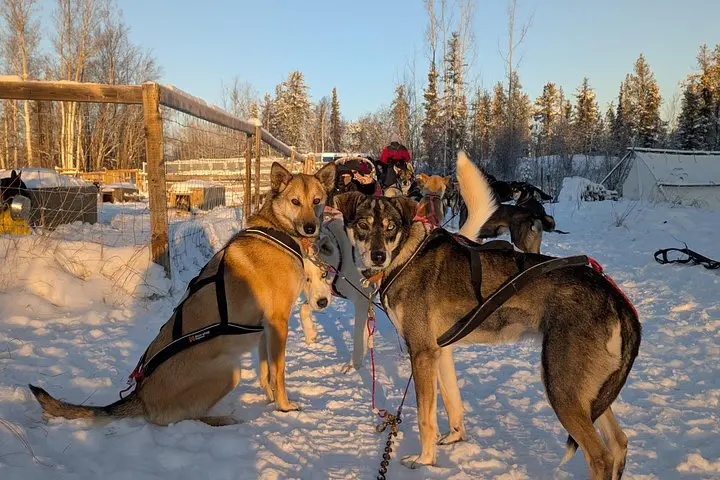
Expect a structured three-hour experience: safety briefing, team setup, a 30-minute guided run on groomed lake and forest portage, then a warm-up with hot drinks and dog time in the heated Aurora Station. Trails can be wind-buffed and bright; glare and cold are active elements that shape the pace. Practical tips: layer to trap heat but allow mobility, carry a windproof outer layer and face protection, and keep fingers and toes dry. Group sizes are small, photography windows are generous, and interaction with the dogs—training, harnessing, and post-ride cuddles—is part of the visit.
This is accessible winter adventure: minimal technical skill required, but respect for cold, animal welfare, and trail rules makes the outing both memorable and responsible.
No—activities include a safety briefing and hands-on instruction; guides manage musher duties and assist guests as needed.
Infants are required to sit on an adult’s lap; check age or size restrictions with the operator before booking.
Tours may be canceled for unsafe conditions; operators will notify you and rebook or refund according to policy.
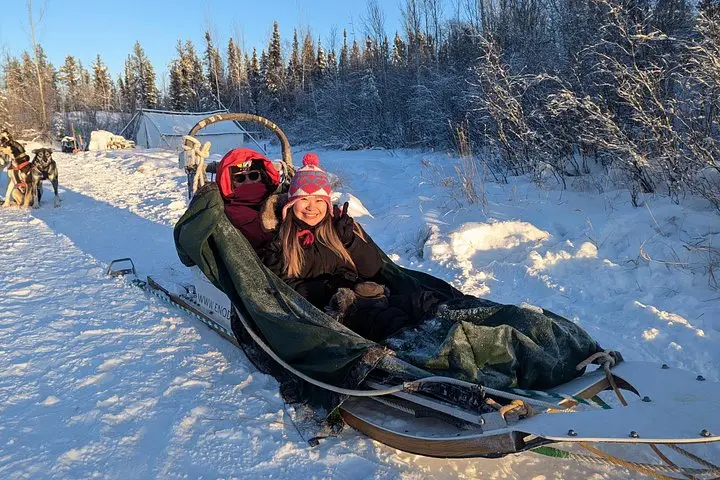
Photos with the dog team are offered as part of the experience; confirm whether digital copies are provided or available for purchase.
Yellowknife Tours operates guided outdoor trips and adventures with an emphasis on safety, stewardship, and memorable experiences.
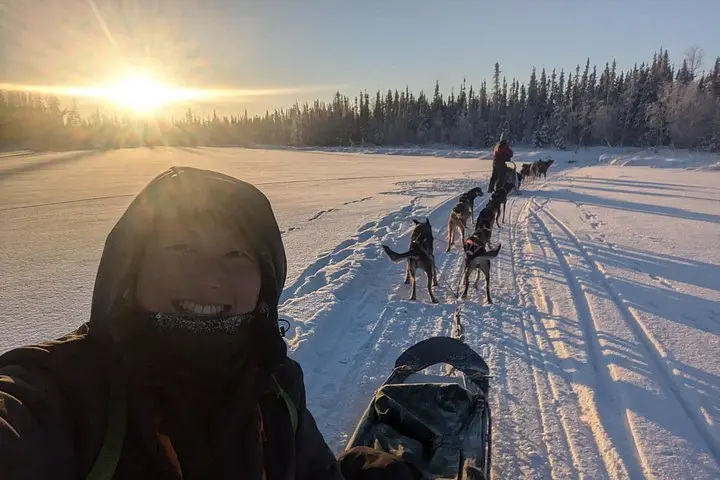
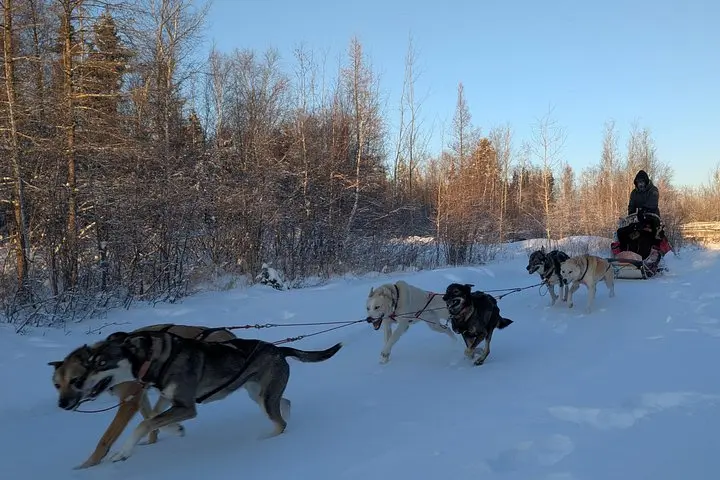
Snow cracks under the runner as the team leans forward and the trees thin, revealing a vast frozen lake that seems to hold the sky. On a crisp Yellowknife morning the dogs pull with eager rhythm; their panting punctuates the soundscape and the sled glides, guided by a musher who reads wind and ice like a compass.
Snow cracks under the runner as the team leans forward and the trees thin, revealing a vast frozen lake that seems to hold the sky. On a crisp Yellowknife morning the dogs pull with eager rhythm; their panting punctuates the soundscape and the sled glides, guided by a musher who reads wind and ice like a compass.
Dog sledding here sits at the intersection of Indigenous travel routes and territorial fur-trade routes—modes of movement shaped by lake ice and boreal forest. The geology of the region is ancient Canadian Shield: rounded bedrock, thin soils, and long, wind-scoured lake basins that freeze into broad, flat trails ideal for sled runs. Local culture in Yellowknife balances Dene traditions, northern outfitting, and contemporary tourism; kennel visits offer a chance to hear about dog breeding, winter survival, and life above the 60th parallel.
Expect a structured three-hour experience: safety briefing, team setup, a 30-minute guided run on groomed lake and forest portage, then a warm-up with hot drinks and dog time in the heated Aurora Station. Trails can be wind-buffed and bright; glare and cold are active elements that shape the pace. Practical tips: layer to trap heat but allow mobility, carry a windproof outer layer and face protection, and keep fingers and toes dry. Group sizes are small, photography windows are generous, and interaction with the dogs—training, harnessing, and post-ride cuddles—is part of the visit.
This is accessible winter adventure: minimal technical skill required, but respect for cold, animal welfare, and trail rules makes the outing both memorable and responsible.