THE ADVENTURE COLLECTIVE® · Independent discovery and booking for outdoor travel

Walk from the ancient Changu Narayan temple along the Kathmandu Valley rim to Nagarkot for a half-day ridge hike with village culture and Himalayan viewpoints. Expect stone lanes, terraced farms, and a steady uphill that rewards you with broad mountain views on clear mornings.
Walk from the ancient Changu Narayan temple along the Kathmandu Valley rim to Nagarkot for a half-day ridge hike with village culture and Himalayan viewpoints. Expect stone lanes, terraced farms, and a steady uphill that rewards you with broad mountain views on clear mornings.
You step out of the car as the valley air feels cool and thin — Changu Narayan’s flagstone lanes climb past woodcarvers and a temple whose carvings have watched the Kathmandu Valley for over a millennium.
Verified experiences and guided adventures in the surrounding area.
Operated by Himalayan Advisor Pvt. Ltd. · Kathmandu, Bagmati Province
You step out of the car as the valley air feels cool and thin — Changu Narayan’s flagstone lanes climb past woodcarvers and a temple whose carvings have watched the Kathmandu Valley for over a millennium.
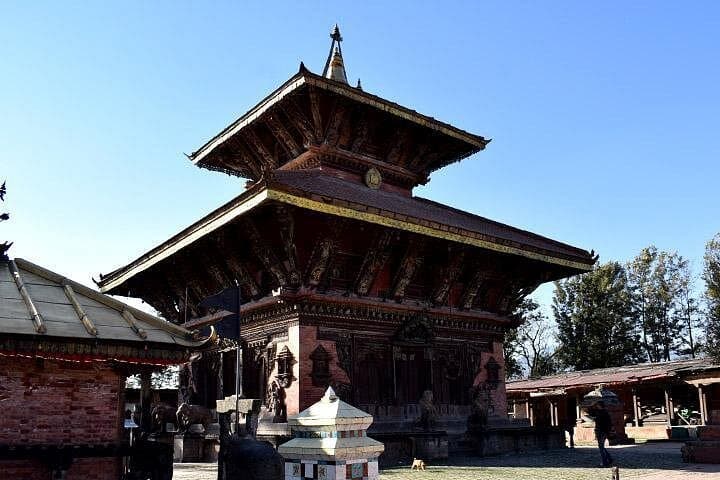
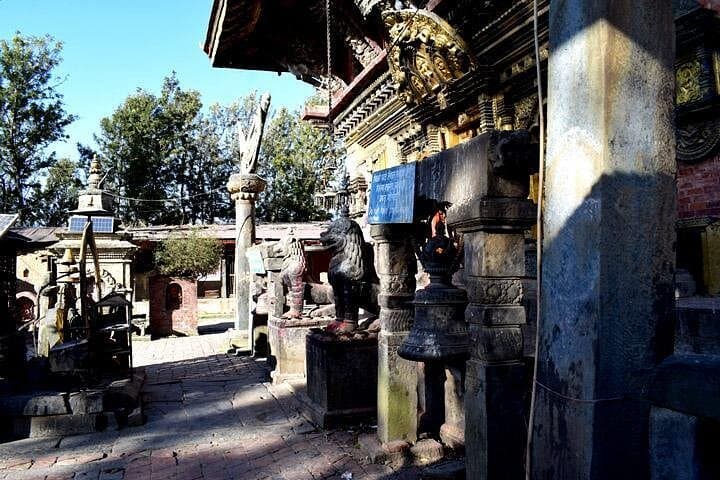
The day begins at the 4th–5th century Changu Narayan temple, a UNESCO World Heritage site where Newar craftsmen still practice age-old trades. From the temple courtyard the trail threads past terraced farms and Tamang and Newar villages along the valley rim. Geologically, you are moving from the softer alluvial flats of the Kathmandu basin onto older hill formations that give Nagarkot its broad viewing ledge.
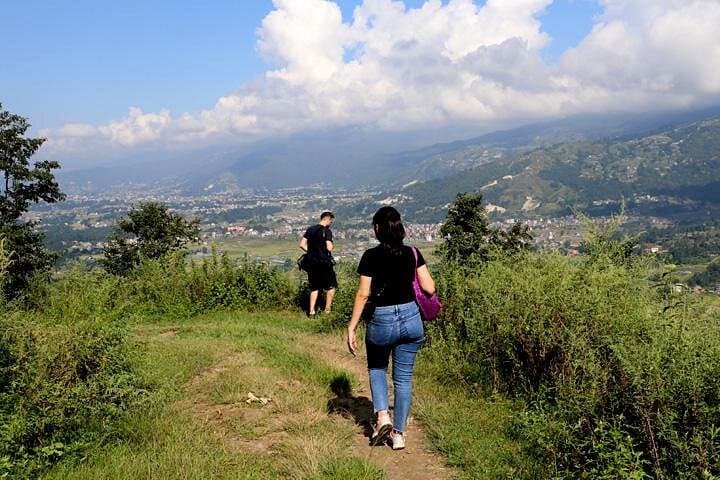
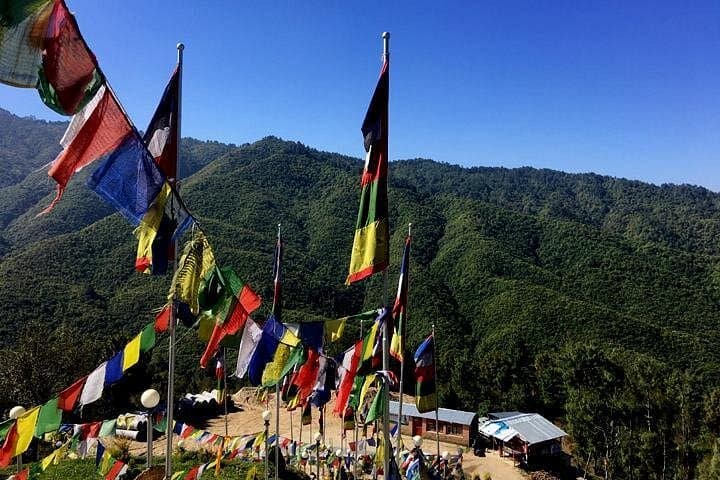
As the path gains about 600–800 meters over roughly 8–10 km, the landscape shifts from village lanes to forested ridgelines, with rhododendron and oak shading steps and footpaths. Nagarkot arrives like a lookout: a low hill station at roughly 2,175 m offering wide Himalayan panoramas on clear mornings — Lhotse, Everest and the Annapurna ranges can appear above the nearer hills when weather cooperates.
Practical guidance: plan for a 4–5 hour uphill hike plus 3–4 hours for drives, lunch and short stops (8 hours total). Wear sturdy hiking shoes for uneven stone paths, carry at least 2 liters of water, sun protection and a warm layer for wind at the ridge. Start early to beat afternoon haze; bring small change for temple donations and local snacks. The walk balances cultural history with steady physical effort — expect steady climbs, village interactions and expansive mountain light if conditions are clear.
Expect a steady uphill of about 4–5 hours over 8–10 km with roughly 600–800 m elevation gain; it’s moderate if you have basic endurance.
Yes on clear mornings — Everest, Lhotse and other high peaks can be visible, but Kathmandu valley haze often limits views, especially in summer and midday.
No special permit is required for the public trails; the tour includes a guide and entry fees to Changu Narayan and Nagarkot viewpoints which simplifies logistics.
Nagarkot is around 2,175 m; most visitors acclimatize in Kathmandu (1,400 m) with no issues, but take it steady if you’re sensitive to altitude.
Himalayan Advisor Pvt. Ltd. operates guided outdoor trips and adventures with an emphasis on safety, stewardship, and memorable experiences.
You step out of the car as the valley air feels cool and thin — Changu Narayan’s flagstone lanes climb past woodcarvers and a temple whose carvings have watched the Kathmandu Valley for over a millennium.
You step out of the car as the valley air feels cool and thin — Changu Narayan’s flagstone lanes climb past woodcarvers and a temple whose carvings have watched the Kathmandu Valley for over a millennium.
The day begins at the 4th–5th century Changu Narayan temple, a UNESCO World Heritage site where Newar craftsmen still practice age-old trades. From the temple courtyard the trail threads past terraced farms and Tamang and Newar villages along the valley rim. Geologically, you are moving from the softer alluvial flats of the Kathmandu basin onto older hill formations that give Nagarkot its broad viewing ledge.
As the path gains about 600–800 meters over roughly 8–10 km, the landscape shifts from village lanes to forested ridgelines, with rhododendron and oak shading steps and footpaths. Nagarkot arrives like a lookout: a low hill station at roughly 2,175 m offering wide Himalayan panoramas on clear mornings — Lhotse, Everest and the Annapurna ranges can appear above the nearer hills when weather cooperates.
Practical guidance: plan for a 4–5 hour uphill hike plus 3–4 hours for drives, lunch and short stops (8 hours total). Wear sturdy hiking shoes for uneven stone paths, carry at least 2 liters of water, sun protection and a warm layer for wind at the ridge. Start early to beat afternoon haze; bring small change for temple donations and local snacks. The walk balances cultural history with steady physical effort — expect steady climbs, village interactions and expansive mountain light if conditions are clear.