THE ADVENTURE COLLECTIVE® · Independent discovery and booking for outdoor travel

See Rio’s signature peaks and neighborhoods in a single day: Corcovado’s Christ the Redeemer, Santa Teresa’s winding streets and Selarón Steps, plus an optional cable-car ascent of Sugarloaf for sunset views over Guanabara Bay. Efficient for first-time visitors and photo-focused travelers.
See Rio’s signature peaks and neighborhoods in a single day: Corcovado’s Christ the Redeemer, Santa Teresa’s winding streets and Selarón Steps, plus an optional cable-car ascent of Sugarloaf for sunset views over Guanabara Bay. Efficient for first-time visitors and photo-focused travelers.
You step out of the van and the city opens: a sweep of beaches, red-tiled roofs, and a green wall of Tijuca Rainforest pushing up toward the 38 m statue of Christ the Redeemer. The tour moves with purpose — a passage through forest, a short climb to Corcovado’s viewing platform, a walk along Selarón’s tiled steps, and, if chosen, a pair of cable-car hops up Sugarloaf for a seaside panorama.
Verified experiences and guided adventures in the surrounding area.
Operated by Gray Line Brazil · Rio de Janeiro, Rio de Janeiro
You step out of the van and the city opens: a sweep of beaches, red-tiled roofs, and a green wall of Tijuca Rainforest pushing up toward the 38 m statue of Christ the Redeemer. The tour moves with purpose — a passage through forest, a short climb to Corcovado’s viewing platform, a walk along Selarón’s tiled steps, and, if chosen, a pair of cable-car hops up Sugarloaf for a seaside panorama.
Corcovado and Sugarloaf are geological contrasts — mist-soaked granite monolith and a sculpted peak rising from Guanabara Bay — both anchor points in Rio’s modern identity. Santa Teresa offers a different layer: winding streets, colonial-era mansions, and Jorge Selarón’s colorful staircase that has become a public canvas. The Tijuca National Park you pass through is one of the world’s largest urban rainforests, largely restored in the 19th century and now home to native birds and small primates.
Practicalities are straightforward: expect 4–6 hours, light walking and some stairs, and between 10–45 minutes at each attraction. Morning departures reduce crowds at Corcovado; late-afternoon Sugarloaf visits capture sunset reflections on the bay. Book the Sugarloaf cable-car option in advance if you want both peaks in one day. Wear comfortable walking shoes, sun protection and keep a water bottle handy — cable-car lines and viewpoints can be exposed.
For photographers and first-time visitors this tour packs Rio’s signature viewpoints into a single, efficient circuit, balancing natural history and urban texture while leaving time to soak in vistas and neighborhood details.
The itinerary offers Sugarloaf as an optional add-on — confirm the cable-car option when booking to include the tickets.
No technical climbing is required; there are stairs and short walks at viewpoints but the tour is rated easy.
Hotel pick-up is provided for selected hotels in Rio’s South Zone; pickup from Barra da Tijuca may be available for an extra fee if arranged in advance.
Expect about 40–50 minutes at Corcovado and up to 45 minutes at Sugarloaf (if selected), with shorter stops for Selarón and Santa Teresa.
Gray Line Brazil operates guided outdoor trips and adventures with an emphasis on safety, stewardship, and memorable experiences.

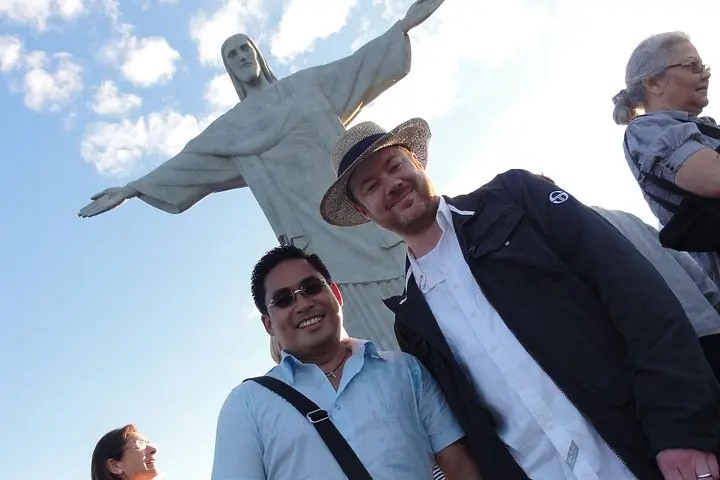


You step out of the van and the city opens: a sweep of beaches, red-tiled roofs, and a green wall of Tijuca Rainforest pushing up toward the 38 m statue of Christ the Redeemer. The tour moves with purpose — a passage through forest, a short climb to Corcovado’s viewing platform, a walk along Selarón’s tiled steps, and, if chosen, a pair of cable-car hops up Sugarloaf for a seaside panorama.
You step out of the van and the city opens: a sweep of beaches, red-tiled roofs, and a green wall of Tijuca Rainforest pushing up toward the 38 m statue of Christ the Redeemer. The tour moves with purpose — a passage through forest, a short climb to Corcovado’s viewing platform, a walk along Selarón’s tiled steps, and, if chosen, a pair of cable-car hops up Sugarloaf for a seaside panorama.
Corcovado and Sugarloaf are geological contrasts — mist-soaked granite monolith and a sculpted peak rising from Guanabara Bay — both anchor points in Rio’s modern identity. Santa Teresa offers a different layer: winding streets, colonial-era mansions, and Jorge Selarón’s colorful staircase that has become a public canvas. The Tijuca National Park you pass through is one of the world’s largest urban rainforests, largely restored in the 19th century and now home to native birds and small primates.
Practicalities are straightforward: expect 4–6 hours, light walking and some stairs, and between 10–45 minutes at each attraction. Morning departures reduce crowds at Corcovado; late-afternoon Sugarloaf visits capture sunset reflections on the bay. Book the Sugarloaf cable-car option in advance if you want both peaks in one day. Wear comfortable walking shoes, sun protection and keep a water bottle handy — cable-car lines and viewpoints can be exposed.
For photographers and first-time visitors this tour packs Rio’s signature viewpoints into a single, efficient circuit, balancing natural history and urban texture while leaving time to soak in vistas and neighborhood details.