THE ADVENTURE COLLECTIVE® · Independent discovery and booking for outdoor travel

Spend three hours on a Brompton tracing riverside embankments, tasting local confections and making your own indigo-dyed handkerchief in Wakimachi. This small-group tour mixes gentle cycling with cultural stops and a coffee break by the Anabuki River.
Spend three hours on a Brompton tracing riverside embankments, tasting local confections and making your own indigo-dyed handkerchief in Wakimachi. This small-group tour mixes gentle cycling with cultural stops and a coffee break by the Anabuki River.
You push off on a compact Brompton and the town opens up — narrow streets with wooden façades, a river that dares you to slow down, and the steady slap of tires on cobbles. The Anabuki and Yoshii rivers guide the route; embankments and submersible bridges create short, cinematic views that reward an easy cadence.
Verified experiences and guided adventures in the surrounding area.
Operated by Local Treasures · Mima (Wakimachi), Tokushima Prefecture
You push off on a compact Brompton and the town opens up — narrow streets with wooden façades, a river that dares you to slow down, and the steady slap of tires on cobbles. The Anabuki and Yoshii rivers guide the route; embankments and submersible bridges create short, cinematic views that reward an easy cadence.
This three-hour loop threads Edo- and Meiji-era streets through Wakimachi’s merchant district, past Izanami Shrine — one of the few shrines dedicated solely to the goddess Izanami — and by Odeon-za, a Showa-era movie house that hints at local leisure from another century. Geologically, the valley is shaped by rivers carving soft alluvial plains out of Tokushima’s low central ranges, which explains the terraced farmlands and the easy gradients cyclists enjoy.
Culturally, Tokushima’s indigo (ai) tradition is both craft and identity: the workshop stop lets you make a handkerchief using traditional resist-dyeing techniques. Between pedaling and dye vats there’s time for local sweets like Wakimachi’s grape manju and a coffee break on the Anabuki embankment.
Practical guidance: the tour runs about three hours on mostly flat, paved embankments and quiet town streets; wear comfortable shoes and be ready for short stretches of pedestrian traffic. Helmets are provided, but bring a light rain jacket — tours run in light rain. Expect short walking sections when visiting shops or the shrine; carry small change for purchases. Follow the guide’s directions for safe road crossings and enjoying the indigo workshop without rushing the process.
The tour is three hours total, mostly easy-paced cycling along river embankments and quiet town streets with several short stops and brief walks.
Yes. Brompton bicycles and helmets are supplied as part of the tour price; guides help set up the bikes.
Yes—riders should be comfortable on a bicycle and have moderate fitness, but no advanced cycling skills are required.
The tour runs in light rain; bring a raincoat. In severe weather the operator will notify you and offer a cancellation or an alternate walking tour.
Local Treasures operates guided outdoor trips and adventures with an emphasis on safety, stewardship, and memorable experiences.
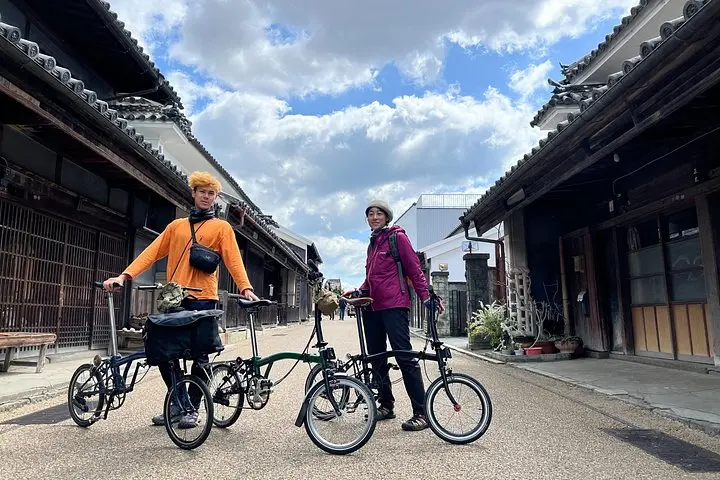
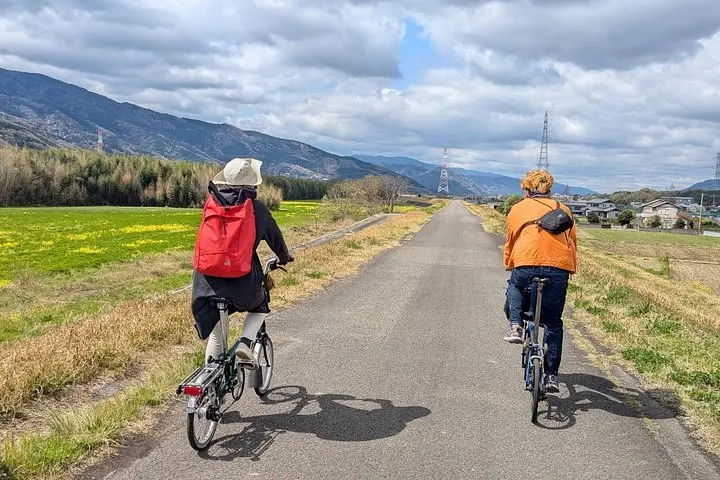
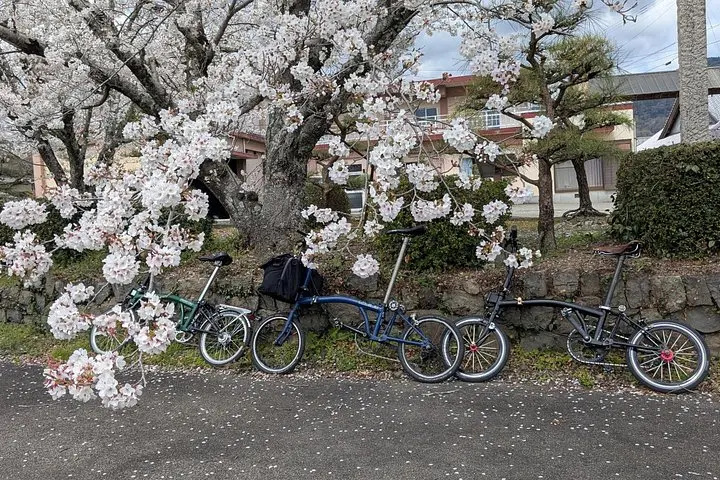
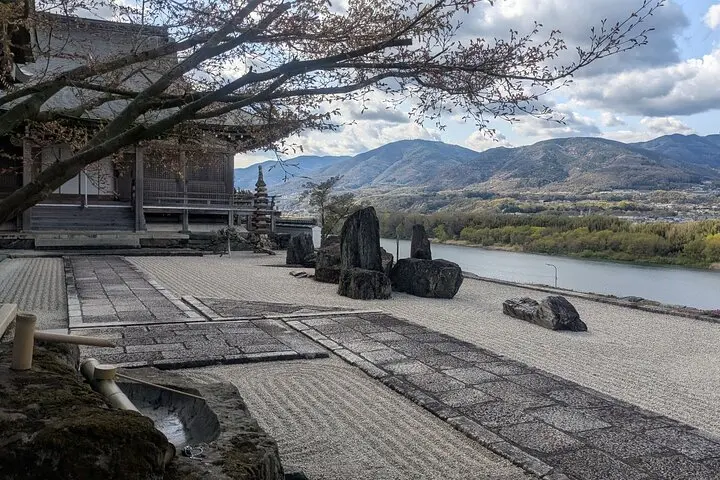
You push off on a compact Brompton and the town opens up — narrow streets with wooden façades, a river that dares you to slow down, and the steady slap of tires on cobbles. The Anabuki and Yoshii rivers guide the route; embankments and submersible bridges create short, cinematic views that reward an easy cadence.
You push off on a compact Brompton and the town opens up — narrow streets with wooden façades, a river that dares you to slow down, and the steady slap of tires on cobbles. The Anabuki and Yoshii rivers guide the route; embankments and submersible bridges create short, cinematic views that reward an easy cadence.
This three-hour loop threads Edo- and Meiji-era streets through Wakimachi’s merchant district, past Izanami Shrine — one of the few shrines dedicated solely to the goddess Izanami — and by Odeon-za, a Showa-era movie house that hints at local leisure from another century. Geologically, the valley is shaped by rivers carving soft alluvial plains out of Tokushima’s low central ranges, which explains the terraced farmlands and the easy gradients cyclists enjoy.
Culturally, Tokushima’s indigo (ai) tradition is both craft and identity: the workshop stop lets you make a handkerchief using traditional resist-dyeing techniques. Between pedaling and dye vats there’s time for local sweets like Wakimachi’s grape manju and a coffee break on the Anabuki embankment.
Practical guidance: the tour runs about three hours on mostly flat, paved embankments and quiet town streets; wear comfortable shoes and be ready for short stretches of pedestrian traffic. Helmets are provided, but bring a light rain jacket — tours run in light rain. Expect short walking sections when visiting shops or the shrine; carry small change for purchases. Follow the guide’s directions for safe road crossings and enjoying the indigo workshop without rushing the process.