THE ADVENTURE COLLECTIVE® · Independent discovery and booking for outdoor travel

Nine days tracing the southeastern spine of Morocco: High Atlas passes, living kasbahs, Todra Gorge and a night beneath Merzouga’s dunes. This trip mixes cultural stays, short walks, and a classic camel-sunset in the Sahara.
Nine days tracing the southeastern spine of Morocco: High Atlas passes, living kasbahs, Todra Gorge and a night beneath Merzouga’s dunes. This trip mixes cultural stays, short walks, and a classic camel-sunset in the Sahara.
You step from Marrakech’s medina into a long ribbon of road that climbs the High Atlas, the city’s noise shrinking behind you as cedar-scented passes and terraced villages slide past the window.
Verified experiences and guided adventures in the surrounding area.
Operated by EASYGO TOURS · Marrakech, Marrakech-Safi
You step from Marrakech’s medina into a long ribbon of road that climbs the High Atlas, the city’s noise shrinking behind you as cedar-scented passes and terraced villages slide past the window.
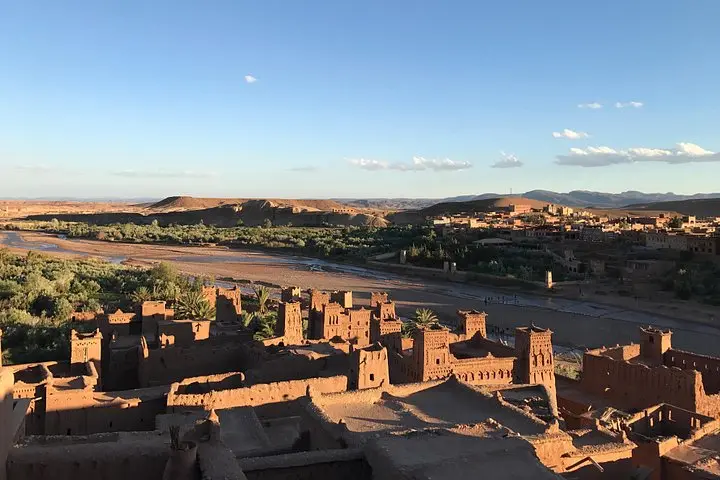
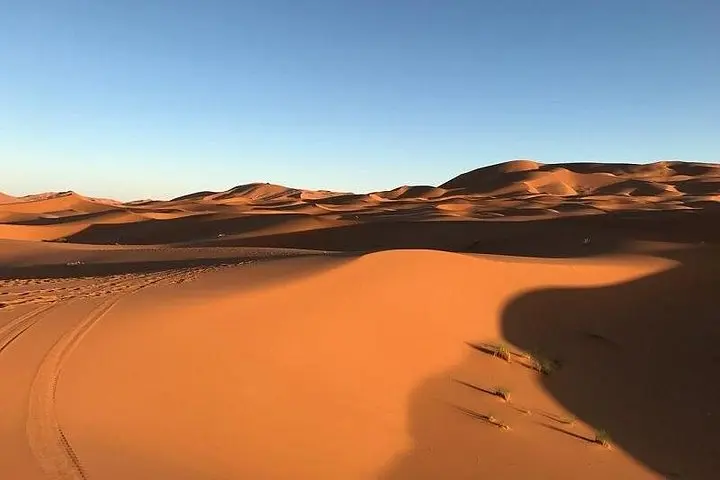
For nine days this route pulls you through carved mudbrick kasbahs, date-palm oases and the sweep of Erg Chebbi’s dunes where camels and stars set the tempo. The skull of the High Atlas (Tizi N’Tichka, ~2,260 m) is geology on display: folded sandstone and volcanic outcrops that forced ancient caravan routes into defensible valleys. Ait Benhaddou’s fortified ksar recalls Saharan trade and the era when salt and gold crossed these roads; later, French-era politics left faded palaces like Telouet scattered across the map.
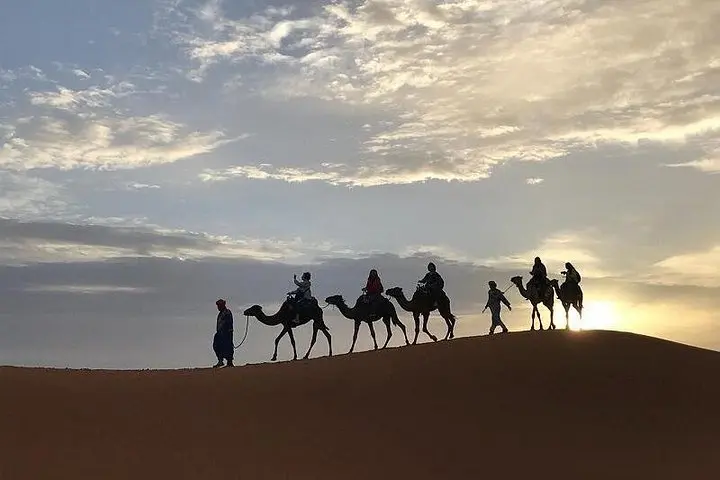
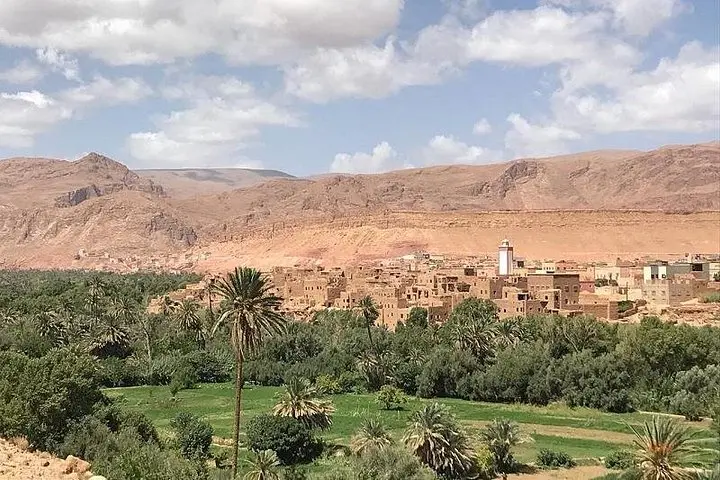
Culturally, the trip is equal parts architecture and hospitality: nights in guest riads and a Merzouga desert camp, mint tea in family homes, and visits to women’s cooperatives in oasis towns. Expect short walks through palm groves, a chance to watch rock-climbers at Todra Gorge, and a dusk camel caravan that ends with sunset climbed atop a dune.
Practically: pack layers for hot days and cool nights, sturdy walking shoes for rough village streets and gorge approaches, and a refillable bottle—water is limited between towns. Daily drives are long; keep motion-sickness remedies if needed and set aside time to acclimatize at altitude when crossing the Atlas. Book hammam time in Marrakech for tired muscles and plan travel insurance for remote transfers. This route blends cultural immersion with outdoor moments—bring curiosity and basic trekking fitness and the road will reveal its history, people, and desert light.
The tour is rated easy-to-moderate: most days are driving with short cultural walks, a dune climb at Merzouga and optional light activities like cycling or easy hikes.
Desert camps usually offer basic but comfortable berber-style tents or fixed dome tents, simple bedding, communal dinner and local music; expect temperature drops at night and limited electricity.
Breakfasts, several lunches and dinners are included per itinerary; bottled water is not always provided between stops so carry refillable bottles and plan to buy water in towns.
The tour uses a mix of riads, kasbah-style hotels and an overnight desert camp; rooms are typically private for couples or individuals, but confirm if single-supplementing is needed.
EASYGO TOURS operates guided outdoor trips and adventures with an emphasis on safety, stewardship, and memorable experiences.
You step from Marrakech’s medina into a long ribbon of road that climbs the High Atlas, the city’s noise shrinking behind you as cedar-scented passes and terraced villages slide past the window.
You step from Marrakech’s medina into a long ribbon of road that climbs the High Atlas, the city’s noise shrinking behind you as cedar-scented passes and terraced villages slide past the window.
For nine days this route pulls you through carved mudbrick kasbahs, date-palm oases and the sweep of Erg Chebbi’s dunes where camels and stars set the tempo. The skull of the High Atlas (Tizi N’Tichka, ~2,260 m) is geology on display: folded sandstone and volcanic outcrops that forced ancient caravan routes into defensible valleys. Ait Benhaddou’s fortified ksar recalls Saharan trade and the era when salt and gold crossed these roads; later, French-era politics left faded palaces like Telouet scattered across the map.
Culturally, the trip is equal parts architecture and hospitality: nights in guest riads and a Merzouga desert camp, mint tea in family homes, and visits to women’s cooperatives in oasis towns. Expect short walks through palm groves, a chance to watch rock-climbers at Todra Gorge, and a dusk camel caravan that ends with sunset climbed atop a dune.
Practically: pack layers for hot days and cool nights, sturdy walking shoes for rough village streets and gorge approaches, and a refillable bottle—water is limited between towns. Daily drives are long; keep motion-sickness remedies if needed and set aside time to acclimatize at altitude when crossing the Atlas. Book hammam time in Marrakech for tired muscles and plan travel insurance for remote transfers. This route blends cultural immersion with outdoor moments—bring curiosity and basic trekking fitness and the road will reveal its history, people, and desert light.