THE ADVENTURE COLLECTIVE® · Independent discovery and booking for outdoor travel

Walk Newport’s most consequential colonial sites on a compact 75-minute tour. From Long Wharf to the Colony House, guides stitch together British occupations, French aid, and local stories that shaped the Revolution.
Walk Newport’s most consequential colonial sites on a compact 75-minute tour. From Long Wharf to the Colony House, guides stitch together British occupations, French aid, and local stories that shaped the Revolution.
You step out onto the wide brick at the head of Washington Square and the city exhales its past — cobblestone, clapboard, and the quick cadence of tour guides pointing to names that shaped a nation.
Verified experiences and guided adventures in the surrounding area.
Operated by Newport Historical Society Walking Tours · Newport, Rhode Island
You step out onto the wide brick at the head of Washington Square and the city exhales its past — cobblestone, clapboard, and the quick cadence of tour guides pointing to names that shaped a nation.
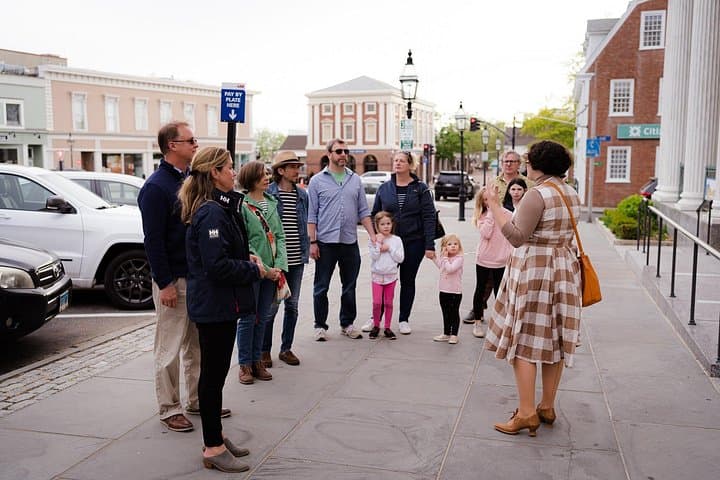
This 75-minute walking tour threads through Newport’s colonial core: Long Wharf, the Liberty Tree site, the Wanton-Lyman-Hazard House, and the Colony House where early state politics played out. The guide situates each stop in the sweep of Revolutionary history — British occupations, French alliances, and Washington’s visit — while pausing on local stories of merchants, Quaker communities, and artillery companies that defended the port.
Geology here is subtle: low-lying Narragansett Bay shores and glacially scoured bedrock that made Newport a strategic harbor since settlement. The city’s built fabric — red brick markets, wooden meeting houses, and 18th-century burial grounds — frames both civic power and everyday life in the 1700s.
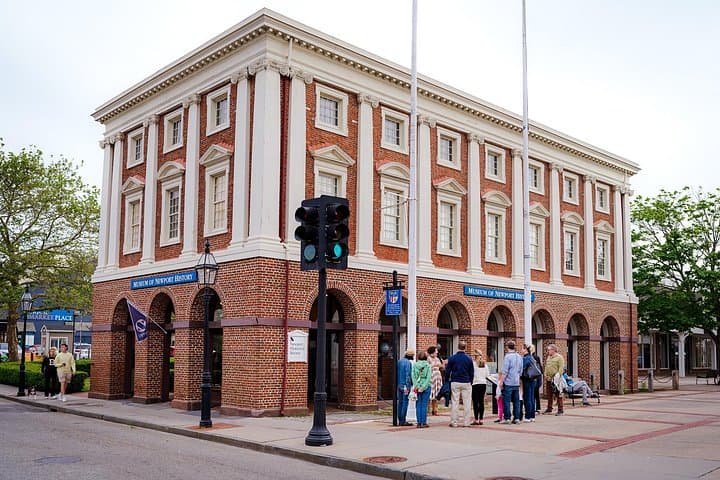
Practical details matter on this short, mainly flat urban route. Expect city sidewalks, occasional uneven stone, and frequent stops for interpretation. The tour begins and ends at the Museum of Newport History at Washington Square; museum admission and a small museum-shop discount are included. Families and casual walkers will find the pace steady but accessible.
Timing visits for cooler mornings or late afternoons keeps the sun off Thames Street in summer and makes for better photos. Bring a refillable bottle, comfortable footwear, and an appetite for close-up history — the sort you can reach out and touch on a brick lintel or an old gravestone.
Meet at the large brick building at the head of Washington Square and check in at the Museum of Newport History front desk.
Yes; the route is family-friendly with mostly flat sidewalks, though some areas have narrow or uneven paving that may be awkward for wide strollers.
Full refund available if canceled at least 24 hours before departure; extreme weather may cancel tours with notice.
Yes — the tour includes access to the Museum of Newport History and offers a small discount at the museum store.
Newport Historical Society Walking Tours operates guided outdoor trips and adventures with an emphasis on safety, stewardship, and memorable experiences.

You step out onto the wide brick at the head of Washington Square and the city exhales its past — cobblestone, clapboard, and the quick cadence of tour guides pointing to names that shaped a nation.
You step out onto the wide brick at the head of Washington Square and the city exhales its past — cobblestone, clapboard, and the quick cadence of tour guides pointing to names that shaped a nation.
This 75-minute walking tour threads through Newport’s colonial core: Long Wharf, the Liberty Tree site, the Wanton-Lyman-Hazard House, and the Colony House where early state politics played out. The guide situates each stop in the sweep of Revolutionary history — British occupations, French alliances, and Washington’s visit — while pausing on local stories of merchants, Quaker communities, and artillery companies that defended the port.
Geology here is subtle: low-lying Narragansett Bay shores and glacially scoured bedrock that made Newport a strategic harbor since settlement. The city’s built fabric — red brick markets, wooden meeting houses, and 18th-century burial grounds — frames both civic power and everyday life in the 1700s.
Practical details matter on this short, mainly flat urban route. Expect city sidewalks, occasional uneven stone, and frequent stops for interpretation. The tour begins and ends at the Museum of Newport History at Washington Square; museum admission and a small museum-shop discount are included. Families and casual walkers will find the pace steady but accessible.
Timing visits for cooler mornings or late afternoons keeps the sun off Thames Street in summer and makes for better photos. Bring a refillable bottle, comfortable footwear, and an appetite for close-up history — the sort you can reach out and touch on a brick lintel or an old gravestone.