THE ADVENTURE COLLECTIVE® · Independent discovery and booking for outdoor travel

Drive the dramatic corridor between Kayenta and Bluff with a GPS-activated audio guide that explains Navajo history, geology, and film lore. This self-guided tour gives you turn-by-turn directions plus stories and suggested stops for an 8–9 hour day trip.
Drive the dramatic corridor between Kayenta and Bluff with a GPS-activated audio guide that explains Navajo history, geology, and film lore. This self-guided tour gives you turn-by-turn directions plus stories and suggested stops for an 8–9 hour day trip.
You pull onto a shoulder of desert highway and the horizon rearranges itself—red sandstone monoliths rising like deliberate sculptures against a high, clear sky. The engine hums; the narrator begins. As the GPS-triggered audio guides you down the Road to Monument Valley, the landscape takes on voice and story: Navajo place names, cinematic history, and the slow work of wind and water carving the mesas.
Verified experiences and guided adventures in the surrounding area.
Operated by Shaka Guide Apps · Kayenta, Arizona
You pull onto a shoulder of desert highway and the horizon rearranges itself—red sandstone monoliths rising like deliberate sculptures against a high, clear sky. The engine hums; the narrator begins. As the GPS-triggered audio guides you down the Road to Monument Valley, the landscape takes on voice and story: Navajo place names, cinematic history, and the slow work of wind and water carving the mesas.
This route threads through Bears Ears and the San Juan Cliffs, a region shaped by uplifted plateaus and ancient river systems that left layers of sandstone and siltstone exposed. Indigenous communities—predominantly Navajo (Diné)—have lived on and stewarded this land for generations; stops like the Navajo Welcome Center and local trading posts connect drivers to both craftsmanship and context.
Geology shows in the gradients: the Moki Dugway drops roughly 1,200 feet over three winding miles, a raw example of cliffside switchbacks and loose gravel. Valley of the Gods offers a bumpy, unpaved loop with towering buttes that feel immediate and monumental. Along the way you’ll pass petroglyph panels and movie locations that offer cultural and cinematic frames for what you see.
Practical notes: download the Shaka Guide tour on Wi‑Fi and load offline maps; follow suggested speeds and GPS prompts; allow 8–9 hours to stop, hike short spur trails, and visit overlooks. Bring water, sun protection, and a high-clearance vehicle for rough stretches. With the narration acting as your guide, the drive becomes both classroom and lookout—letting the land speak while you decide where to pause and listen.
No—redeem and download the tour in the Shaka Guide app over Wi‑Fi beforehand; it runs offline with GPS activation.
The audio itinerary covers roughly an 8–9 hour day if you follow suggested stops and take short hikes and overlooks.
Yes—some areas like Monument Valley Tribal Park and specific state parks may charge entry or parking fees; check local signage and visitor centers.
Yes—the tour can be paused and resumed; it’s designed so you can stop, explore a viewpoint or short trail, then continue the narration.
Shaka Guide Apps operates guided outdoor trips and adventures with an emphasis on safety, stewardship, and memorable experiences.


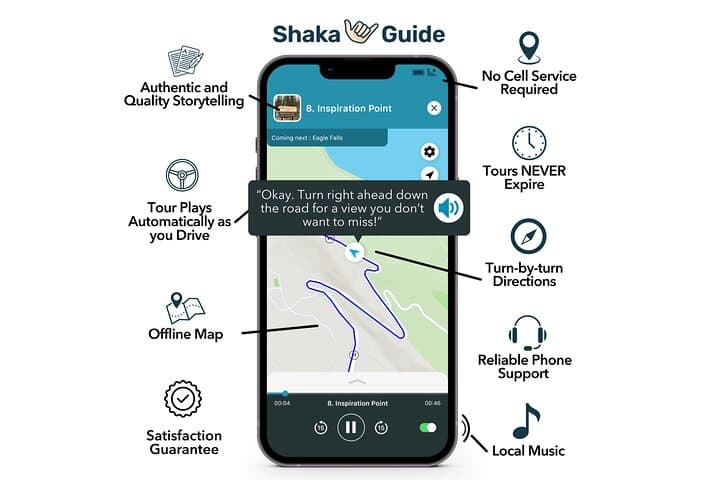

You pull onto a shoulder of desert highway and the horizon rearranges itself—red sandstone monoliths rising like deliberate sculptures against a high, clear sky. The engine hums; the narrator begins. As the GPS-triggered audio guides you down the Road to Monument Valley, the landscape takes on voice and story: Navajo place names, cinematic history, and the slow work of wind and water carving the mesas.
You pull onto a shoulder of desert highway and the horizon rearranges itself—red sandstone monoliths rising like deliberate sculptures against a high, clear sky. The engine hums; the narrator begins. As the GPS-triggered audio guides you down the Road to Monument Valley, the landscape takes on voice and story: Navajo place names, cinematic history, and the slow work of wind and water carving the mesas.
This route threads through Bears Ears and the San Juan Cliffs, a region shaped by uplifted plateaus and ancient river systems that left layers of sandstone and siltstone exposed. Indigenous communities—predominantly Navajo (Diné)—have lived on and stewarded this land for generations; stops like the Navajo Welcome Center and local trading posts connect drivers to both craftsmanship and context.
Geology shows in the gradients: the Moki Dugway drops roughly 1,200 feet over three winding miles, a raw example of cliffside switchbacks and loose gravel. Valley of the Gods offers a bumpy, unpaved loop with towering buttes that feel immediate and monumental. Along the way you’ll pass petroglyph panels and movie locations that offer cultural and cinematic frames for what you see.
Practical notes: download the Shaka Guide tour on Wi‑Fi and load offline maps; follow suggested speeds and GPS prompts; allow 8–9 hours to stop, hike short spur trails, and visit overlooks. Bring water, sun protection, and a high-clearance vehicle for rough stretches. With the narration acting as your guide, the drive becomes both classroom and lookout—letting the land speak while you decide where to pause and listen.