THE ADVENTURE COLLECTIVE® · Independent discovery and booking for outdoor travel

Drive south from Aswan for an all-day private tour to Abu Simbel, where colossal Ramses II statues and a relocated temple complex sit above Lake Nasser. This road trip combines geology, history and a few hours of exposed, unforgettable archaeology.
Drive south from Aswan for an all-day private tour to Abu Simbel, where colossal Ramses II statues and a relocated temple complex sit above Lake Nasser. This road trip combines geology, history and a few hours of exposed, unforgettable archaeology.
You crest the last low rise and the two colossal figures of Ramses II appear, monumental and abrupt against a honey-colored cliff. The road has slit the desert into long bands of heat; ahead, stone faces stare down across the shimmering sweep of Lake Nasser. Morning light skates over carved columns and the entrance yawns like an invitation.
Verified experiences and guided adventures in the surrounding area.
Operated by Reflections Travel · Abu Simbel, Aswan Governorate
You crest the last low rise and the two colossal figures of Ramses II appear, monumental and abrupt against a honey-colored cliff. The road has slit the desert into long bands of heat; ahead, stone faces stare down across the shimmering sweep of Lake Nasser. Morning light skates over carved columns and the entrance yawns like an invitation.
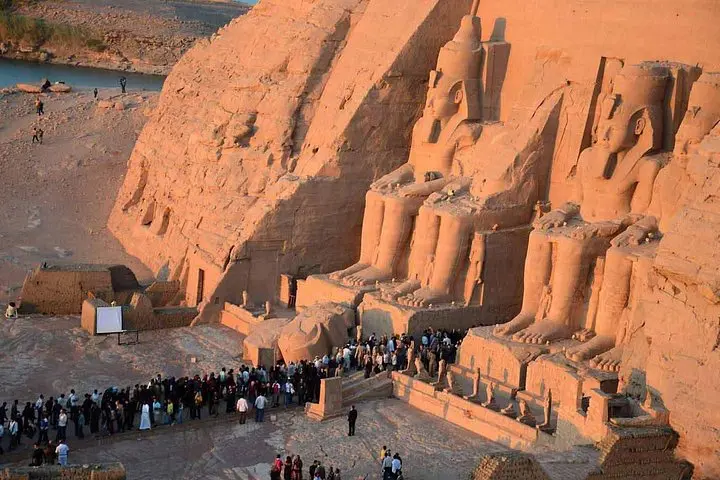
Abu Simbel was carved in the 13th century BCE under Ramses II to proclaim pharaonic power along the southern frontier. In the 1960s the temples were carefully dismantled and rebuilt on higher ground—one of UNESCO’s most dramatic conservation projects—when the Aswan High Dam raised waters behind the Nile into what is now Lake Nasser. The rock is Nubian sandstone; its warm grain holds crisp hieroglyphics and scenes of gods, war and procession.
The larger temple honors Ramses and four gods; the smaller is dedicated to Nefertari/Hathor. A predictable solar alignment in February and October lights the innermost statues—a phenomenon many travelers time their visits for.
Practical edge: expect about 3–4 hours each way by private A/C vehicle from Aswan, with a total day near eight hours. Sites are flat but exposed—sun protection, steady water, and sensible shoes matter. Your Egyptologist guide speeds history into readable sections and handles entry logistics (tickets often included). Plan for early departure to avoid midday heat and allow uninterrupted time inside both temples. Carry a copy of your passport for permits, and leave drones and flash photography equipment at home: the site enforces strict rules. On the road back, the desert light softens; the day ends quieter, with the sense of having walked through ancient power and modern rescue in the same breath.
Travel time by private A/C vehicle is typically 3–4 hours each way, depending on stops and road conditions.
No; the twice-yearly phenomenon that lights inner statues happens predictably in February and October—other days won’t produce the same effect.
Many private tours include Abu Simbel admission; confirm on booking—this specific product notes entry/admission to Abu Simbel is included.
The site has flat walkways but some steps and uneven surfaces; the tour lists as suitable for all fitness levels but mobility needs should be raised at booking for assistance arrangements.
Reflections Travel operates guided outdoor trips and adventures with an emphasis on safety, stewardship, and memorable experiences.
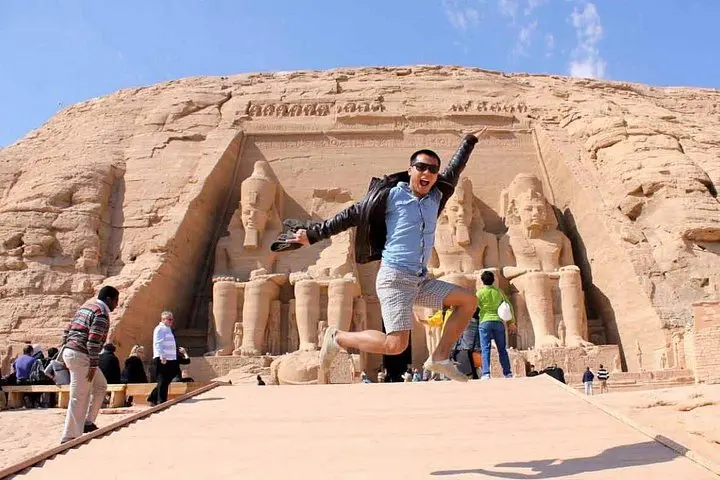
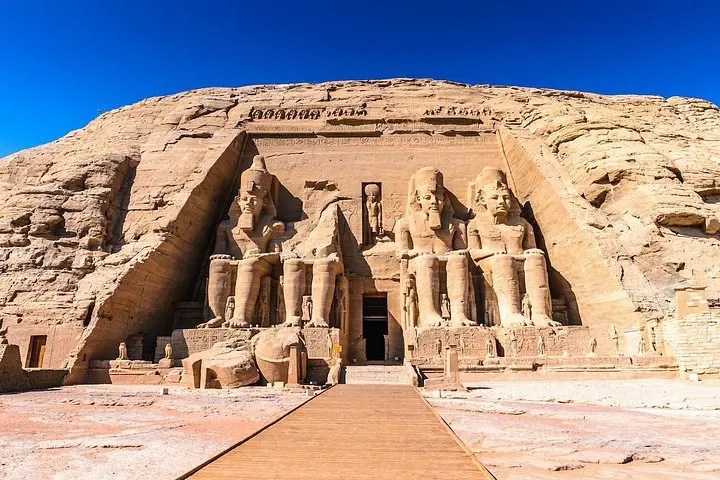
You crest the last low rise and the two colossal figures of Ramses II appear, monumental and abrupt against a honey-colored cliff. The road has slit the desert into long bands of heat; ahead, stone faces stare down across the shimmering sweep of Lake Nasser. Morning light skates over carved columns and the entrance yawns like an invitation.
You crest the last low rise and the two colossal figures of Ramses II appear, monumental and abrupt against a honey-colored cliff. The road has slit the desert into long bands of heat; ahead, stone faces stare down across the shimmering sweep of Lake Nasser. Morning light skates over carved columns and the entrance yawns like an invitation.
Abu Simbel was carved in the 13th century BCE under Ramses II to proclaim pharaonic power along the southern frontier. In the 1960s the temples were carefully dismantled and rebuilt on higher ground—one of UNESCO’s most dramatic conservation projects—when the Aswan High Dam raised waters behind the Nile into what is now Lake Nasser. The rock is Nubian sandstone; its warm grain holds crisp hieroglyphics and scenes of gods, war and procession.
The larger temple honors Ramses and four gods; the smaller is dedicated to Nefertari/Hathor. A predictable solar alignment in February and October lights the innermost statues—a phenomenon many travelers time their visits for.
Practical edge: expect about 3–4 hours each way by private A/C vehicle from Aswan, with a total day near eight hours. Sites are flat but exposed—sun protection, steady water, and sensible shoes matter. Your Egyptologist guide speeds history into readable sections and handles entry logistics (tickets often included). Plan for early departure to avoid midday heat and allow uninterrupted time inside both temples. Carry a copy of your passport for permits, and leave drones and flash photography equipment at home: the site enforces strict rules. On the road back, the desert light softens; the day ends quieter, with the sense of having walked through ancient power and modern rescue in the same breath.