THE ADVENTURE COLLECTIVE® · Independent discovery and booking for outdoor travel

Crossing from the V&A Waterfront to Robben Island is more than a short ferry ride — it’s a measured step into South Africa’s recent history. This half-day tour combines museum admission, a guided island circuit, and hotel transfers for a compact, reflective experience.
Crossing from the V&A Waterfront to Robben Island is more than a short ferry ride — it’s a measured step into South Africa’s recent history. This half-day tour combines museum admission, a guided island circuit, and hotel transfers for a compact, reflective experience.
The harbor air sharpens as you step toward the Nelson Mandela Gateway at the V&A Waterfront. Ferries load and roll, and the flat silhouette of Robben Island sits low on the horizon, its limestone face scoured by Atlantic wind. Boarding feels like a threshold: a short water crossing that moves you from Cape Town’s harbor bustle to a place where history and sea collide.
Verified experiences and guided adventures in the surrounding area.
Operated by HYM CAPE TOURS · Cape Town, Western Cape
The harbor air sharpens as you step toward the Nelson Mandela Gateway at the V&A Waterfront. Ferries load and roll, and the flat silhouette of Robben Island sits low on the horizon, its limestone face scoured by Atlantic wind. Boarding feels like a threshold: a short water crossing that moves you from Cape Town’s harbor bustle to a place where history and sea collide.
Robben Island is best known for its role in South Africa’s struggle against apartheid — the former prison that held Nelson Mandela, as well as other political leaders, remains the central feature of museum tours. Geologically the island is a low, rocky outcrop with scrub and reclaimed areas shaped by coastal processes; culturally it’s a layered site of memory, resilience, and interpretation. Small-group museum talks are often led by former prisoners, adding direct, human perspective to the stone corridors and Mandela’s solitary cell.
Expect guided bus loops around the island, a walking visit to the prison complex, and time for reflection at key points. You may glimpse seabirds and local shorelines; guides will point out features and recount historical context. Practicalities matter: the full outing runs about 3–4 hours including hotel transfer; weather can change quickly on the water and on the exposed island. Bring layers, waterproofs, motion-sickness prevention if you’re sensitive, and a charged camera for striking low-angle sea light.
Book transfers and tickets well in advance, carry ID for local regulations, and plan your morning to arrive at the Gateway on time — ferries depart on tight schedules and tours sell out during peak season.
Yes — tours and transfers often sell out, especially in high season; book pre-paid tickets and transfers ahead of time.
The tour listing notes wheelchair accessibility, but mobility limitations should be discussed with the operator in advance to confirm assistance and transfer arrangements.
Yes — most museum tours include a visit to Mandela’s cell and narrated context from guides or former prisoners.
You must provide your hotel address at least 24 hours before travel for pickup; last-minute transfer requests are typically not accommodated.
HYM CAPE TOURS operates guided outdoor trips and adventures with an emphasis on safety, stewardship, and memorable experiences.


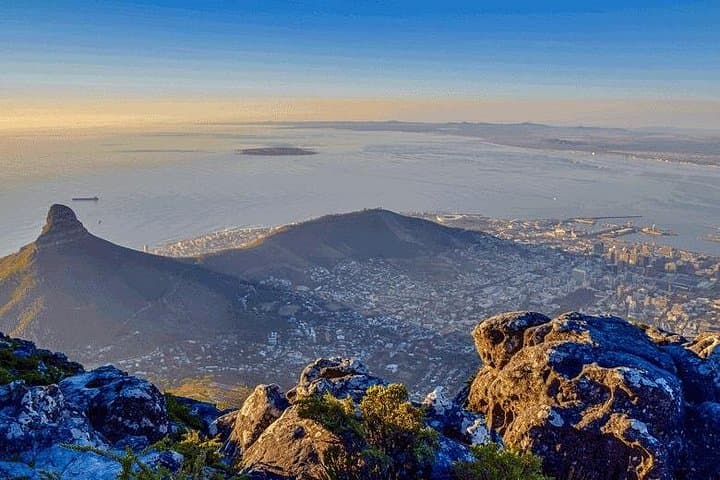

The harbor air sharpens as you step toward the Nelson Mandela Gateway at the V&A Waterfront. Ferries load and roll, and the flat silhouette of Robben Island sits low on the horizon, its limestone face scoured by Atlantic wind. Boarding feels like a threshold: a short water crossing that moves you from Cape Town’s harbor bustle to a place where history and sea collide.
The harbor air sharpens as you step toward the Nelson Mandela Gateway at the V&A Waterfront. Ferries load and roll, and the flat silhouette of Robben Island sits low on the horizon, its limestone face scoured by Atlantic wind. Boarding feels like a threshold: a short water crossing that moves you from Cape Town’s harbor bustle to a place where history and sea collide.
Robben Island is best known for its role in South Africa’s struggle against apartheid — the former prison that held Nelson Mandela, as well as other political leaders, remains the central feature of museum tours. Geologically the island is a low, rocky outcrop with scrub and reclaimed areas shaped by coastal processes; culturally it’s a layered site of memory, resilience, and interpretation. Small-group museum talks are often led by former prisoners, adding direct, human perspective to the stone corridors and Mandela’s solitary cell.
Expect guided bus loops around the island, a walking visit to the prison complex, and time for reflection at key points. You may glimpse seabirds and local shorelines; guides will point out features and recount historical context. Practicalities matter: the full outing runs about 3–4 hours including hotel transfer; weather can change quickly on the water and on the exposed island. Bring layers, waterproofs, motion-sickness prevention if you’re sensitive, and a charged camera for striking low-angle sea light.
Book transfers and tickets well in advance, carry ID for local regulations, and plan your morning to arrive at the Gateway on time — ferries depart on tight schedules and tours sell out during peak season.