THE ADVENTURE COLLECTIVE® · Independent discovery and booking for outdoor travel
Board a scheduled ferry from the Nelson Mandela Gateway and spend a reflective half day exploring Robben Island’s prison, colonial buildings and wartime structures. This guided experience combines transport, museum admission and firsthand historical interpretation.
Board a scheduled ferry from the Nelson Mandela Gateway and spend a reflective half day exploring Robben Island’s prison, colonial buildings and wartime structures. This guided experience combines transport, museum admission and firsthand historical interpretation.
The ferry pulls away from the Nelson Mandela Gateway and Table Mountain recedes into a wedge of cloud; sea spray tangles with the cool Atlantic breeze and Robben Island resolves from the horizon as a compact slab of shoreline, concrete and low scrub.
Verified experiences and guided adventures in the surrounding area.
Operated by Shine The Way Tours · Robben Island, Western Cape
The ferry pulls away from the Nelson Mandela Gateway and Table Mountain recedes into a wedge of cloud; sea spray tangles with the cool Atlantic breeze and Robben Island resolves from the horizon as a compact slab of shoreline, concrete and low scrub.
Long before the island became shorthand for apartheid’s cruelty, it was a military outpost and, at times, a leper colony. Today it’s a UNESCO World Heritage Site that records layered histories: colonial forts, WWII bunkers, and the limestone quarry where political prisoners including Nelson Mandela toiled. Many of the guides are former inmates — their first-person accounts shape the visit and leave a quiet, exacting gravity in the rooms and corridors.
Geologically the island sits in Table Bay, exposed to strong westerly winds and waves that both shaped its shoreline and once made escape nearly impossible. The walk across the compound moves you past colonial architecture, preserved cells and the guide’s stop at Mandela’s cell, where silence and scale tell much of the story.
Practically, the half-day package runs about four hours door-to-door from central Cape Town, including return ferry crossings and museum admission. Ferries are weather-dependent; bring layers, sun protection and your passport—details are checked for boarding. Expect paved paths and moderate walking with some uneven surfaces; tours are accessible but specific restrictions apply. Allow time afterward to process the visit—return views back to Cape Town and Table Mountain give a final perspective on the island’s place in South Africa’s landscape and history.
Yes — passport or official national ID is required for boarding and must match booking details.
Yes — ferry crossings are cancelled in rough sea or high winds; operators will refund or rebook if the tour is cancelled.
Many Robben Island tours include guides who were formerly incarcerated there; their personal accounts are part of the official museum program.
Children are allowed but must sit on laps if infants; some accessibility options exist but steep or uneven paths and a ferry crossing may limit full access—check with the operator ahead of booking.
Shine The Way Tours operates guided outdoor trips and adventures with an emphasis on safety, stewardship, and memorable experiences.


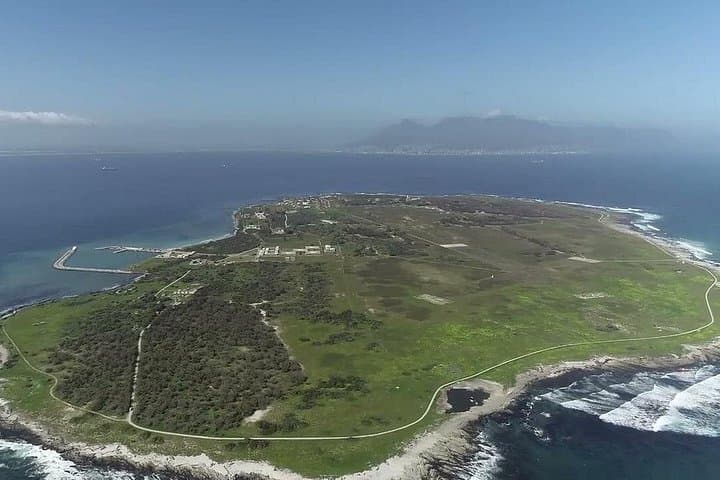
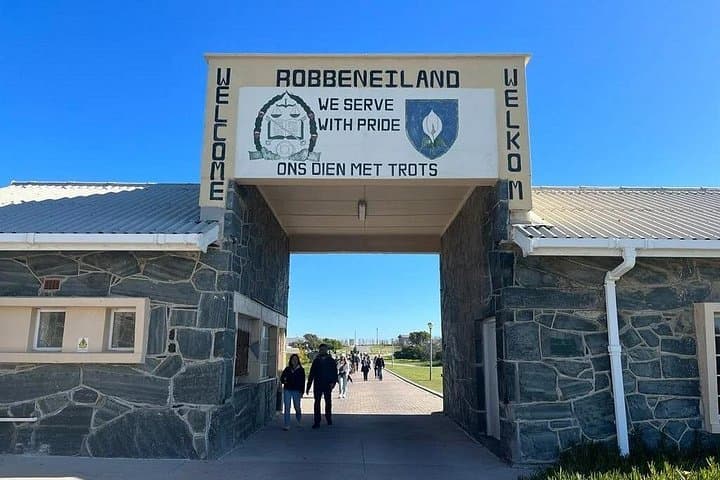
The ferry pulls away from the Nelson Mandela Gateway and Table Mountain recedes into a wedge of cloud; sea spray tangles with the cool Atlantic breeze and Robben Island resolves from the horizon as a compact slab of shoreline, concrete and low scrub.
The ferry pulls away from the Nelson Mandela Gateway and Table Mountain recedes into a wedge of cloud; sea spray tangles with the cool Atlantic breeze and Robben Island resolves from the horizon as a compact slab of shoreline, concrete and low scrub.
Long before the island became shorthand for apartheid’s cruelty, it was a military outpost and, at times, a leper colony. Today it’s a UNESCO World Heritage Site that records layered histories: colonial forts, WWII bunkers, and the limestone quarry where political prisoners including Nelson Mandela toiled. Many of the guides are former inmates — their first-person accounts shape the visit and leave a quiet, exacting gravity in the rooms and corridors.
Geologically the island sits in Table Bay, exposed to strong westerly winds and waves that both shaped its shoreline and once made escape nearly impossible. The walk across the compound moves you past colonial architecture, preserved cells and the guide’s stop at Mandela’s cell, where silence and scale tell much of the story.
Practically, the half-day package runs about four hours door-to-door from central Cape Town, including return ferry crossings and museum admission. Ferries are weather-dependent; bring layers, sun protection and your passport—details are checked for boarding. Expect paved paths and moderate walking with some uneven surfaces; tours are accessible but specific restrictions apply. Allow time afterward to process the visit—return views back to Cape Town and Table Mountain give a final perspective on the island’s place in South Africa’s landscape and history.
