THE ADVENTURE COLLECTIVE® · Independent discovery and booking for outdoor travel

Cross Table Bay to a UNESCO heritage site, walk among fynbos at Kirstenbosch, then taste wines in Constantia — all in one measured day. This small‑group tour pairs political history, botanical context, and terroir-led wine tasting with minimal driving.
Cross Table Bay to a UNESCO heritage site, walk among fynbos at Kirstenbosch, then taste wines in Constantia — all in one measured day. This small‑group tour pairs political history, botanical context, and terroir-led wine tasting with minimal driving.
You step off the waterfront into the air that carries salt and distant mountain dust — Table Mountain watching the harbor as ferries slip toward Robben Island. The morning ferry rocks you across pale blue water to an island that records South Africa’s political history: the former prison where Nelson Mandela spent 18 years, limestone quarries under a raw sky, and a compact museum tour led by an ex-prisoner.
Verified experiences and guided adventures in the surrounding area.
Operated by Beyond Africa Safaris (Pty)Ltd · Cape Town, Western Cape
You step off the waterfront into the air that carries salt and distant mountain dust — Table Mountain watching the harbor as ferries slip toward Robben Island. The morning ferry rocks you across pale blue water to an island that records South Africa’s political history: the former prison where Nelson Mandela spent 18 years, limestone quarries under a raw sky, and a compact museum tour led by an ex-prisoner.
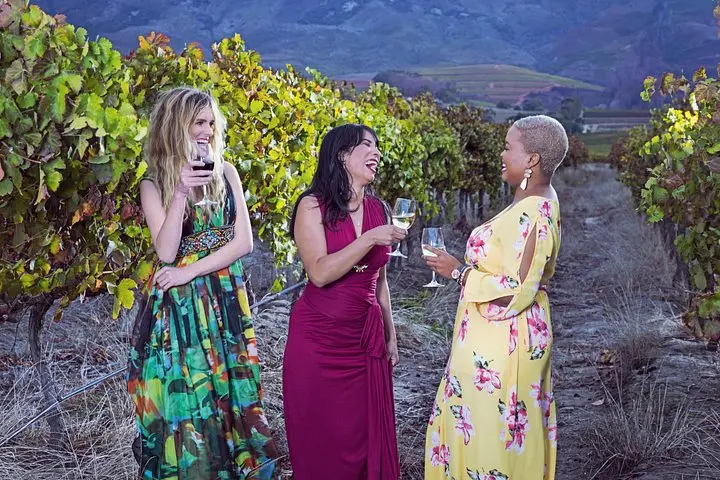
Back on the mainland the program turns to botany and terroir. Kirstenbosch sits on Table Mountain’s eastern slopes and showcases Cape fynbos — plants adapted to thin soils and fire cycles — framed by the Boomslang canopy walkway that gives a treetop vantage over gardens and mountain. Then you drive the short, scenic route into Constantia, birthplace of South African wine since the 1680s. Groot Constantia presents classic Cape Dutch architecture and historic cellars; Klein Constantia focuses on terroir-driven Sauvignon Blancs and the legendary Vin de Constance.
Expect a mix of gentle walking, short bus transfers, and seated tastings. The Robben Island leg is time-sensitive: bring ID for ferry boarding and allow extra time for queues. The tour balances heritage interpretation, botanical context, and tasting technique — you’ll leave with a clearer sense of how landscape, climate, and history shape South Africa’s wines.
Practical notes: ferries can be canceled in high winds; dress in layers for brisk mornings and warmer afternoons; carry water and a rain layer in shoulder seasons. Photography is allowed in most places but restricted inside certain museum spaces on Robben Island.
Yes — this tour includes pre‑booked Robben Island ferry tickets and the island museum tour led by an ex‑prisoner guide.
Most areas in Kirstenbosch and Constantia have accessible routes and the operator lists wheelchair accessibility, but the Robben Island ferry and some island surfaces can be uneven — check specific assistance needs in advance.
Light refreshments are available at the Nelson Mandela Gateway and a kiosk on Robben Island; there’s an opportunity to buy a takeaway lunch before the Kirstenbosch visit, but tastings themselves are included at the estates listed.
Ferries to Robben Island may be canceled in high winds; the operator notes cancellations for bad weather or insufficient travelers and will communicate options on the day.
Beyond Africa Safaris (Pty)Ltd operates guided outdoor trips and adventures with an emphasis on safety, stewardship, and memorable experiences.
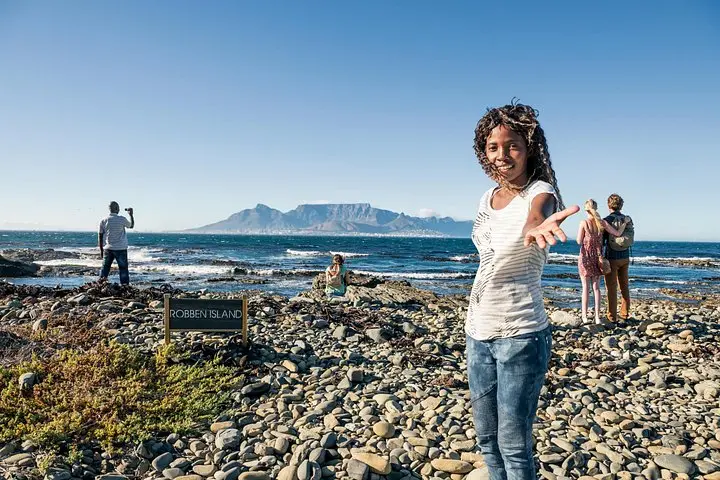
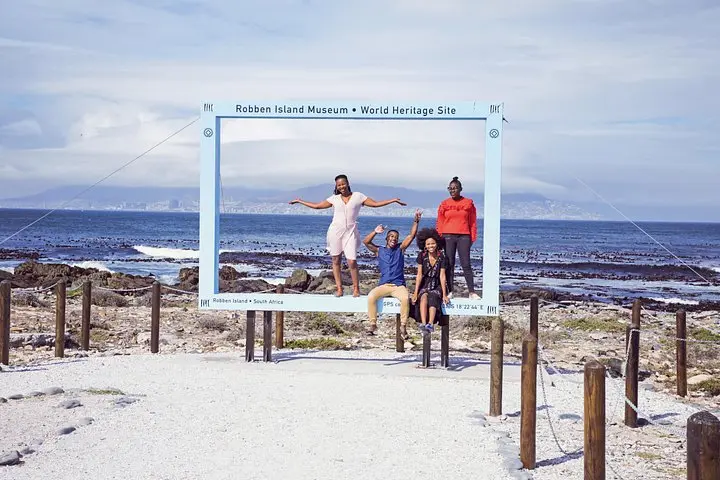
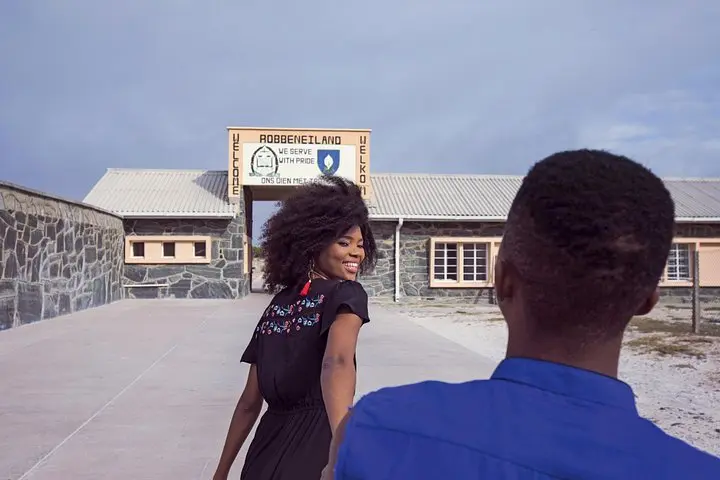
You step off the waterfront into the air that carries salt and distant mountain dust — Table Mountain watching the harbor as ferries slip toward Robben Island. The morning ferry rocks you across pale blue water to an island that records South Africa’s political history: the former prison where Nelson Mandela spent 18 years, limestone quarries under a raw sky, and a compact museum tour led by an ex-prisoner.
You step off the waterfront into the air that carries salt and distant mountain dust — Table Mountain watching the harbor as ferries slip toward Robben Island. The morning ferry rocks you across pale blue water to an island that records South Africa’s political history: the former prison where Nelson Mandela spent 18 years, limestone quarries under a raw sky, and a compact museum tour led by an ex-prisoner.
Back on the mainland the program turns to botany and terroir. Kirstenbosch sits on Table Mountain’s eastern slopes and showcases Cape fynbos — plants adapted to thin soils and fire cycles — framed by the Boomslang canopy walkway that gives a treetop vantage over gardens and mountain. Then you drive the short, scenic route into Constantia, birthplace of South African wine since the 1680s. Groot Constantia presents classic Cape Dutch architecture and historic cellars; Klein Constantia focuses on terroir-driven Sauvignon Blancs and the legendary Vin de Constance.
Expect a mix of gentle walking, short bus transfers, and seated tastings. The Robben Island leg is time-sensitive: bring ID for ferry boarding and allow extra time for queues. The tour balances heritage interpretation, botanical context, and tasting technique — you’ll leave with a clearer sense of how landscape, climate, and history shape South Africa’s wines.
Practical notes: ferries can be canceled in high winds; dress in layers for brisk mornings and warmer afternoons; carry water and a rain layer in shoulder seasons. Photography is allowed in most places but restricted inside certain museum spaces on Robben Island.