THE ADVENTURE COLLECTIVE® · Independent discovery and booking for outdoor travel

On a three‑hour outing in the Ox Mountains you’ll learn to climb secured routes and abseil back down exposed cliffs along the Wild Atlantic Way. Guided instruction, safety kit and short, steep crags make this a perfect introduction to outdoor climbing in County Sligo.
On a three‑hour outing in the Ox Mountains you’ll learn to climb secured routes and abseil back down exposed cliffs along the Wild Atlantic Way. Guided instruction, safety kit and short, steep crags make this a perfect introduction to outdoor climbing in County Sligo.
You step off a narrow lane and the wind of the Wild Atlantic Way finds you first — a brisk, salt‑tinged shove that unwraps the valley and throws the Ox Mountains into sharp relief. Crags rise like layered pages of the earth: hard, gray sandstone streaked with lichen and the faint orange of iron. The guide clips a harness around your hips and briefs the group; ropes hum softly as they uncoil. For the next three hours you move in short, intense bursts — a few strenuous meters of upward reach, a breath, then the controlled surrender of abseil back down the face. Nature here doesn’t simply look dramatic; it insists on participation.
Verified experiences and guided adventures in the surrounding area.
Operated by Ireland Wild Escapes · Sligo, County Sligo
You step off a narrow lane and the wind of the Wild Atlantic Way finds you first — a brisk, salt‑tinged shove that unwraps the valley and throws the Ox Mountains into sharp relief. Crags rise like layered pages of the earth: hard, gray sandstone streaked with lichen and the faint orange of iron. The guide clips a harness around your hips and briefs the group; ropes hum softly as they uncoil. For the next three hours you move in short, intense bursts — a few strenuous meters of upward reach, a breath, then the controlled surrender of abseil back down the face. Nature here doesn’t simply look dramatic; it insists on participation.
The Ox Mountains are old—rocks laid down in a turbulent Ordovician sea then folded and hardened over millions of years. The cliffs at Scailp Na gCapail (the Irish name roughly meaning "the cleft of the horses") bear the marks of glacial abrasion and ancient faulting, giving climbers clean edges and plenty of natural holds. This stretch of County Sligo sits on the Wild Atlantic Way, and local communities have a long relationship with the land: shepherding, turf cutting and small‑scale stonework shaped the valleys you’ll see from the top. Guides often point out old sheep paths and the occasional stone wall that tells a quiet human story against the raw geology.
The route is designed for beginners and mixed‑ability groups. Climbs are single‑pitch crags, mostly 10–25 meters tall, with protected lines and top‑ropes set by fully qualified guides. Instruction covers footwork, body position, and rope commands; safety is reinforced at every stage. After climbing to a viewpoint that opens onto rolling heath and distant Atlantic flashes, you’ll rappel — abseiling deliberately, rope under control — a small, focused act that leaves a lasting rush.
Practicalities: the activity runs about three hours, suitable for anyone with moderate fitness and a head for heights. Minimum group size is four; maximum 12. Guides supply harnesses, helmets and specialized climbing shoes — bring sturdy trainers for the approach. Weather can change fast: layers, a waterproof shell, and plenty of water are non‑negotiable. If you’re travelling from Sligo town allow 30–40 minutes to reach the meet point; the guide confirms exact location after booking. The operators cancel for unsafe weather and accept mobile tickets.
This is a compact, high‑impact taste of climbing — technical enough to teach useful skills, short enough to slot into a day of exploring Sligo’s coastline. Expect to get chalked, wind‑tousled, and surprisingly stronger by the end of it.
No—this trip is tailored for beginners; guides teach climbing technique, rope safety and abseiling during the session.
People of most ages can join if they have moderate fitness; operators may set a lower age limit—confirm when booking.
Guides supply a climbing harness, helmet and specialised climbing shoes; ropes and protection are provided by the operator.
The operator cancels unsafe sessions (heavy rain, high winds) and offers a full refund if canceled at least 24 hours prior or if weather prevents the activity.
Groups run with a minimum of four participants and up to 12 on shared sessions; private bookings are subject to availability.
The guide will contact you after booking with precise directions; allow 30–40 minutes from Sligo town and use the provided Google Maps link.
Ireland Wild Escapes operates guided outdoor trips and adventures with an emphasis on safety, stewardship, and memorable experiences.


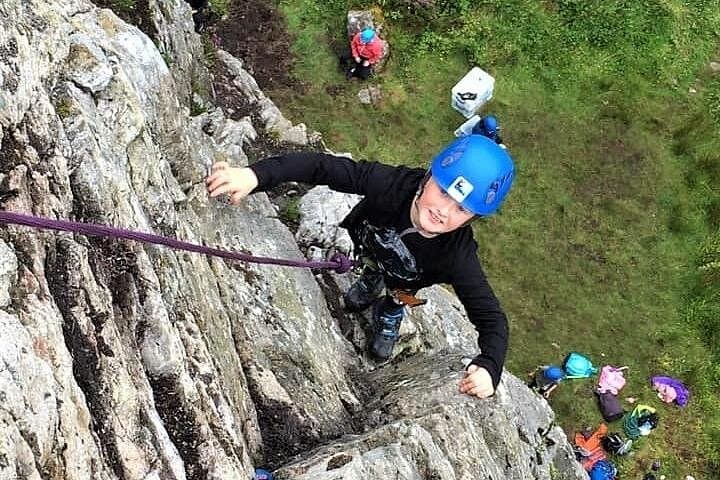

You step off a narrow lane and the wind of the Wild Atlantic Way finds you first — a brisk, salt‑tinged shove that unwraps the valley and throws the Ox Mountains into sharp relief. Crags rise like layered pages of the earth: hard, gray sandstone streaked with lichen and the faint orange of iron. The guide clips a harness around your hips and briefs the group; ropes hum softly as they uncoil. For the next three hours you move in short, intense bursts — a few strenuous meters of upward reach, a breath, then the controlled surrender of abseil back down the face. Nature here doesn’t simply look dramatic; it insists on participation.
You step off a narrow lane and the wind of the Wild Atlantic Way finds you first — a brisk, salt‑tinged shove that unwraps the valley and throws the Ox Mountains into sharp relief. Crags rise like layered pages of the earth: hard, gray sandstone streaked with lichen and the faint orange of iron. The guide clips a harness around your hips and briefs the group; ropes hum softly as they uncoil. For the next three hours you move in short, intense bursts — a few strenuous meters of upward reach, a breath, then the controlled surrender of abseil back down the face. Nature here doesn’t simply look dramatic; it insists on participation.
The Ox Mountains are old—rocks laid down in a turbulent Ordovician sea then folded and hardened over millions of years. The cliffs at Scailp Na gCapail (the Irish name roughly meaning "the cleft of the horses") bear the marks of glacial abrasion and ancient faulting, giving climbers clean edges and plenty of natural holds. This stretch of County Sligo sits on the Wild Atlantic Way, and local communities have a long relationship with the land: shepherding, turf cutting and small‑scale stonework shaped the valleys you’ll see from the top. Guides often point out old sheep paths and the occasional stone wall that tells a quiet human story against the raw geology.
The route is designed for beginners and mixed‑ability groups. Climbs are single‑pitch crags, mostly 10–25 meters tall, with protected lines and top‑ropes set by fully qualified guides. Instruction covers footwork, body position, and rope commands; safety is reinforced at every stage. After climbing to a viewpoint that opens onto rolling heath and distant Atlantic flashes, you’ll rappel — abseiling deliberately, rope under control — a small, focused act that leaves a lasting rush.
Practicalities: the activity runs about three hours, suitable for anyone with moderate fitness and a head for heights. Minimum group size is four; maximum 12. Guides supply harnesses, helmets and specialized climbing shoes — bring sturdy trainers for the approach. Weather can change fast: layers, a waterproof shell, and plenty of water are non‑negotiable. If you’re travelling from Sligo town allow 30–40 minutes to reach the meet point; the guide confirms exact location after booking. The operators cancel for unsafe weather and accept mobile tickets.
This is a compact, high‑impact taste of climbing — technical enough to teach useful skills, short enough to slot into a day of exploring Sligo’s coastline. Expect to get chalked, wind‑tousled, and surprisingly stronger by the end of it.