THE ADVENTURE COLLECTIVE® · Independent discovery and booking for outdoor travel

A guided climbing day 25 minutes from Heraklion puts you on clean limestone walls with routes for beginners to advanced climbers. Expect short approaches, sun-soaked exposures, and expert local beta that makes the crags accessible and safe.
A guided climbing day 25 minutes from Heraklion puts you on clean limestone walls with routes for beginners to advanced climbers. Expect short approaches, sun-soaked exposures, and expert local beta that makes the crags accessible and safe.
You arrive at a roadside pullout 25 minutes from Heraklion, the salt-heavy wind rubbing at your jacket as a guide in a green shirt sorts ropes and quickdraws. The cliff ahead rises in white-and-gray bands of weathered limestone — ribs and pockets that invite hands and feet to test balance and nerve. Below, a dry valley spreads toward the sea; above, routes peel off single-pitch lines that run 15–30 meters, while steeper sport walls challenge anyone chasing harder grades.
Verified experiences and guided adventures in the surrounding area.
Operated by Your Guide Crete · Heraklion, Crete
You arrive at a roadside pullout 25 minutes from Heraklion, the salt-heavy wind rubbing at your jacket as a guide in a green shirt sorts ropes and quickdraws. The cliff ahead rises in white-and-gray bands of weathered limestone — ribs and pockets that invite hands and feet to test balance and nerve. Below, a dry valley spreads toward the sea; above, routes peel off single-pitch lines that run 15–30 meters, while steeper sport walls challenge anyone chasing harder grades.
Crete’s rock is ancient: Mesozoic limestone lifted and fractured by tectonic collisions that gave the island its spine. Around Heraklion, local climbers have bolted routes for decades, converting outcrops once used for grazing into a modern playground. The island’s climbing culture is communal — morning coffees at the meeting spot, route beta traded like weather forecasts — and you’ll hear local stories of Minoan footpaths and Ottoman-era shepherd tracks threading the same slopes you climb.
The climbing itself is straightforward but varied. Expect a short approach of 10–25 minutes over uneven trail with 50–200 meters of elevation change depending on sector. Routes range from beginner-friendly slab and vertical sport climbs to overhanging lines for experienced climbers. The guide handles ropes, sets anchors, and can lead or top-rope depending on your skill. Terrain is limestone: sharp edges, positive pockets, and occasional pockets of loose rock near older scrub. Sun is a factor — many sectors bake in the afternoon, while mornings and late afternoons offer cooler friction and dramatic light.
Practical guidance: book a morning or late-afternoon slot in summer to avoid heat; bring your climbing shoes and harness if you have them — rental options are often available, but personal fit matters. Hydrate and layer: crete’s coastal sun can trick you into underestimating dehydration. Fitness-wise, be ready for repetitive pulling and standing on small edges; a moderate level of cardio and core strength makes the day more fun.
Safety and stewardship matter here. Guides inspect anchors and maintain routes, but basic expectations—staying aware of loose holds, listening during belay checks, and packing out all trash—keep the cliffs healthy. Photographing climbers against the island’s light is irresistible: shoot wide to capture the valley and sea, and use a fast shutter to freeze motion on steeper pitches.
Whether you’re climbing your first real rock or polishing redpoint tactics, a guided day near Heraklion delivers technical climbing, local context, and the kind of memories that come from earning vertical ground on an island shaped by stone and sea.
The crag is roughly a 20–30 minute drive from Heraklion city center; the guide meets at a roadside parking area adjacent to the access road.
No — routes for beginners are offered and the guide provides instruction, but a moderate level of fitness is required.
Guiding, bottled water, walking sticks, air-conditioned transport, and necessary fees are included; confirm specific gear rental ahead of time.
The activity requires moderate fitness and isn’t recommended for travelers with serious spinal, heart, or pregnancy-related conditions; check booking questions for age requirements.
Tours are canceled in bad weather for safety; you’ll receive a full refund if canceled at least 24 hours before the departure time.
Many operators and local shops provide harnesses, shoes, and helmets — confirm availability in advance because proper fit is important.
Your Guide Crete operates guided outdoor trips and adventures with an emphasis on safety, stewardship, and memorable experiences.
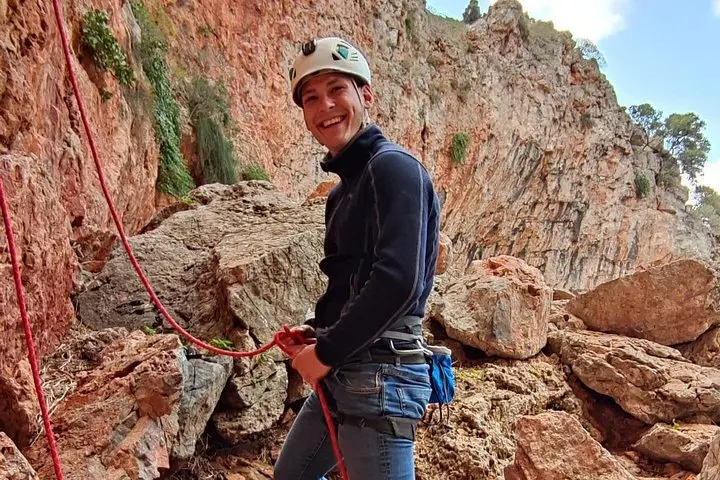
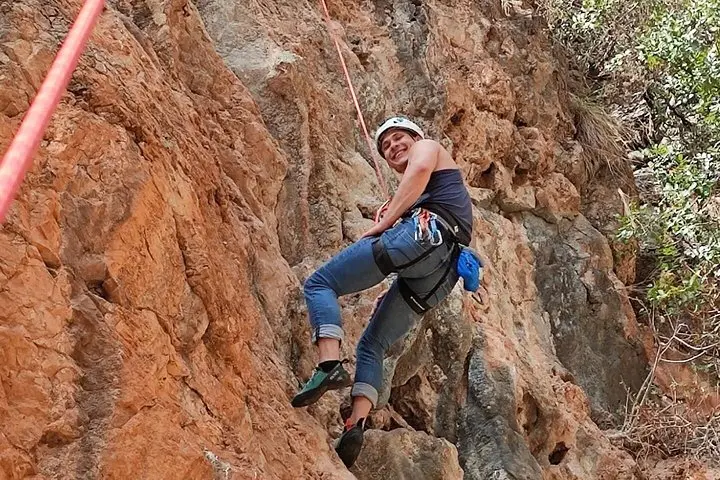
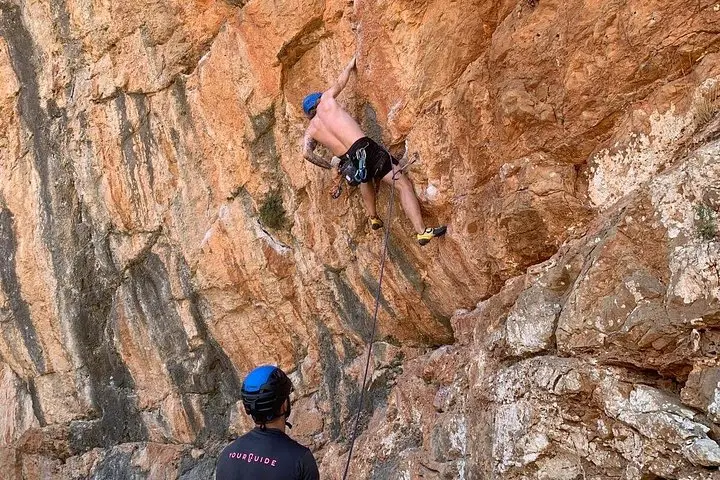
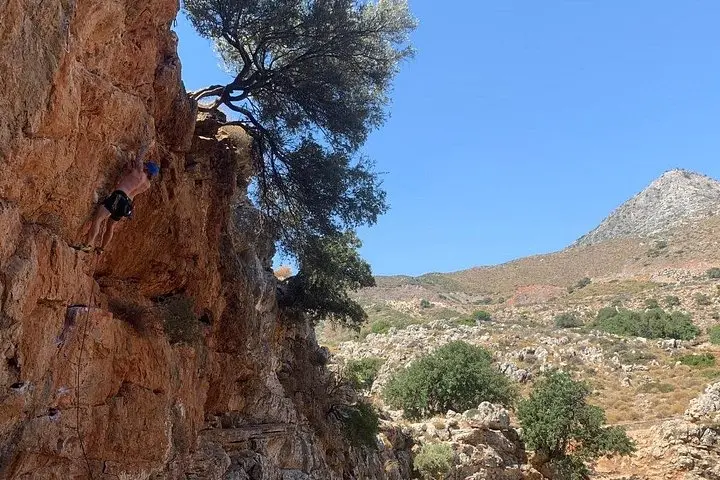
You arrive at a roadside pullout 25 minutes from Heraklion, the salt-heavy wind rubbing at your jacket as a guide in a green shirt sorts ropes and quickdraws. The cliff ahead rises in white-and-gray bands of weathered limestone — ribs and pockets that invite hands and feet to test balance and nerve. Below, a dry valley spreads toward the sea; above, routes peel off single-pitch lines that run 15–30 meters, while steeper sport walls challenge anyone chasing harder grades.
You arrive at a roadside pullout 25 minutes from Heraklion, the salt-heavy wind rubbing at your jacket as a guide in a green shirt sorts ropes and quickdraws. The cliff ahead rises in white-and-gray bands of weathered limestone — ribs and pockets that invite hands and feet to test balance and nerve. Below, a dry valley spreads toward the sea; above, routes peel off single-pitch lines that run 15–30 meters, while steeper sport walls challenge anyone chasing harder grades.
Crete’s rock is ancient: Mesozoic limestone lifted and fractured by tectonic collisions that gave the island its spine. Around Heraklion, local climbers have bolted routes for decades, converting outcrops once used for grazing into a modern playground. The island’s climbing culture is communal — morning coffees at the meeting spot, route beta traded like weather forecasts — and you’ll hear local stories of Minoan footpaths and Ottoman-era shepherd tracks threading the same slopes you climb.
The climbing itself is straightforward but varied. Expect a short approach of 10–25 minutes over uneven trail with 50–200 meters of elevation change depending on sector. Routes range from beginner-friendly slab and vertical sport climbs to overhanging lines for experienced climbers. The guide handles ropes, sets anchors, and can lead or top-rope depending on your skill. Terrain is limestone: sharp edges, positive pockets, and occasional pockets of loose rock near older scrub. Sun is a factor — many sectors bake in the afternoon, while mornings and late afternoons offer cooler friction and dramatic light.
Practical guidance: book a morning or late-afternoon slot in summer to avoid heat; bring your climbing shoes and harness if you have them — rental options are often available, but personal fit matters. Hydrate and layer: crete’s coastal sun can trick you into underestimating dehydration. Fitness-wise, be ready for repetitive pulling and standing on small edges; a moderate level of cardio and core strength makes the day more fun.
Safety and stewardship matter here. Guides inspect anchors and maintain routes, but basic expectations—staying aware of loose holds, listening during belay checks, and packing out all trash—keep the cliffs healthy. Photographing climbers against the island’s light is irresistible: shoot wide to capture the valley and sea, and use a fast shutter to freeze motion on steeper pitches.
Whether you’re climbing your first real rock or polishing redpoint tactics, a guided day near Heraklion delivers technical climbing, local context, and the kind of memories that come from earning vertical ground on an island shaped by stone and sea.