THE ADVENTURE COLLECTIVE® · Independent discovery and booking for outdoor travel

Scale granite faces above Sintra with an instructive half-day climb at Penedo da Amizade. This guided experience pairs hands-on teaching with sweeping views of Pena Palace and the Moorish Castle.
Scale granite faces above Sintra with an instructive half-day climb at Penedo da Amizade. This guided experience pairs hands-on teaching with sweeping views of Pena Palace and the Moorish Castle.
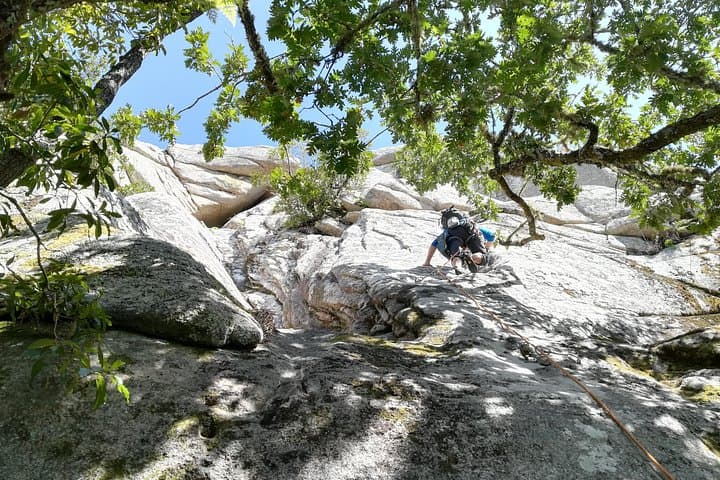
You step out of the narrow cobbled street and the air changes — cooler, scented with pine and laurel, the rock ahead gleaming pale against a patch of blue sky. The meeting point is the National Palace in central Sintra; a short walk through a green corridor leads to Penedo da Amizade, a granite outcrop that calls climbers with the same blunt invitation: come and try.
Verified experiences and guided adventures in the surrounding area.
Operated by Life Outside · Sintra, Lisbon
You step out of the narrow cobbled street and the air changes — cooler, scented with pine and laurel, the rock ahead gleaming pale against a patch of blue sky. The meeting point is the National Palace in central Sintra; a short walk through a green corridor leads to Penedo da Amizade, a granite outcrop that calls climbers with the same blunt invitation: come and try.
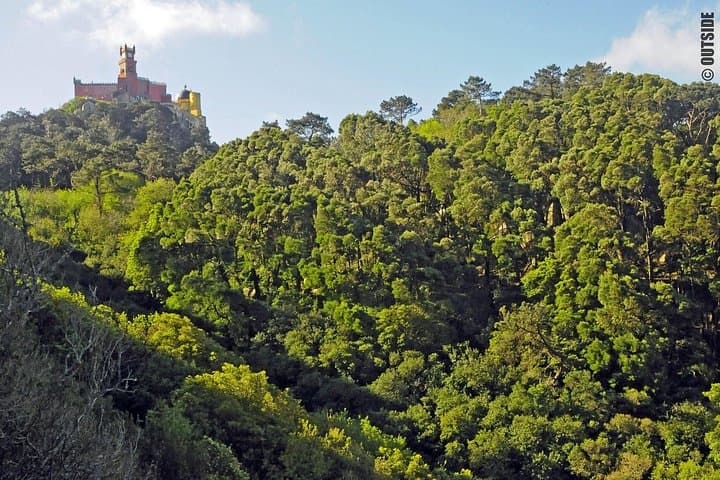
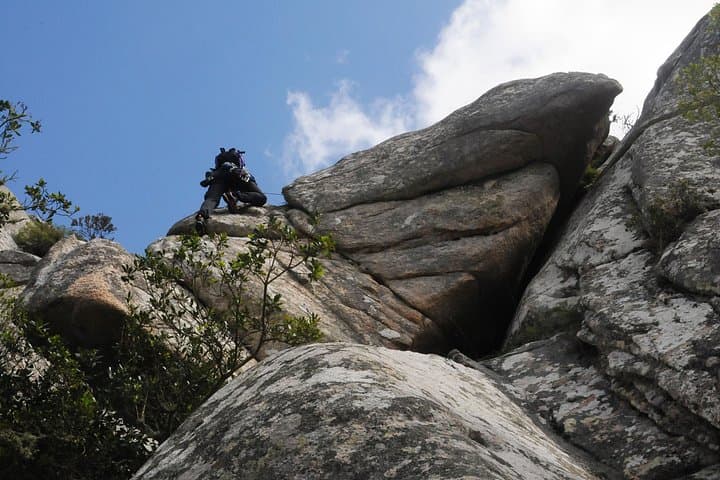
This is not a tacky tourist climb. The Sintra hills have been shaped by roughly hewn granite of the Sintra Massif, uplifted and sculpted across millions of years. The stone grips and flakes differently than the coastal limestone of nearby Cascais; it demands respect and rewards tactility. From the belay ledges the Disney-like towers of Pena Palace and the squat masonry of the Moorish Castle sit in frame, a reminder that this landscape has been a stage for centuries of human activity — from medieval fortifications to 19th-century Romantic gardens that earned Sintra UNESCO protection.
Locals treat the place as both backyard and refuge. Early mornings are when you’ll feel the cliffs themselves — the rock warming slowly, small birds darting through eucalyptus. Guides here balance teaching with route selection. The operator supplies ropes, hardware, helmets, harnesses, shoes and insurance; routes range from single-pitch top-ropes for first-timers to longer multi-pitch lines for experienced climbers.
Practical side: plan on about four hours from meet to finish. The approach is an easy 10–20 minute trek through forest with roughly 50–100 meters of elevation gain. Groups are capped at 10, with a guide ratio that tightens with party size (1:3 typical). Weather matters: climbs need dry granite, so rainy days are off and the operator may reschedule or refund.
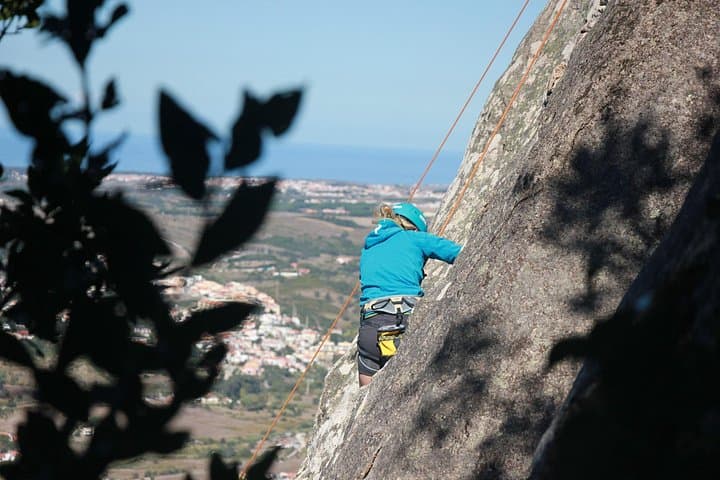
Bring hydration, layered clothing and sturdy shoes for the approach. Expect frequent short rests at small ledges and sweeping views across Sintra’s pine and chestnut canopy down toward the Atlantic. If you want quieter rock, book a weekday morning — weekends pull local climbers and sightseeing crowds.
The experience is equal parts skill-building and scenery. Beginners learn belay basics, knot work and movement on rock; stronger climbers can test multi-pitch lines with granite features that feel alive under your fingers. Finish back in the village with a strong coffee and a slice of travesseiro — a local pastry — then walk the castle walls to see how the land you climbed has been used and admired for generations.
No — guides teach basic techniques and provide all necessary equipment; there are routes suitable for beginners and progressions for more experienced climbers.
Meet at the National Palace in Sintra; the guided session runs about 4 hours including approach, instruction and climbs.
Climbing requires dry granite; operators will reschedule or issue a full refund if the day is unsafe or unsuitable.
Children can join if they meet minimum size and fitness requirements; the operator asks for age, height and weight at booking for safety planning.
No pickup is provided; Sintra is accessible by train from Lisbon’s Rossio Station or by car; public transport is available nearby.
Provide accurate weight, height and any medical conditions — spinal or cardiovascular issues are noted in the booking restrictions for safety.
Life Outside operates guided outdoor trips and adventures with an emphasis on safety, stewardship, and memorable experiences.
You step out of the narrow cobbled street and the air changes — cooler, scented with pine and laurel, the rock ahead gleaming pale against a patch of blue sky. The meeting point is the National Palace in central Sintra; a short walk through a green corridor leads to Penedo da Amizade, a granite outcrop that calls climbers with the same blunt invitation: come and try.
You step out of the narrow cobbled street and the air changes — cooler, scented with pine and laurel, the rock ahead gleaming pale against a patch of blue sky. The meeting point is the National Palace in central Sintra; a short walk through a green corridor leads to Penedo da Amizade, a granite outcrop that calls climbers with the same blunt invitation: come and try.
This is not a tacky tourist climb. The Sintra hills have been shaped by roughly hewn granite of the Sintra Massif, uplifted and sculpted across millions of years. The stone grips and flakes differently than the coastal limestone of nearby Cascais; it demands respect and rewards tactility. From the belay ledges the Disney-like towers of Pena Palace and the squat masonry of the Moorish Castle sit in frame, a reminder that this landscape has been a stage for centuries of human activity — from medieval fortifications to 19th-century Romantic gardens that earned Sintra UNESCO protection.
Locals treat the place as both backyard and refuge. Early mornings are when you’ll feel the cliffs themselves — the rock warming slowly, small birds darting through eucalyptus. Guides here balance teaching with route selection. The operator supplies ropes, hardware, helmets, harnesses, shoes and insurance; routes range from single-pitch top-ropes for first-timers to longer multi-pitch lines for experienced climbers.
Practical side: plan on about four hours from meet to finish. The approach is an easy 10–20 minute trek through forest with roughly 50–100 meters of elevation gain. Groups are capped at 10, with a guide ratio that tightens with party size (1:3 typical). Weather matters: climbs need dry granite, so rainy days are off and the operator may reschedule or refund.
Bring hydration, layered clothing and sturdy shoes for the approach. Expect frequent short rests at small ledges and sweeping views across Sintra’s pine and chestnut canopy down toward the Atlantic. If you want quieter rock, book a weekday morning — weekends pull local climbers and sightseeing crowds.
The experience is equal parts skill-building and scenery. Beginners learn belay basics, knot work and movement on rock; stronger climbers can test multi-pitch lines with granite features that feel alive under your fingers. Finish back in the village with a strong coffee and a slice of travesseiro — a local pastry — then walk the castle walls to see how the land you climbed has been used and admired for generations.