THE ADVENTURE COLLECTIVE® · Independent discovery and booking for outdoor travel

Take a 30-minute fixed-wing panorama from Brač Airport over Zlatni rat, Vrboska and the UNESCO-protected Stari Grad Plain. Short, private and packed with coastal history, this flight gives a compact aerial view of Dalmatia’s wind-sculpted shores.
Take a 30-minute fixed-wing panorama from Brač Airport over Zlatni rat, Vrboska and the UNESCO-protected Stari Grad Plain. Short, private and packed with coastal history, this flight gives a compact aerial view of Dalmatia’s wind-sculpted shores.
You lift from Brač Airport and the island exhales beneath you: the spit of Zlatni rat juts into the Adriatic like a moving finger of sand, its tip reshaped by each wind as if the sea were negotiating the coastline.
Verified experiences and guided adventures in the surrounding area.
Operated by SplitAir · Bol, Split-Dalmatia County
You lift from Brač Airport and the island exhales beneath you: the spit of Zlatni rat juts into the Adriatic like a moving finger of sand, its tip reshaped by each wind as if the sea were negotiating the coastline.
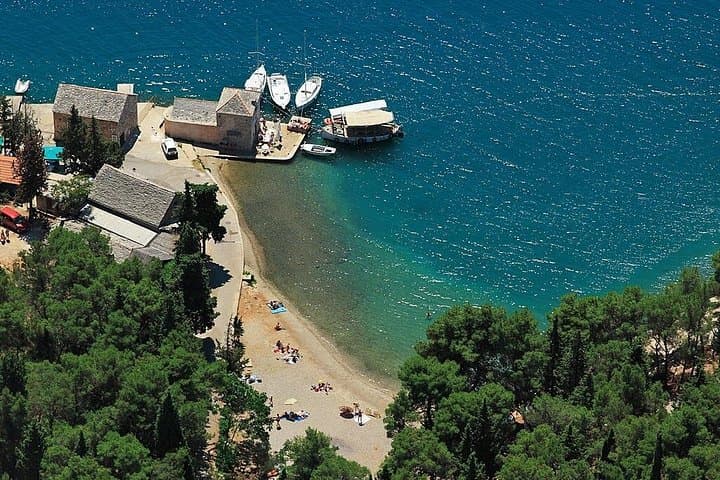
This thirty-minute fixed-wing circuit reads like a compact history lesson from above. The route traces Dalmatia’s layered past — the agricultural geometry of the Stari Grad Plain laid out by Greek colonists and now protected by UNESCO, the stone bridges and tidal inlets of Vrboska that speak to maritime craft, and the wind-sculpted shoreline at Bol known for world-class windsurfing. Geology here is visible at a glance: limestone islands rising from deep blue water, karst terraces etched into slopes, and narrow coves carved by millennia of waves.
Expect low-altitude sightseeing (typical cruising altitudes ~500–1,500 m) with unobstructed coastal views; the pilot will pass over Zlatni rat, sweep across Vrboska’s bay, cross Hvar’s agricultural plain and finish by circling Bol. The sea can be dramatic — thermals lift the plane and surface breezes rework the beach below.
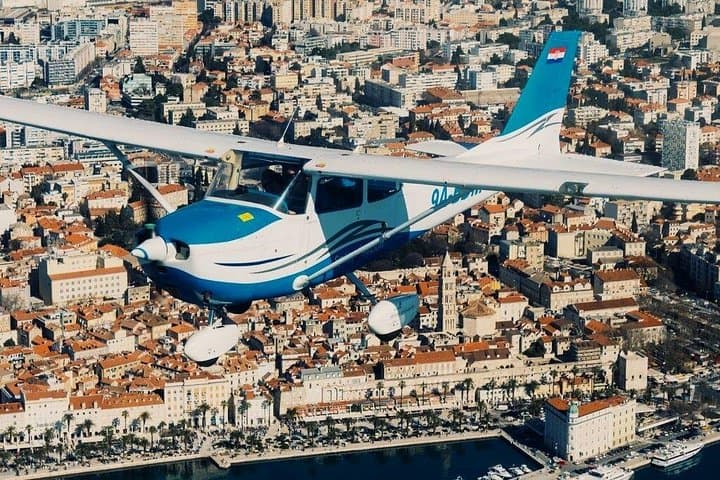
Practical notes: flights are short and private, accessible to most travelers, but weight and balance checks apply. Book a window seat, bring a camera with a short lens, and consider motion-sickness medication if you’re sensitive. Morning and late-afternoon flights offer softer light and calmer air; mid-day can bring stronger thermals. Arrive early for check-in and travel light — the islands reward those who look up.
The standard route is approximately 30 minutes from takeoff to landing, designed as a panoramic circuit rather than point-to-point transport.
Passengers must disclose weight for balance checks; the tour is not recommended for pregnant travelers or those with serious cardiovascular conditions.
This is a sightseeing loop that departs and returns to Brač Airport; it does not include stops for disembarkation on other islands.
Early morning and late afternoon offer calmer air and warmer light for photos; midday may have stronger winds and thermals.
SplitAir operates guided outdoor trips and adventures with an emphasis on safety, stewardship, and memorable experiences.
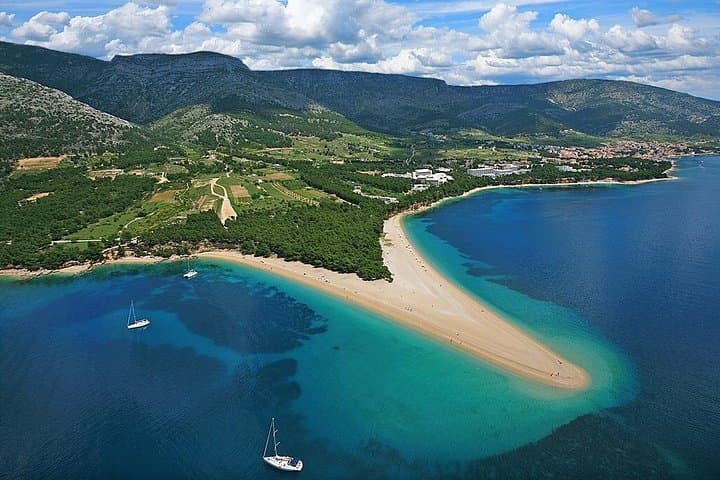

You lift from Brač Airport and the island exhales beneath you: the spit of Zlatni rat juts into the Adriatic like a moving finger of sand, its tip reshaped by each wind as if the sea were negotiating the coastline.
You lift from Brač Airport and the island exhales beneath you: the spit of Zlatni rat juts into the Adriatic like a moving finger of sand, its tip reshaped by each wind as if the sea were negotiating the coastline.
This thirty-minute fixed-wing circuit reads like a compact history lesson from above. The route traces Dalmatia’s layered past — the agricultural geometry of the Stari Grad Plain laid out by Greek colonists and now protected by UNESCO, the stone bridges and tidal inlets of Vrboska that speak to maritime craft, and the wind-sculpted shoreline at Bol known for world-class windsurfing. Geology here is visible at a glance: limestone islands rising from deep blue water, karst terraces etched into slopes, and narrow coves carved by millennia of waves.
Expect low-altitude sightseeing (typical cruising altitudes ~500–1,500 m) with unobstructed coastal views; the pilot will pass over Zlatni rat, sweep across Vrboska’s bay, cross Hvar’s agricultural plain and finish by circling Bol. The sea can be dramatic — thermals lift the plane and surface breezes rework the beach below.
Practical notes: flights are short and private, accessible to most travelers, but weight and balance checks apply. Book a window seat, bring a camera with a short lens, and consider motion-sickness medication if you’re sensitive. Morning and late-afternoon flights offer softer light and calmer air; mid-day can bring stronger thermals. Arrive early for check-in and travel light — the islands reward those who look up.