THE ADVENTURE COLLECTIVE® · Independent discovery and booking for outdoor travel

Explore coastal Roman ruins and the Cherchell museum on a private day tour from Algiers. Walk amphitheater tiers, visit a royal mausoleum, and learn the layered history of Algeria’s Mediterranean shore.
Explore coastal Roman ruins and the Cherchell museum on a private day tour from Algiers. Walk amphitheater tiers, visit a royal mausoleum, and learn the layered history of Algeria’s Mediterranean shore.
You step from a shaded minivan onto sun-warmed stone, the Mediterranean wind immediately pressing at your jacket like an impatient guide. Around you, low columns and half-ruined walls slice the skyline; gulls wheel and dare the sea to reclaim the shore.
Verified experiences and guided adventures in the surrounding area.
Operated by VIZITINA · Tipaza, Tipaza Province
You step from a shaded minivan onto sun-warmed stone, the Mediterranean wind immediately pressing at your jacket like an impatient guide. Around you, low columns and half-ruined walls slice the skyline; gulls wheel and dare the sea to reclaim the shore.
The day tour threads two complementary sites: the Roman-era ruins at Tipaza — amphitheater tiers, temple foundations and a waterfront necropolis — and the museum and royal mausoleum at Cherchell, where marble statuary and a massive circular tomb recall Mauretania’s Hellenistic and Roman passages. Geologically, the strip of limestone coast tilts gently toward the sea, leaving exposed bedrock and terraces that preserve building blocks and mosaics intact.
Culturally the area records layered rule: Phoenician harbors, a Roman colonia, then Byzantine and local dynasties; the Cherchell National Museum keeps many recovered sculptures that make that succession legible. Local guides often weave oral history about fishing families and market towns into the archaeological narrative.
Practical guidance: plan for 3–7 hours, expect uneven stone and short staircases, and mild coastal wind that can make mornings brisk. Admission is included on standard itineraries; wear sturdy shoes, sun protection, and bring water. Mobility is moderate — the tour suits travelers comfortable walking over rocky surfaces for 1–3 miles total. Cameras are welcome, but treat fragile ruins with hands-off respect. Timing your visit for morning or late afternoon gives cooler light for photos and fewer crowds, while a private guide can tailor stops if you prefer deeper archaeological detail or a relaxed seaside lunch.
The private tour runs roughly 3–7 hours depending on itinerary; standard packages include admissions for the sites listed, guiding services, and transport from agreed pickup points.
Children can join but expect walking; the route includes uneven steps and rocky areas—travelers with serious mobility limitations should notify the operator to adapt the itinerary where possible.
Yes — the standard itinerary lists admission included for the Cherchell National Museum and key archaeological sites at Tipaza.
Guides typically speak French and Arabic, and many who work with international visitors can provide English; confirm language needs at booking.
VIZITINA operates guided outdoor trips and adventures with an emphasis on safety, stewardship, and memorable experiences.
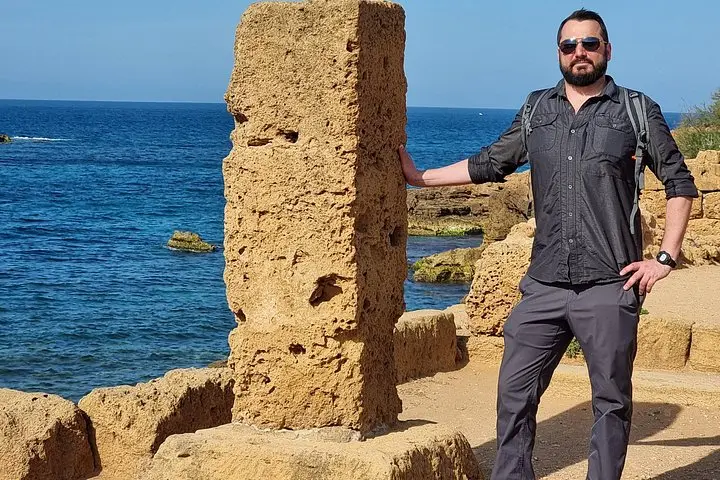
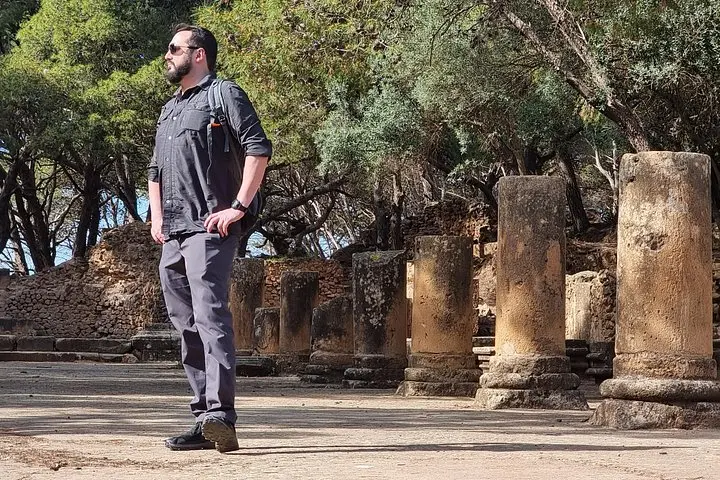
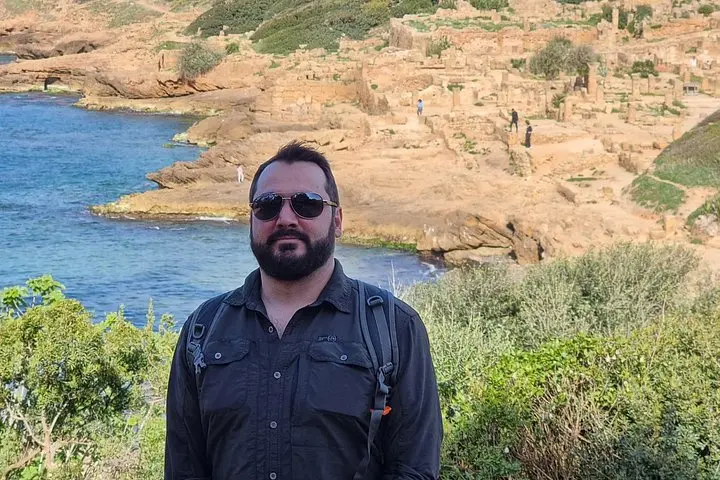
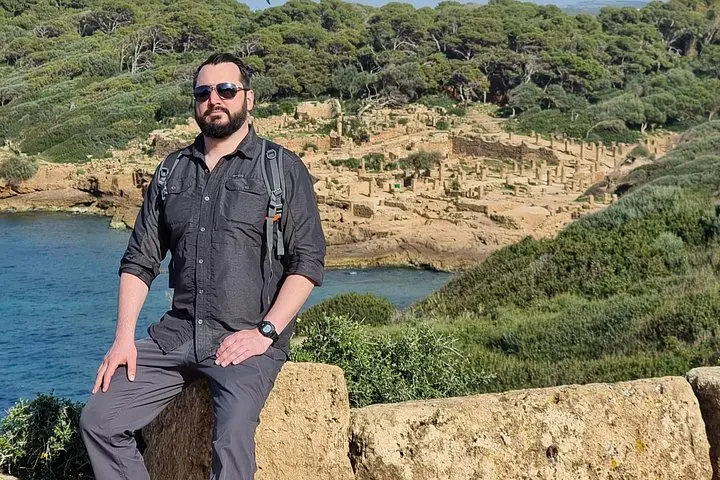
You step from a shaded minivan onto sun-warmed stone, the Mediterranean wind immediately pressing at your jacket like an impatient guide. Around you, low columns and half-ruined walls slice the skyline; gulls wheel and dare the sea to reclaim the shore.
You step from a shaded minivan onto sun-warmed stone, the Mediterranean wind immediately pressing at your jacket like an impatient guide. Around you, low columns and half-ruined walls slice the skyline; gulls wheel and dare the sea to reclaim the shore.
The day tour threads two complementary sites: the Roman-era ruins at Tipaza — amphitheater tiers, temple foundations and a waterfront necropolis — and the museum and royal mausoleum at Cherchell, where marble statuary and a massive circular tomb recall Mauretania’s Hellenistic and Roman passages. Geologically, the strip of limestone coast tilts gently toward the sea, leaving exposed bedrock and terraces that preserve building blocks and mosaics intact.
Culturally the area records layered rule: Phoenician harbors, a Roman colonia, then Byzantine and local dynasties; the Cherchell National Museum keeps many recovered sculptures that make that succession legible. Local guides often weave oral history about fishing families and market towns into the archaeological narrative.
Practical guidance: plan for 3–7 hours, expect uneven stone and short staircases, and mild coastal wind that can make mornings brisk. Admission is included on standard itineraries; wear sturdy shoes, sun protection, and bring water. Mobility is moderate — the tour suits travelers comfortable walking over rocky surfaces for 1–3 miles total. Cameras are welcome, but treat fragile ruins with hands-off respect. Timing your visit for morning or late afternoon gives cooler light for photos and fewer crowds, while a private guide can tailor stops if you prefer deeper archaeological detail or a relaxed seaside lunch.