THE ADVENTURE COLLECTIVE® · Independent discovery and booking for outdoor travel

Escape Rome for a private day in Tivoli: explore the theatrical fountains of Villa d'Este and the imperial ruins of Hadrian's Villa with skip-the-line access and a licensed guide. This seven-hour car tour balances close-up history with outdoor walking and easy logistics.
Escape Rome for a private day in Tivoli: explore the theatrical fountains of Villa d'Este and the imperial ruins of Hadrian's Villa with skip-the-line access and a licensed guide. This seven-hour car tour balances close-up history with outdoor walking and easy logistics.
A low, rolling road slips you out of Rome’s urban hum and into the light of Tivoli, where terraces and ruins unfold across limestone slopes. The private car eases to a stop and the guide opens the door to Villa d'Este’s fountains—water that insists on moving, tracing channels and stairways as if showing you the route.
Verified experiences and guided adventures in the surrounding area.
Operated by Rosotravel - Italy City Tour · Tivoli, Lazio
A low, rolling road slips you out of Rome’s urban hum and into the light of Tivoli, where terraces and ruins unfold across limestone slopes. The private car eases to a stop and the guide opens the door to Villa d'Este’s fountains—water that insists on moving, tracing channels and stairways as if showing you the route.
Villa d'Este (16th century) is a Renaissance exercise in hydraulic drama: terraced gardens, lined grottoes and fountains that celebrate engineering as ornament. Across the town, Hadrian’s Villa (c. AD 120) sprawls across an archaeological plain, where pools, baths and fragments of Greek, Roman and Egyptian-inspired architecture still argue for the cosmopolitan reach of one emperor’s taste. Together they map centuries of shifting power, art and water management that helped shape later Italian garden design.
Geologically, Tivoli sits at the edge of volcanic highlands and alluvial plains; the springs that feed the gardens come from carbonate aquifers that have long attracted settlement and luxury building. Culturally, Tivoli mixes medieval alleys, a civic piazza and quiet viewpoints where locals pause for espresso.
Practical guidance: the tour runs about seven hours with private pickup in Rome and skip-the-line entry to both sites, but expect walking on paved terraces and uneven archaeological surfaces. Wear sturdy footwear, carry a refillable water bottle, and plan for sun exposure in summer. Ask your guide about quieter routes through Villa d'Este and about the best place to view the imperial baths at Hadrian’s Villa. This private format keeps pace flexible—ideal for focused history, close-up photography and a measured escape from the city.
Yes — the private tour includes pickup and drop-off at accommodations in central Rome; confirm your pickup point when booking.
Villa d'Este has wheelchair-accessible areas and paths, while Hadrian's Villa has extensive uneven terrain and limited accessibility; check specifics if mobility is a concern.
Skip-the-line entry is provided for scheduled time slots; you should still arrive on time as entry is coordinated with site staff and may require validation.
Lunch is not included by default but can be arranged on request; there are nearby cafés and trattorie in Tivoli for a leisurely meal.
Rosotravel - Italy City Tour operates guided outdoor trips and adventures with an emphasis on safety, stewardship, and memorable experiences.
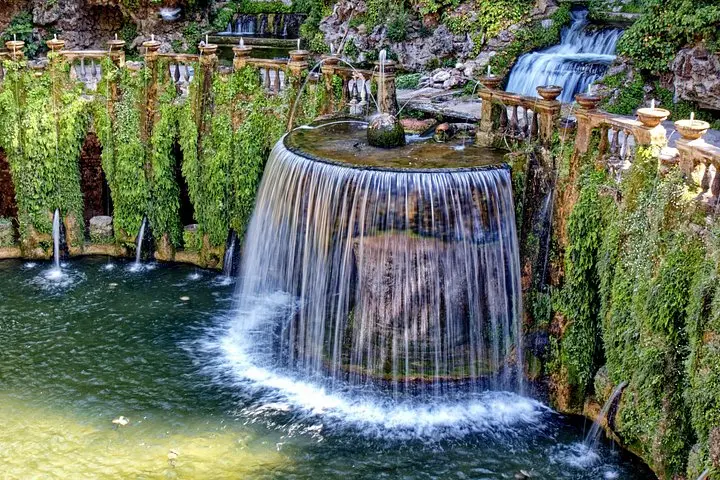

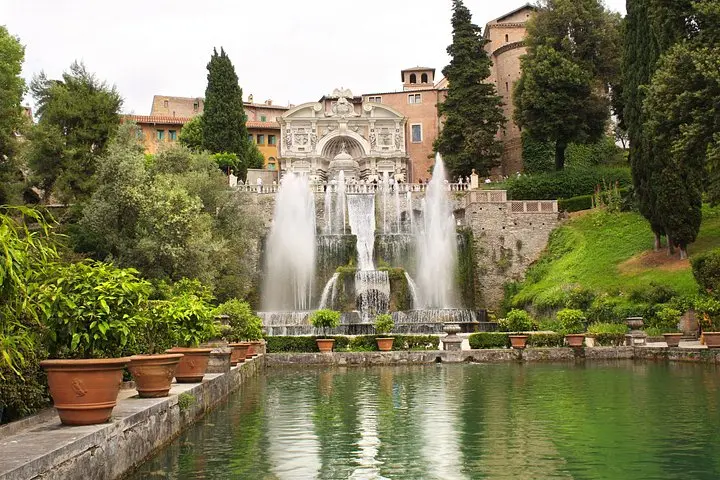
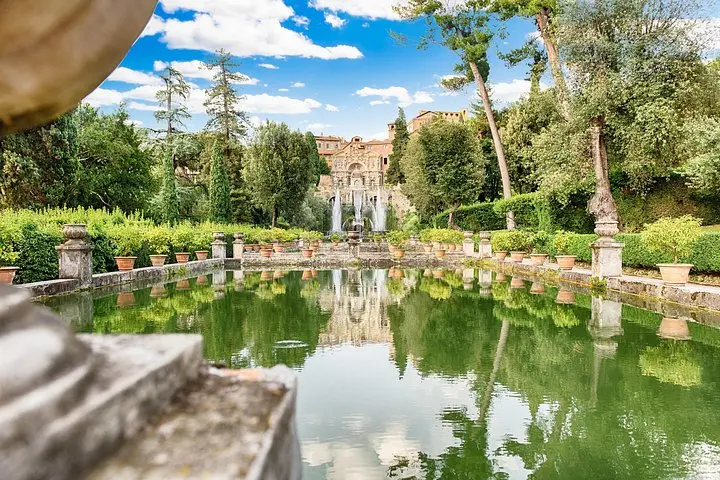
A low, rolling road slips you out of Rome’s urban hum and into the light of Tivoli, where terraces and ruins unfold across limestone slopes. The private car eases to a stop and the guide opens the door to Villa d'Este’s fountains—water that insists on moving, tracing channels and stairways as if showing you the route.
A low, rolling road slips you out of Rome’s urban hum and into the light of Tivoli, where terraces and ruins unfold across limestone slopes. The private car eases to a stop and the guide opens the door to Villa d'Este’s fountains—water that insists on moving, tracing channels and stairways as if showing you the route.
Villa d'Este (16th century) is a Renaissance exercise in hydraulic drama: terraced gardens, lined grottoes and fountains that celebrate engineering as ornament. Across the town, Hadrian’s Villa (c. AD 120) sprawls across an archaeological plain, where pools, baths and fragments of Greek, Roman and Egyptian-inspired architecture still argue for the cosmopolitan reach of one emperor’s taste. Together they map centuries of shifting power, art and water management that helped shape later Italian garden design.
Geologically, Tivoli sits at the edge of volcanic highlands and alluvial plains; the springs that feed the gardens come from carbonate aquifers that have long attracted settlement and luxury building. Culturally, Tivoli mixes medieval alleys, a civic piazza and quiet viewpoints where locals pause for espresso.
Practical guidance: the tour runs about seven hours with private pickup in Rome and skip-the-line entry to both sites, but expect walking on paved terraces and uneven archaeological surfaces. Wear sturdy footwear, carry a refillable water bottle, and plan for sun exposure in summer. Ask your guide about quieter routes through Villa d'Este and about the best place to view the imperial baths at Hadrian’s Villa. This private format keeps pace flexible—ideal for focused history, close-up photography and a measured escape from the city.