THE ADVENTURE COLLECTIVE® · Independent discovery and booking for outdoor travel

Glide through Rome’s ancient core in an electric 7-seater and see the Colosseum, Spanish Steps, Trevi Fountain and Piazza Navona in 2–3 hours. Minimal walking, local stories, and prime photo stops make this a compact way to feel the city’s layers.
Glide through Rome’s ancient core in an electric 7-seater and see the Colosseum, Spanish Steps, Trevi Fountain and Piazza Navona in 2–3 hours. Minimal walking, local stories, and prime photo stops make this a compact way to feel the city’s layers.
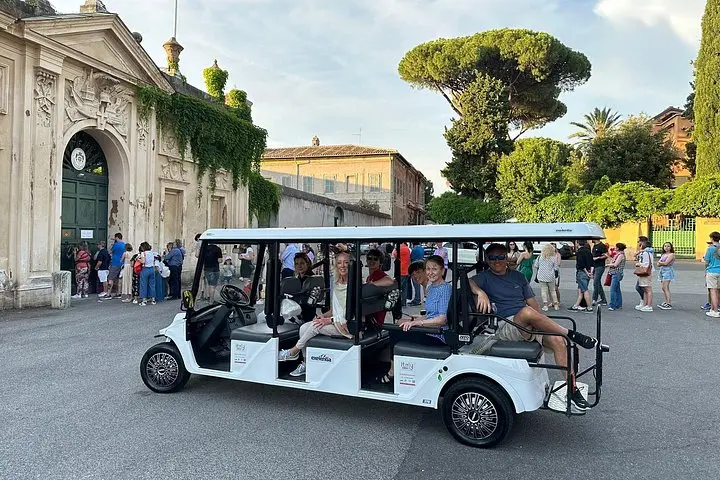
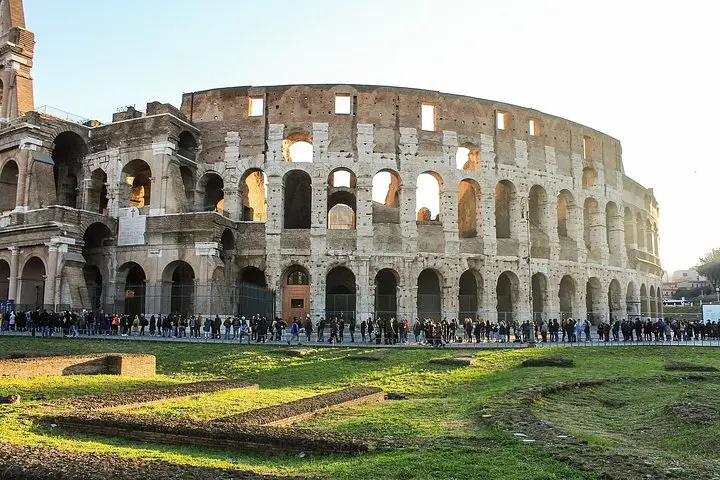
You round a corner and the Colosseum fills the windshield: weathered travertine catching the light, a low hum of scooters and conversation, and your electric 7-seater easing forward.
Verified experiences and guided adventures in the surrounding area.
Operated by Tours In Rome · Rome, Lazio
You round a corner and the Colosseum fills the windshield: weathered travertine catching the light, a low hum of scooters and conversation, and your electric 7-seater easing forward.
This 2–3 hour golf cart loop stitches together Rome’s Roman, Baroque and everyday layers — a drive past the Colosseum and Palatine Hill, a sweep by the Circus Maximus, a climb toward the Spanish Steps, and photo stops at Trevi Fountain, Piazza Navona and Campo de’ Fiori.
Rome’s story is under and around you: the Colosseum built 72–80 AD on compacted tuff and travertine; Palatine Hill’s palazzi rising from volcanic soil; Trevi’s 18th-century Baroque façade masking an aqueduct lineage that supplied ancient Rome. The Tiber threads through this urban geology, nudging boulevards and bridges that have carried markets and pilgrims for centuries.
Locals still trade produce in Campo de’ Fiori, students crowd the Spanish Steps, and the city’s cats keep watch in archaeological pockets — the modern city moving around ancient stones.
Practical guidance: tours are outside-only at major monuments, minimal walking is required but expect short strolls across cobbles. Best times are early morning or late afternoon to avoid peak sun and crowds. Keep a hand on your bag—busy squares attract pickpockets—and bring a lightweight layer; evenings on the hills can cool quickly. The vehicle is electric and guided in English; capacity is small, so book ahead and cancel at least 24 hours out if plans change. A quick coin toss at Trevi is a local ritual — coins are routinely collected by the city and redirected to social causes, so toss thoughtfully.
This tour condenses Rome’s highlights into a compact, low-effort window onto a city that rewards curiosity once you step off the cart.
This tour provides outside visits and photo stops; admissions are not included and there is no interior access to major sites.
The vehicle seats up to seven people; tours are shared unless a private booking option is specifically arranged.
Yes—minimal walking is required, and the electric cart reduces strain; notify the operator of accessibility needs when booking.
You can receive a full refund if you cancel at least 24 hours before the scheduled departure; last-minute cancellations are not refundable.
Tours In Rome operates guided outdoor trips and adventures with an emphasis on safety, stewardship, and memorable experiences.


You round a corner and the Colosseum fills the windshield: weathered travertine catching the light, a low hum of scooters and conversation, and your electric 7-seater easing forward.
You round a corner and the Colosseum fills the windshield: weathered travertine catching the light, a low hum of scooters and conversation, and your electric 7-seater easing forward.
This 2–3 hour golf cart loop stitches together Rome’s Roman, Baroque and everyday layers — a drive past the Colosseum and Palatine Hill, a sweep by the Circus Maximus, a climb toward the Spanish Steps, and photo stops at Trevi Fountain, Piazza Navona and Campo de’ Fiori.
Rome’s story is under and around you: the Colosseum built 72–80 AD on compacted tuff and travertine; Palatine Hill’s palazzi rising from volcanic soil; Trevi’s 18th-century Baroque façade masking an aqueduct lineage that supplied ancient Rome. The Tiber threads through this urban geology, nudging boulevards and bridges that have carried markets and pilgrims for centuries.
Locals still trade produce in Campo de’ Fiori, students crowd the Spanish Steps, and the city’s cats keep watch in archaeological pockets — the modern city moving around ancient stones.
Practical guidance: tours are outside-only at major monuments, minimal walking is required but expect short strolls across cobbles. Best times are early morning or late afternoon to avoid peak sun and crowds. Keep a hand on your bag—busy squares attract pickpockets—and bring a lightweight layer; evenings on the hills can cool quickly. The vehicle is electric and guided in English; capacity is small, so book ahead and cancel at least 24 hours out if plans change. A quick coin toss at Trevi is a local ritual — coins are routinely collected by the city and redirected to social causes, so toss thoughtfully.
This tour condenses Rome’s highlights into a compact, low-effort window onto a city that rewards curiosity once you step off the cart.