THE ADVENTURE COLLECTIVE® · Independent discovery and booking for outdoor travel

A private day trip from Rome delivers Orvieto’s cathedral splendor and the cliff-top drama of Civita di Bagnoregio. Walk historic lanes, learn Etruscan and medieval history, and prepare for uneven stone steps and a pedestrian-only approach to Civita.
A private day trip from Rome delivers Orvieto’s cathedral splendor and the cliff-top drama of Civita di Bagnoregio. Walk historic lanes, learn Etruscan and medieval history, and prepare for uneven stone steps and a pedestrian-only approach to Civita.
The morning road unwinds out of Rome and into Umbria’s soft, vineyard-scattered hills; limestone ridges sharpen as you near Orvieto and the air smells faintly of olive and baking stone. Arriving at Orvieto, the cathedral’s façade dominates — a medieval pageant of mosaics and carved saints — while streets slope toward hidden courtyards and the deep well of Pozzo di San Patrizio that spirals out of sight.
Verified experiences and guided adventures in the surrounding area.
Operated by sabino pagano ( www.rometourstravel.com) · Orvieto, Umbria
The morning road unwinds out of Rome and into Umbria’s soft, vineyard-scattered hills; limestone ridges sharpen as you near Orvieto and the air smells faintly of olive and baking stone. Arriving at Orvieto, the cathedral’s façade dominates — a medieval pageant of mosaics and carved saints — while streets slope toward hidden courtyards and the deep well of Pozzo di San Patrizio that spirals out of sight.
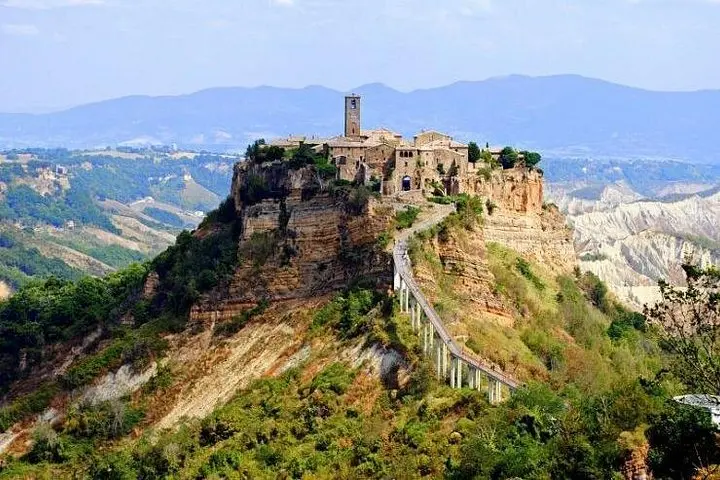
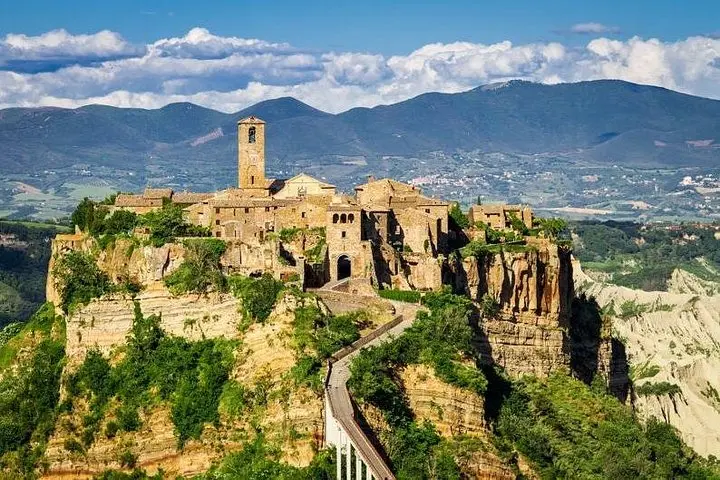
This region sits on a layer of volcanic tuff formed from ash and compacted pumice, the same rock that carved Etruscan tombs and shaped Civita di Bagnoregio’s dramatic perch. Civita, founded by the Etruscans 2,500 years ago, clings to a dwindling plateau; erosion of the surrounding gullies (calanchi) has reduced access to a single pedestrian causeway and given the town its nickname, the “dying city.” Local culture centers on food and wine: lunch in a nearby trattoria brings Umbrian pork, pecorino, and a glass of Montefalco rosso.
Practical guidance: the tour is a private, full-day outing with hotel pickup in Rome and air-conditioned transport. Expect several hours of on-foot exploration on uneven medieval paving and steep inclines—Pozzo di San Patrizio involves many stone steps if you opt in. Civita is reached on foot via a 300–400 metre bridge/approach; vehicles cannot enter. Bring stable shoes, water, and sun protection; morning departures avoid the hottest hours and give better light for photos. Mobility-accessible options exist for parts of Orvieto, but Civita’s steep access limits wheelchair entry.
Yes—this private tour includes hotel/apartment pickup in Rome’s city center; you’ll coordinate the exact point with the operator.
No—the ancient town is pedestrian-only and reached by a footbridge; vehicles must stop outside the access point.
It’s optional; the well has many steep stone steps so it’s not recommended for those with mobility issues or severe vertigo.
No—lunch, wine tastings, and any optional admissions are not included unless specified otherwise.
sabino pagano ( www.rometourstravel.com) operates guided outdoor trips and adventures with an emphasis on safety, stewardship, and memorable experiences.


The morning road unwinds out of Rome and into Umbria’s soft, vineyard-scattered hills; limestone ridges sharpen as you near Orvieto and the air smells faintly of olive and baking stone. Arriving at Orvieto, the cathedral’s façade dominates — a medieval pageant of mosaics and carved saints — while streets slope toward hidden courtyards and the deep well of Pozzo di San Patrizio that spirals out of sight.
The morning road unwinds out of Rome and into Umbria’s soft, vineyard-scattered hills; limestone ridges sharpen as you near Orvieto and the air smells faintly of olive and baking stone. Arriving at Orvieto, the cathedral’s façade dominates — a medieval pageant of mosaics and carved saints — while streets slope toward hidden courtyards and the deep well of Pozzo di San Patrizio that spirals out of sight.
This region sits on a layer of volcanic tuff formed from ash and compacted pumice, the same rock that carved Etruscan tombs and shaped Civita di Bagnoregio’s dramatic perch. Civita, founded by the Etruscans 2,500 years ago, clings to a dwindling plateau; erosion of the surrounding gullies (calanchi) has reduced access to a single pedestrian causeway and given the town its nickname, the “dying city.” Local culture centers on food and wine: lunch in a nearby trattoria brings Umbrian pork, pecorino, and a glass of Montefalco rosso.
Practical guidance: the tour is a private, full-day outing with hotel pickup in Rome and air-conditioned transport. Expect several hours of on-foot exploration on uneven medieval paving and steep inclines—Pozzo di San Patrizio involves many stone steps if you opt in. Civita is reached on foot via a 300–400 metre bridge/approach; vehicles cannot enter. Bring stable shoes, water, and sun protection; morning departures avoid the hottest hours and give better light for photos. Mobility-accessible options exist for parts of Orvieto, but Civita’s steep access limits wheelchair entry.